We may receive a fee from trusted installers when you request a quote, or a commission when you buy through links on our site. This helps us keep our content independent, well-researched and up to date – Learn more
- Renewables supplied 52.5% of the UK’s energy generation in 2025
- Most of the new energy capacity came from solar PV and offshore wind
- Wind power accounted for 30% of all renewable energy
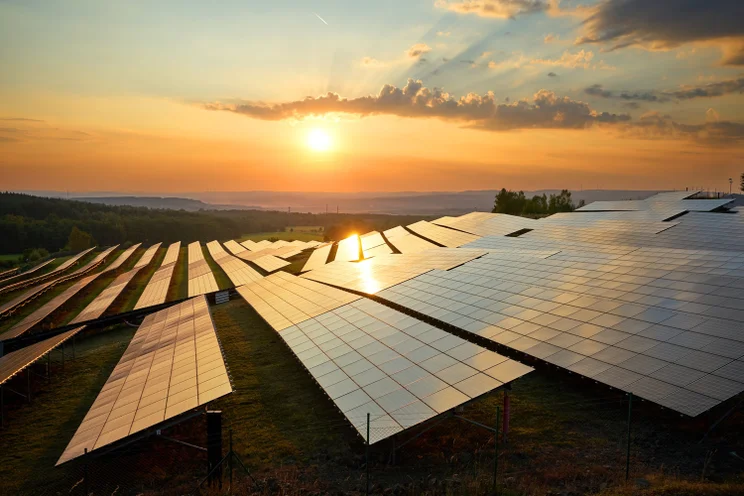
The amount of renewable energy the UK uses is rising, but how much does it use?
According to UK government statistics, renewable energy supplied a record 52.5% of the electricity generated in the UK in 2025. This is the second year in a row that renewables have supplied over half of the country’s power.
Driven by high wind and solar output, the UK generated a record 152.5 terawatt-hours (TWh) of renewable energy in 2025, marking a 5.7% jump on 2024.
According to RenewableUK’s CEO, Tara Singh, renewables are now the “backbone of Britain’s power system” and have supplied “most of our electricity for the second year running, with wind doing the heavy lifting.”
Wind power reached a record share of 30%, increasing 4% to deliver 87.1 TWh of generation. Solar generation also saw a significant increase, surging 37% to 20 TWh, accounting for a 6.9% share.
In the fourth quarter, renewables accounted for 54.5% of total generation. While this represents an increase compared to the same quarter in 2024, it was slightly less than the share recorded during the second and third quarters of 2025.
Singh said the next round auction of renewable projects later in the year will be a great opportunity to “lock in cheaper, more secure power.”
According to energy trends in March 2026, 28.8 TWh of wind generation in the fourth quarter of 2025 drove a substantial increase in renewable generation. With the UK already experiencing record breaking wind power generation this year, it’s no surprise that wind power is set to continue that trend.
Why is the UK producing more renewable energy?
The answer is simple: better weather, more storage capacity, government support, and the need to be energy independent.
- Our storage capacity grew by 3.8 gigawatts (GW) to a total of 65.1 GW in 2025. Most of this came from The majority of the new capacity came from solar PV (2.8 GW) and offshore wind.
- 2025 was the sunniest year on record, having 1,622 hours of sunshine, beating the record set in 2003.
- The government has pushed through reforms to the National Grid to make renewable projects online quicker.
Will the UK produce more renewable energy in the future?
Yes, it is highly likely that the UK will produce more renewable energy in the future than it is now. The sunshine record is very likely to be broken as the UK has got sunnier since the 1980s, and the Met Office thinks it will keep doing so.
As recently as 8 April, ground and roof-mounted solar panels generated a record breaking 14,414 megawatts (MW), according to the National Energy System Operator (NESO), enough to boil 4.8 million kettles at the same time. It’s the earliest annual peak we’ve seen.
As well as that, the government is committed to renewable energy and will continue to support wind and solar projects, as well as upgrading the National Grid. It will also continue to help households install solar panels through the Warm Homes Plan. The government also has a legal commitment to bring carbon emissions down to net zero by 2050.
Another very important reason why it is very likely that the UK will generate more renewable energy is the need to cut our dependence on gas. The US-Iran war caused an enormous increase in gas prices, a market the UK is extremely vulnerable to. The ongoing energy crisis will accelerate the pace of growth, in addition to rising demand for rooftop and plug-in solar systems.
Which types of renewable energy does the UK use?
Wind is the biggest source of renewable energy in the UK, but there is still a way to go to make the UK run totally on clean energy.
| Renewable energy type | How much energy was produced (2025) | Percentage of total generation |
|---|---|---|
| Gas | 8.37GW | 27.40% |
| Solar | 2.02GW | 6.60% |
| Wind | 10.60GW | 34.60% |
| Hydroelectric | 0.38GW | 1.30% |
| Nuclear | 3.83GW | 12.50% |
| Biomass | 2.33GW | 7.60% |
The Eco Experts says:
The UK is definitely generating a lot more clean energy than it used to, and in the future it is likely to make a lot more. But despite using clean power for more than half of its energy last year, there is a lot of room for improvement.
Will 2026 be another record year for the renewables industry? We won’t know for another 12 months or so, but if things continue as they are, it’s very likely that the 52.5% number will increase.
Iceland, for example, gets 85–87% of its primary energy supply from domestic renewable sources. In our opinion, if the government achieves its goal of installing 600,000 heat pumps annually by 2028, as well as building upon the UK’s offshore wind potential and making the most of solar panels on new builds, we’ll be well on our way to ending reliance on fossil fuels for good.