We may receive a fee from trusted installers when you request a quote, or a commission when you buy through links on our site. This helps us keep our content independent, well-researched and up to date – Learn more
- Ministers are making big efforts to get our bills down
- The Boiler Upgrade Scheme has been extended for some households
- But is what they’re doing enough?
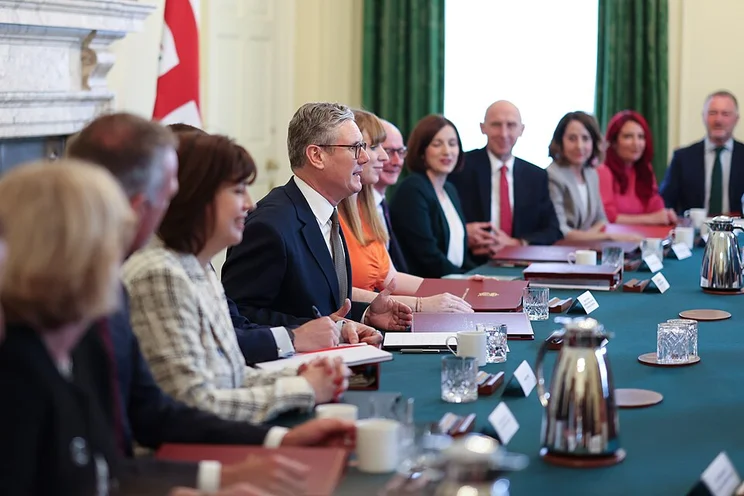
The government is trying to cut the link between gas and the price of electricity.
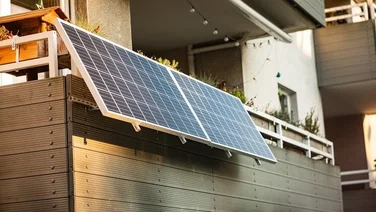
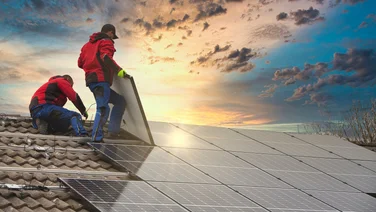
That’s great, but we have to ask – is the government doing enough to cut our energy bills? It’s a big question, and there’s a reason we’re asking it. Ministers have announced more steps to cut the link between gas and bills. This includes a £25mn pilot project to get some households to use plug-in solar panels and increasing the Boiler Upgrade Scheme to £9,000 in some cases.
However, right now, we’d have to say no, the government is NOT doing enough to cut energy bills. That’s not because they aren’t trying – the government is definitely doing some very good things. Sadly, there’s a lot of work to be done on improving the National Grid, making electricity cheaper than gas and getting more solar panels on roofs.
What has the government done to cut energy bills?
- Remove some policy costs – In her Budget last Autumn, Chancellor Rachel Reeves some policy costs, also called ‘green levies’, from electricity bills
- The Warm Homes Plan – At over £11bn, this is the biggest home energy improvement scheme in UK history. It’s great, but we don’t know the full details right now.
- Support the Boiler Upgrade Scheme – Households with liquified petroleum gas (LPG) or oil heating can now get £9,000 towards the cost of a heat pump.
- Warm Homes Discount – Last February, ministers said millions of families will get £150 towards winter fuel costs until 2031.
- No North Sea drilling licenses (so far) – One of the first things the government did was ban new licenses for drilling in the North Sea. This is a great step away from the gas and oil market shocks…as long as they don’t give in to pressure to start drilling.
- £53 mn Heating oil support – About 1.7 million households in the UK use heating oil to heat their homes (mostly in Northern Ireland). As oil prices ballooned thanks to the US-Iran war, so did bills, and the government has stepped in.
This is all promising stuff and shows that the government’s election promises to turn the UK into a ‘clean energy superpower’, while big, can be backed up by some action.
The most recent of the improvements listed above is the expansion of the Boiler Upgrade Scheme: this is designed to help households who have been hit hardest by the soaring price of natural gas and oil.
Bean Beanland, heat pump expert and consultant to the industry, said it was “very good news” and something that will help rural households in particular as they always “lose out” from energy price volatility.
For context, the price of heating oil is 109 pence per litre, as of 22nd April. Before the US-Iran war began, the price was 60.4 pence per litre. On top of chaos on the international markets, heating oil is also affected by a small supply chain and a lack of storage, making households more at risk of big price shocks.
That’s why the government has expanded the Boiler Upgrade Scheme to £9,000 for those using heating and LPG, on top of the £53mn of support it earmarked in March.
Beanland thinks that the government’s latest support could convince people to upgrade to a heat pump earlier than they might have done. This would mean they’re not waiting until their boiler or heating oil tank stops before they make the switch.
Is this enough? Sadly the answer is no, as we will likely find out when the next energy price cap is announced in May (some experts predict a jump of between 10-20%). There are still a lot of things the government needs to do before we can definitively say they’ve done enough to cut energy bills.
What has the government not done to cut energy bills?
- They haven’t fixed the Spark Gap – electricity is still ridiculously expensive and is four times the price of gas. This is the single biggest thing holding back the roll out of heat pumps, which is keeping millions of people on gas.
- Standing charge reform hasn’t been quick enough – Standing charges have been cut by about £39 as they removed the cost of paying for the Warm Homes Discount into the unit rate. While good in theory, this does little to help those who use little energy.
- Nothing has replaced ECO4 – Don’t be confused, ECO4 was definitely not worth keeping, but without it there is little help for households install insulation, which is vital if heat pumps are going to cut bills
- There’s been no progress on a new pricing model – Right now, our gas bills are driven by gas and something called ‘marginal pricing’. This is what makes up the Spark Gap.
- Delays in the Warm Homes Plan – we think the Warm Homes Plan is great, but at the moment we’re waiting to find out who can get it and how to apply. We won’t know until next year.
What should the government do next to bring down energy bills?
This is a huge question and potentially an unfair one as the government has already done quite a bit and is fighting a hard battle against the UK’s ageing infrastructure and historic reliance on fossil fuels.
In case you didn’t know, around 73.8% of UK households rely on gas for heating, which is about 20 million.
Among the challenges, we think the biggest thing the government has to overcome is the Spark Gap, because that is what’s driving the price of electricity, holding back the rollout of heat pumps. According to Beanland, the Spark Gap, which is right now is four, meaning electricity is four times the price of gas. It needs to be cut to three, and “ideally two-and-a-half”, according to Beanland.
“There needs to be consistent downward pressure on the Spark Gap, I don’t mind what measures they use to get it down,” Beanland told us.
The next question is, how does the government close the Spark Gap?
The first thing to do is to remove all policy costs from electricity to general taxation. Before the Autumn 2025 Budget about 15% of our energy bills were made up of policy costs (also called ‘green levies), which paid for support for households, such as the Warm Homes Discount. Rachel Reeves took a lot of this away from the price of electricity and put it into general taxation.
Policy costs now only account for about 6% of our energy bills, removing the remaining few could save households about £100 a year, on top of the £150 saved on average since April.
They could also cut VAT on electricity, which right now is 5% for households and 20% for businesses. Households would see bills fall by £38 between now and 2035. Removing standing charges would cut bills by another £122 a year, but this would have to be moved into general taxation instead.
Cutting policy costs would make bills cheaper, but it wouldn’t necessarily close the Spark Gap, because the price of electricity would still be linked to the price of gas. Why? Because of marginal pricing, a market mechanism which sets the price by the cost of the last unit needed, which is always gas as our electricity is generated by gas-powered stations.
There are other options, such as zonal pricing (which would benefit areas that generate a lot of renewables – such as Scotland – but do little to help high-demand areas, such as the South East of England). The government did look at zonal pricing but abandoned that idea in July 2025 due to concerns that it would do little to cut costs.
Unfortunately, there is no magic pricing model that will close the Spark Gap, but it is going in the right direction. Improvements to renewable capacity and a move from variable to fixed price contract, among other things, has seen gas set the price of electricity 90% of the time in 2020 to about 60%, with some predictions saying it will be as little as 50% of the time by 2030.
The less time gas spends setting the price of electricity, the quicker our bills will come down. How does that happen? By increasing renewable energy capacity as soon as possible and to reach a state where gas is no longer setting the price of electricity, the UK needs to replace about 30-40 terawatts (TW) of gas-powered generation.
Can it do that? Yes, but only by massively increasing renewable capacity. Our solar energy capacity right now is 16 gigawatts (GW). That needs to increase to somewhere around 47GW and battery storage needs to jump from its current capacity of 5GW to somewhere near 27GW. Onshore and offshore wind need to increase from 14GW and 15GW to 29GW and 50GW respectively. All this is in line with the Clean Power plan the government set in motion in 2024.
The government has definitely started on the right track when it comes to getting our energy bills down. It can do more and if it is going to succeed, it will have to take more costs away from electricity and ramp up renewable energy generation. Only then will gas no longer be setting the price and we’ll see the benefit in our bills.