We may receive a fee from trusted installers when you request a quote, or a commission when you buy through links on our site. This helps us keep our content independent, well-researched and up to date – Learn more
- The Aion V arrives this Spring
- The Aion UT will launch late 2026
- The Eco Experts are here to help you decide whether an EV is right for you and offer higher savings than a petrol car
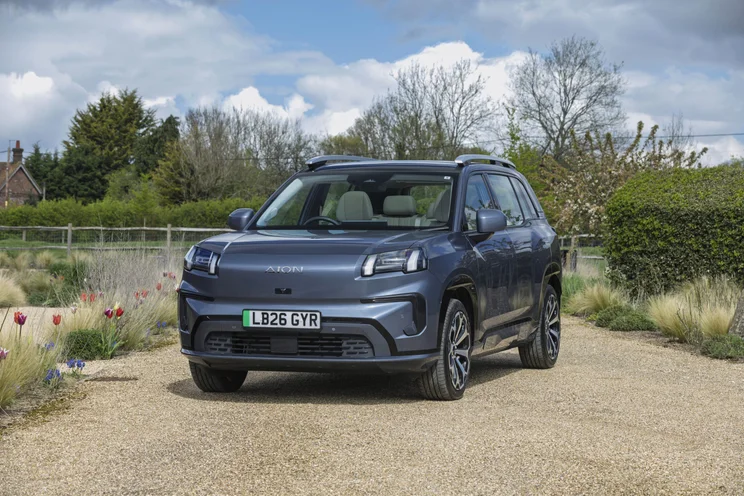
Electric vehicle (EV) drivers in the UK will soon have two more cars to choose from with GAC Group rolling out the Aion V and Aion UT later this year.
The Aion V starts from £36,450 and has a mileage capacity of more than 300 miles, with a charging speed of 30%-80% in 18 minutes, and it has a boot capacity of 500 litres. Its seats also fold flat to create a comfy bed or additional storage space.
The EV has been designed to offer a “seamless driving experience”. Its all-purpose app helps drivers monitor the car from afar, including making sure it’s locked, the windows are closed and how much charge it has.
The car’s intelligent driving system helps keep drivers safe by monitoring traffic signals, obstacles and gives a full view of every angle while the car is moving. All this has helped it get a five-star NCAP rating, which is the highest-possible safety rating.
Other features include heated seats, tray capabilities and a coolbox-style compartment to keep drinks and snacks cold. Each owner will be supported by the Aion Great 8 package, which offers eight years of warranty, service, roadside assistance and MOT. Pre-orders will open 23 April.
The Aion UT
The Aion UT arrives in the UK this autumn. While prices are yet to be confirmed, the manufacturer describes it as a “stylish, urban EV, comfortable with long weekend adventures or missions throughout city streets.”
Similar to the Aion V, the Aion UT offers more than three hours of driving after charging for just 24 minutes, from 10% to 80% charging. This is based on travelling 214 miles at an average speed of 60mph, so it might be more or less. It also offers a 255-mile range, meaning you could drive for days without a recharge.
The key difference is that you can accelerate quicker than you can with the Aion V.
Available in two different tones, drivers have a choice of their style on the interior, and you’re able to take in the UK’s various weather patterns through its ultra-large sunroof.
Interestingly, the front of the car has been inspired by an owl, and has playful pixel graphic lights and a sleek, Milan-styled silhouette to help make it distinctive, yet modern.
Its safety features include wide side airbags and intelligent safety systems that watch the road around you, helping with braking and blind spots.
Should you invest in an EV?
Yes, we think that now is the right time to get an EV because they’re cheaper and offer better value, and we’re backed up by data from Autotrader, which says that, for the first time, they’re cheaper than petrol cars.
The average EV now costs £42,620, whereas a new petrol car is about £43,405, thanks largely to government schemes, such as the Electric Car Grant.
Discounts on EVs in March were 12.8%, a record high, and 11.7% in April, which has done wonders to bring down costs.
Colin Walker, head of transport, the Energy and Climate Intelligence Unit (ECIU), said that EVs are saving drivers more than £1,000 per year, a £130 increase from before the US-Iran war. He is now urging the government to reduce the UK’s dependence on volatile oil markets.
“With EVs now cheaper to buy than a regular petrol car, and interest in them soaring, the Government has an opportunity to reduce the UK’s dependence on volatile oil markets by accelerating its transition to vehicles that are increasingly powered by electricity generated in British wind and solar farms,” he said.
“Given it’s an international market, more drilling for oil in the North Sea has no real impact on the price paid at the pump.”
Need help researching?
If you’re looking to decide whether an EV is right for you, you need to move beyond the ‘sticker price’ and calculate the total cost of ownership over the duration you plan to keep the car. We’ve put together a few calculations to help:
| Cost category | Petrol car | Electric vehicle (EV) |
|---|---|---|
| Fuel/energy | (Miles ÷ MPG) × Price/Litre | (Miles ÷ Mi/kWh) × Price/kWh |
| Maintenance | Higher (Oil, filters, exhaust, etc.) | Lower (fewer moving parts) |
| Road Tax (Vehicle Excise Duty) | Varies by CO2 emissions | Standard rate (£195 in 2026) |
| Tax Benefits | None | Potential for huge savings via Salary Sacrifice |
The key variables to adjust when using these calculations are:
- Charging habits: Charging at home on an off-peak EV or smart tariff, which is typically drastically cheaper than public rapid charging.
- Annual mileage: How many miles do you drive, on average? The more miles you drive, the faster the savings on fuel that will offset the initial cost of the vehicle.
- Salary sacrifice: If you are employed, look into whether your company offers a salary sacrifice scheme, which allows you to pay for your EV from your pre-tax salary.
If you can charge at home and drive more than 8,000 miles per year, it’s likely that the cost of an EV will be lower over a three-to-five year period compared to a petrol car.
For further guidance, check out these guides: