We may receive a fee from trusted installers when you request a quote, or a commission when you buy through links on our site. This helps us keep our content independent, well-researched and up to date – Learn more
- Plug-in solar panels cost a range from £599 to £1189.
- UKSOL is the only manufacturer to get their plug-in solar products to market so far.
- Argos has become the first retailer to stock and sell them, but others such as Wickes will soon follow.
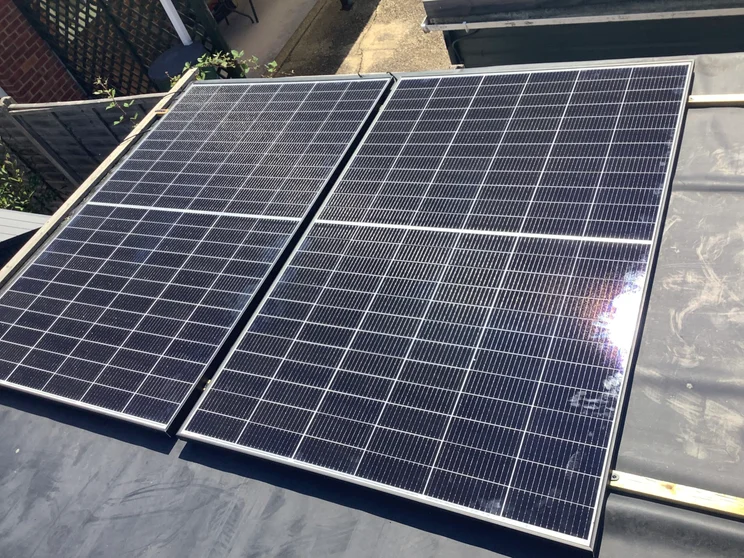
Plug-in solar panels are now legal and available in the UK after the government updated the plug safety laws on 27th August, but how much do they cost?
At the time of writing, plug-in solar panels costs range from £599 to £1198.
Where can I buy plug-in solar panels?
Currently, all plug-in solar panels available in the UK are manufactured by UKSOL and on sale at Argos.
Argos has become the first UK retailer to sell plug-in solar panels. This is what they offer:
- UKSOL 515w Pro Compact Plug In Solar Panel With Hybrid Mount Bundle – £599
- UKSOL 460w Pro Compact Plug In Solar Panel With Ground Mount Bundle – £849
- UKSOL 890w Pro Duo Plug In Solar Panel With Hybrid Mount Bundle – £849
- UKSOL 1030w Pro Plus Plug In Solar Panel With Hybrid Mount Bundle – £899
- UKSOL 1260w Pro Max Plug In Solar Panel With Ground Mount Bundle – £989
- UKSOL 890w Pro Duo Plug In Solar Panel With Ground Mount Bundle – £1199
Wickes, Lidl, Tesco, Aldi, and others will soon follow Argos in selling plug-in solar panels.
David Moore, from UKSOL’s public affairs team, said that costs will be lower than rooftop installation because there is no installation or scaffolding costs.
“[Plug-in solar] gives households that may not have the budget, roof space or appetite for a full rooftop system a much more accessible way into generating some of their own electricity,” Moore told us.
Will plug-in solar panels become popular in the UK?
Yes, it’s very likely that plug-in solar panels will become popular in the UK because of their potential to cut energy bills and make households less dependent on the grid.
Households could save about £110 as starting point by using plug-in solar panels, but savings will be higher if it’s combined with a battery and dynamic tariffs.
“Actual savings will vary considerably depending on location, orientation, shading, household consumption, electricity tariffs and, importantly, how much of the electricity generated is used within the home,” Moore said.
However, Moore also points out that plug-in solar should be viewed as a “long-term home-energy investment” rather than “a quick fix”.
“We think the potential market is significant, but the first year will be as much about consumer confidence and education as headline volume.
“We are already seeing considerable interest from retailers and consumers, particularly people who have previously considered rooftop solar but found the upfront investment too high.”
In Germany, where plug-in solar panels have been legal since 2024, has seen more than one million installations. Plug-in solar panels could meet 2% of Germany’s total electricity demand by 2045.
Can you get a grant for plug-in solar panels?
No, there are currently no grants dedicated to lower the costs of plug-in solar panels. None of the existing grants have funding available to make them cheaper.
Existing rooftop solar panel grants include:
- ECO4 (due to expire on 31st December 2026).
- 0% VAT (not a grant a big factor in making solar panels affordable).
The Warm Homes Plan will come into effect later in the year, but it’s unlikely that plug-in solar panels will be included in the scheme.
Will plug-in solar panels fall in price?
It’s quite likely that plug-in solar panels will fall in price as take up increases. The cost of plug-in solar panels in Germany have fallen by a third since 2024. Plug-in solar panels now cost on average of £170 (€200).
Moore told us that ministers should remove VAT on plug-in solar panels. Right now, VAT on plug-in solar panels is 20%. By contrast, rooftop solar panels have no VAT (which is set to change on 31st March 2027).
He went onto say that while UKSOL are the first manufacturer to get plug-in solar to market, the company has “deliberately not tried to produce the cheapest possible product”.
Instead, the company has “focused on quality, longevity, substantial mounting systems”, as well as “a controlled supply chain and proper UK support”.
“Our systems also use two-person delivery rather than simply sending a large solar module through a normal parcel network, and registered products are backed by a 10-year warranty.”
This focus on quality and reliability is what will help plug-in solar panels’ popularity. If consumers have a positive experience with the first generation of products, Moore said, adoption could accelerate very quickly.
Key takeaways
- Plug-in solar panels costs stretch from £599 to £1189
- Argos won the race to be the first UK retailer to sell them, but Wickes and others are set to follow
- Germany is a great example of how popularity of plug-in solar panels can grow
- You can’t get a grant for plug-in solar panels right now, but there could be a cut in VAT soon