We may receive a fee from trusted installers when you request a quote, or a commission when you buy through links on our site. This helps us keep our content independent, well-researched and up to date – Learn more
- You could be eligible for free home energy upgrade improvements
- The Warm Homes: Local Grant is currently only available in England
- It is part of the Warm Homes Plan, upgrading five million homes from 2025-2030
What is the Warm Homes: Local Grant?
The Warm Homes: Local Grant is a government-funded scheme that allows households to receive free energy-saving improvements to their home. It works with local authorities to help fuel-poor households cut energy bills.
It’s part of the government’s Warm Homes Plan, an initiative designed to upgrade five million homes from 2025-2030 and slash fuel poverty.
The government committed £3.4 billion to the Warm Homes Plan at the 2024 Autumn Budget, and £1.8 billion committed to tackling fuel poverty. £500 million of that fund was allocated to the Warm Homes: Local Grant which was launched in April 2025 as a three-year initiative. It is due to end in March 2028.
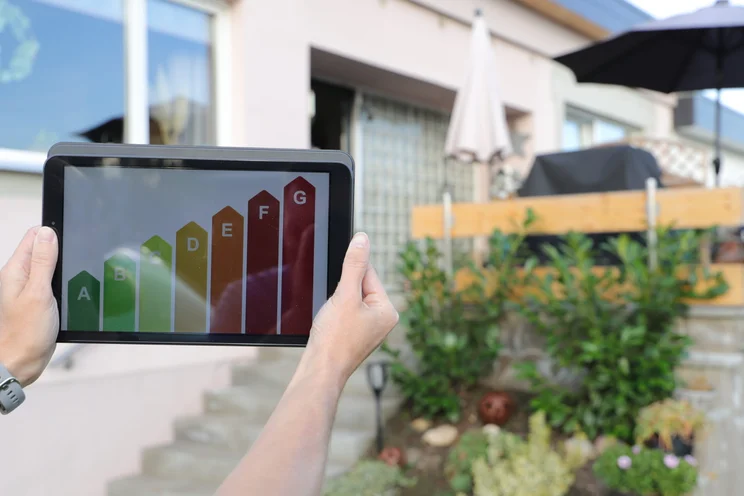
It focuses on improving fuel-poor homes to an energy performance certificate (EPC) rating of Band C by 2030, as well as reducing energy bills and cutting carbon emissions by providing free home upgrades.
As the Department of Energy Security and Net Zero’s (DESNZ) policy on Warm Homes states, the grant will help to, “ensure homes are healthy living environments, thermally comfortable, efficient and well-adapted to climate change.
“It will also support the green economy, local supply chains, and skilled jobs for tradespeople in every part of England,” the DESNZ has said.
It continues: “By focusing on low-income households and areas of high economic deprivation, upgrades made to the housing stock will support deprived communities throughout England, ensuring that they are not left behind in the transition towards Net Zero, but instead lead the way.”
What energy efficient measures are available with the Warm Homes: Local Grant?
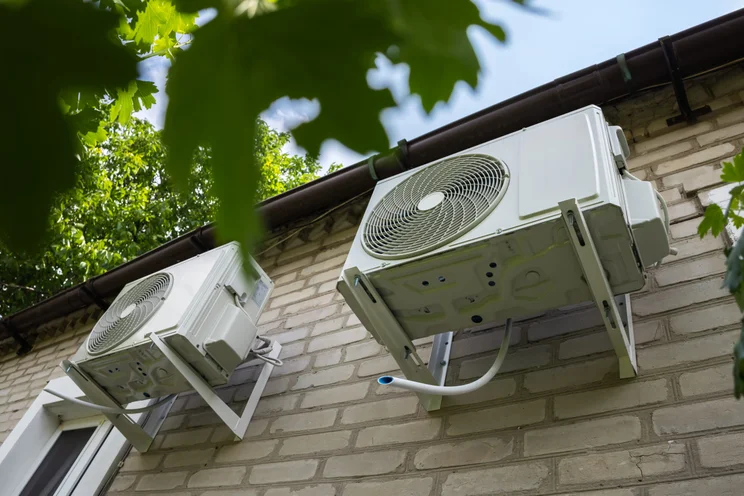
In order to make your home as energy efficient as possible, there are a number of upgrades available via the Warm Homes: Local Grant, and you won’t have to pay a thing for them.
Benefits include:
- Wall, loft and floor insulation
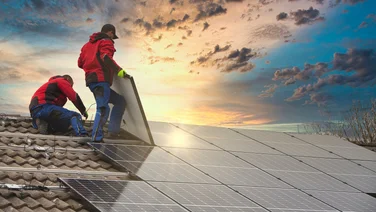
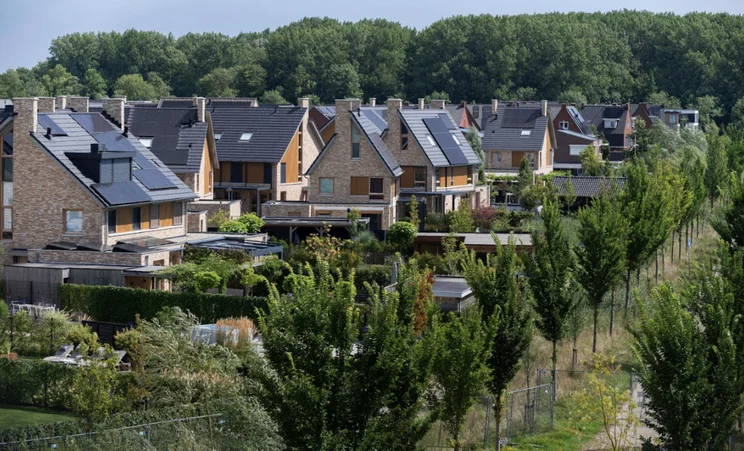
- Solar panels
- Air-source heat pump
- Smart controls such as a smart thermostat or smart meter
- Double/triple glazing
It takes an average of 10 days between initial application for the grant and being contacted by your local council. A surveyor will assess the property and recommend an appropriate course of action, and from there it typically takes anywhere between two and six months to complete the installation of energy-efficient improvements. This is due to a high volume of applications, so while approvals are often swift, final installation can take some time.
Am I eligible for the Warm Homes: Local Grant?
Eligibility for the Warm Homes: Local Grant include:
- Your property must have an EPC rating within band D to G. Properties with an EPC rating of C or above are ineligible under all circumstances.
If your EPC rating is D or below, you then need to meet one of the following criteria:
- Your household must be in England. There are other schemes available for the rest of the UK.
- The home must be privately owned, either by you or a landlord.
- The property must be an existing domestic dwelling, excluding new build or selfbuild homes that haven’t been previously occupied.
Usually, your household income must be below £36,000 annually. If you earn more than that, you might still be eligible if you live in a certain postcode, or someone in your household receives certain benefits.
Social housing is ineligible except for in-fill purposes, and even then it is capped at 10% of a project’s total homes treated, with a compulsory 50% cost contribution from social housing landlords required.
There is a £15,000 cap per home for energy performance upgrades, and another £15,000 per home for low carbon heating.
Below is a table of all the local authorities in England where the Warm Homes: Local Grant is applicable, with the amount each local authority has in funding as part of the grant.
| Local authority | Available funding |
|---|---|
| Ashford | £1,500,000 |
| Barking and Dagenham | £2,644,879 |
| Barnsley | £1,538,552 |
| Basildon | £1,500,000 |
| Blackpool | £30,039,099 |
| Bradford | £7,106,823 |
| City of Bristol | £13,458,463 |
| Broadland | £3,999,037 |
| Broxbourne | £1,070,786 |
| Buckinghamshire | £3,023,682 |
| Calderdale | £3,206,150 |
| Cambridge | £8,568,050 |
| Canterbury | £1,500,000 |
| Cheshire | £7,792,725 |
| Cornwall | £3,383,632 |
| County Durham | £2,055,853 |
| Dacorum | £2,337,982 |
| Darlington | £13,953,865 |
| Devon | £5,250,000 |
| Doncaster | £1,064,111 |
| Dorset | £3,871,782 |
| Dover | £1,868,398 |
| East Hertfordshire | £1,500,000 |
| East Lindsey | £5,639,746 |
| East Riding of Yorkshire | £1,500,000 |
| Essex | £6,000,000 |
| Gateshead | £1,500,000 |
| Gravesham | £1,117,648 |
| Great Yarmouth | £2,638,910 |
| Greater London Authority | £53,470,910 |
| Hartlepool | £2,391,408 |
| City of Kingston upon Hull | £3,402,806 |
| Leeds | £5,963,439 |
| Leicester | £4,507,699 |
| Lewes | £3,901,852 |
| Liverpool City Region Combined Authority | £31,805,813 |
| Medway | £1,500,000 |
| Newcastle-upon-Tyne | £2,294,325 |
| North East Derbyshire | £5,160,618 |
| North Hertfordshire | £1,500,000 |
| North Northamptonshire | £2,003,912 |
| North Tyneside | £4,281,163 |
| North Yorkshire | £5,974,078 |
| Northumberland | £2,530,853 |
| Norwich | £4,745,409 |
| Midland Net Zero Hub | £69,859,402 |
| Oxfordshire | £3,750,000 |
| Plymouth | £3,024,995 |
| Portsmouth | £26,037,063 |
| Sevenoaks | £1,500,000 |
| Sheffield | £3,406,008 |
| Shropshire | £6,717,405 |
| Slough | £1,500,000 |
| Somerset | £6,066,116 |
| South Tyneside | £1,500,000 |
| St Albans | £1,500,000 |
| Stevenage | £1,500,000 |
| Stroud | £5,250,000 |
| Suffolk | £4,624,418 |
| Sunderland | £1,500,000 |
| Surrey | £13,914,375 |
| Thanet | £1,548,220 |
| Tonbridge and Malling | £1,500,000 |
| Tunbridge Wells | £1,382,964 |
| Wakefield | £1,500,000 |
| Watford | £3,750,031 |
| Welwyn Hatfield | £1,500,000 |
| West Devon | £3,315,320 |
| West Northamptonshire | £2,606,931 |
| Westmorland and Furness | £11,828,581 |
| Wiltshire | £3,035,320 |
| Wyre Forest | £1,500,000 |
| York | £2,037,677 |
Once you’ve checked your eligibility and your local council has confirmed the available funding, a home survey will be conducted to see how your home’s energy efficiency can be improved.
The council will then organise and pay for any agreed upon work . You will not need to pay for anything.
Summary
The Warm Homes: Local Grant is an affordable way to make changes to your household, resulting in a healthier home environment, lower energy bills, and more sustainable living.
As well as being completely free, installing low-carbon technologies can help pave the way to a more eco-friendly future.
Click here to apply to the Warm Homes: Local Grant.
Call 0800 098 7950 for the Warm Homes: Local Grant assisted digital support helpline.