


We may receive a fee from trusted installers when you request a quote, or a commission when you buy through links on our site. This helps us keep our content independent, well-researched and up to date – Learn more
- The Jules by Fuse panel and battery system is designed to help people in flats access solar
- It’s not yet available in the UK and it won’t be until the law on plug-in batteries changes
- Billpayers will be able to store excess energy and use it when needed
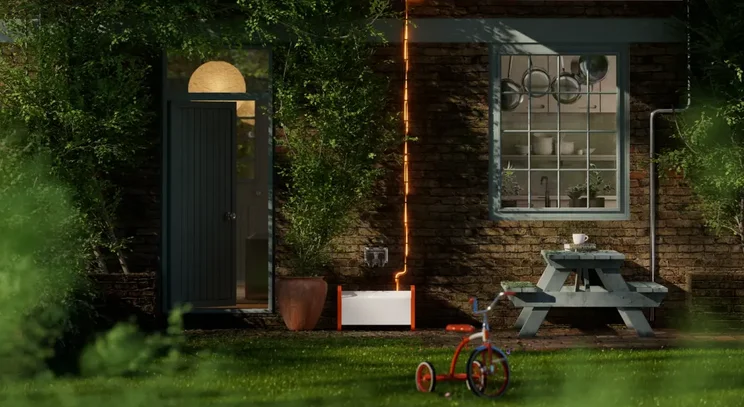
If you live in a flat and want to get solar energy then it will hopefully one day be possible, thanks to a new plug-in solar and battery system to Fuse Energy, which could released next year.
The energy provider says Jules (the name given to the system) is designed to solve the problem of not having enough space for solar energy, especially on their roof.
They describe it as a “plug-in home battery that brings home solar and battery storage to people who have never had access to it”.
At this time Jules by Fuse is not legal because of the UK’s regulations that prevent plug-in batteries that don’t need to be installed.
How does Jules by Fuse work?
Jules by Fuse connects to the home’s electrical circuit through a standard UK 3-pin socket rather than being hardwired into the consumer unit, so when plug-in batteries become legal there will be no need for an electrician.
The system can run on its own or with up to four Anywhere Panels, which are the solar panels sold alongside it. Mounting kits support balcony, wall and ground installations, with each panel up to 500W.
The Jules battery is, which allows surplus power can be stored when it is cheap and used later when it is not, or even to sell via the Smart Export Guarantee.
Another useful feature is that Fuse’s own battery management software decides when to store power and when to use it, so you don’t need to manage it.
The system also looks at solar forecasts, household usage and live prices to bring bills down as much as possible.
How does it do this?
The software builds on the real-time system Fuse already uses to bill customers against half-hourly wholesale prices.
Jules automatically charges and discharges. If you use it on a multi-rate tariff, it will store electricity when it is cheapest, for example overnight, and uses it when rates rise.
With Anywhere Panels it stores excess solar and releases it later. It connects to the customer’s smart meter to help optimise the schedule, although a smart meter is not required.
How much does Jules by Fuse cost?
The battery part of Jules by Fuse costs £799 without Fuse tariff, and this price falls to £199 for a five-year fixed tariff. Anywhere Panels are £189 each and you’ll own the system outright.
However, one thing to take into account is that it is not a billing meter or an in-home display, and it does not provide backup power during a power cut.
Reservations are open to anyone, with or without a Fuse tariff, through the Fuse app or website. Live Fuse customers get first access at launch.
Can I buy Jules by Fuse right now?
No, you can’t buy Jules by Fuse right now in the UK because plug-in batteries aren’t yet legal. The government made plug-in solar panels fully legal on 27th August 2026 and is at this time making plans to legalise plug-in batteries.
Fuse says they expect Jules to be on the market as soon as plug-in batteries are fully legal in the UK. This could be as early as 2027, at which point it could become a lot easier for people in flats to generate and store solar energy.
Fuse’s founder and CEO Alan Change described solar has a “club for homeowners with the right roof and eight grand to spare”.
“That’s backwards. It’s the cheapest power in Britain, and the only things stopping most households using it are cost and complexity.”
“Jules removes both and starts cutting bills from day one. We will keep reinvesting everything we make until low-cost, abundant power is the default for everyone.”


