


We may receive a fee from trusted installers when you request a quote, or a commission when you buy through links on our site. This helps us keep our content independent, well-researched and up to date – Learn more
- Chancellor John Healey announces that houses in council tax bands A-D will receive £100 off energy bills this winter
- Chancellor also says standing charges on gas will be scrapped
- The average household will save £45 from standing charges cut, with low gas users the ones to benefit
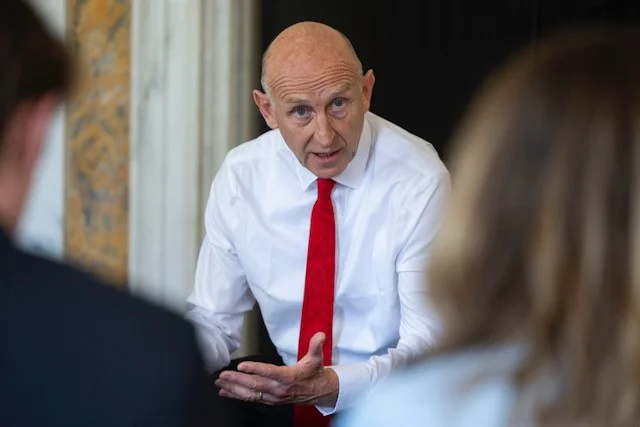
Households in council tax bands A-D will receive £100 off their energy bills winter, Chancellor John Healey has announced.
The decision will benefit more than 20mn households will be paid the £100 and it will be paid straight into their bank accounts.
The move has been taken to give households “breathing space” amid rising energy bills, caused largely by Donald Trump’s war with Iran.
“I know that with the conflict in the Middle East, rising energy bills are a real worry. I know that people look to government at times like this, not to solve all their problems, but to give them a bit of breathing space,” Healey said.
“Today I’m taking one further step: this winter for 20 million households in council tax bands A to D, I’m announcing a £100 energy payment for households.
“That’s a £2.6bn scheme to take the pressure off in the coldest months and see people through to the spring.”
Healey has also said that 0% VAT electricity which was brought in by PM Andy Burnham will be extended through to the spring.
No more standing charges on gas
Standing charges in gas bills will be abolished after the Budget, according to Chancellor John Healey.
In a big pre-Budget announcement, Healey described standing charges as “unfair and outdated” and said that scrapping them will give “millions of households breathing space”.
The scrapping of standing charges on gas bills will save the average household £45, according to the government. It follows the decision taken by PM Andy Burnham earlier in the year to cut VAT from electricity bills.
What are standing charges?
Standing charges are fees added to energy bills to pay for the maintenance of the National Grid. They are a flat charge that apply to every household regardless of how much is used.
This has often led to criticism because sanding charges cost low users an unfair amount. The costs will now be shifted to the unit of gas used, making the amount each household pays more representative of their energy use.
Prime Minister Andy Burnham said: “Abolishing gas standing charges is about basic fairness and giving people more control over their bills.
“I am determined to reform our broken energy market, so it better serves the public interest.”
Why can’t standing charges on electricity be cut as well?
John Healey reportedly wants to cut standing charges on electricity as well and is in talks with Ofgem to do so. However, it is not as simple as cutting standing charges on gas. Why? Because doing so would likely hurt vulnerable higher users, such as people who use electric chairs, dialysis machines etc. It could also make costs more expensive for heat pump users if more had to be paid on the amount of electricity used.
There’s also the question of policy costs, which are on electricity bills. These include environmental and social levies which pay for government subsidies, such as Warm Homes Discount.
The scrapping of standing charges on gas bills will save the average household £45, according to the government. It follows the decision taken by PM Andy Burnham earlier in the year to cut VAT from electricity bills.
Reacting to the announcement, Energy UK’s Chief Executive Dhara Vyas, said that while cutting standing charges on gas was good news for households it’s “important to support those low-income households who will otherwise lose out”.
She stressed that the change needs to be “accompanied by a social discount scheme to protect low-income households who have no choice but to use a lot of gas”.
“Standing charges cover the fixed infrastructure and operational costs required to keep homes connected to the energy system, regardless of how much gas or electricity is consumed.
“These costs need to be recovered elsewhere and as any change will create winners and losers, it needs to be introduced carefully.”
Edward Gurney, Founding Director of Solar and Battery Company said that while households will benefit, particularly those with low gas use and well-insulated homes, more needs to be done to make energy bills more affordable in the long term.
“We’ve seen how quickly international events can push up wholesale gas prices, and changing the way bills are structured doesn’t tackle the underlying cost of energy,” Gurney said.
“Affordable, abundant electricity is something we should all be working towards, and it’s one of the reasons we’re in the renewable energy industry in the first place.”
“We should be making it easier for households to use cheaper electricity, store it for when they need it and, where their property is suitable, generate some of their own. Solar panels and battery storage can help with that, although the financial benefits depend on the property, the installation costs and how the system is used.”
“The Government’s estimated £45 annual saving will make a difference to some households, but we need to look beyond individual changes to bills and ask how people can gain more control over their energy costs.
“Making cheaper electricity tariffs accessible to battery owners, keeping VAT relief on solar panels and batteries, and giving people a sensible, affordable way to finance the equipment would all help.”


