


We may receive a fee from trusted installers when you request a quote, or a commission when you buy through links on our site. This helps us keep our content independent, well-researched and up to date – Learn more
- It’s now easier than ever to get solar power if you’re a renter
- Innovations such as plug-in solar panels and EcoFlow STREAM have changed the game for renters
- Landlords still need to give permission, but they’re motivated to do so
Is it possible to get cheap and clean solar energy without owning your own home? Until quite recently, unless you lived in a house large enough for 8-13 solar panels, it was assumed solar energy would likely be out of reach. Unfortunately, solar panels and rental properties were not seen as compatible.
However, is it the case that in 2026 you need to own your own home to get solar panels? No. Can you get solar panels and batteries and cut your energy bills without owning your home? Unequivocally, yes.
How was solar energy changed for renters?
Solar energy has changed for renters in lots of ways, and they all mean not owning your own home is no longer a big barrier.
There are plenty of reasons why not owning your own home is no longer a major hurdle to getting solar panels. The main one is that the UK solar industry is changing at a rapid pace, with a greater emphasis than ever on helping billpayers cut their costs by not relying on gas or the grid.
More specific reasons include:
- New technology and products on the market that help billpayers and households of all sizes access solar energy
- Changes to the law that incentivise landlords to allow solar panels
- Financial support for renters
Fewer than 2 million households in the UK have solar panels as of 2024. Going a bit deeper, just 7% of owner-occupied properties have solar panels, with 2% of private rented ones and 5% of social rented ones doing so respectively.
Just over a third of households overall, just under 9 million, are rented, with an almost even split between private (54%) and social (46%). What does this mean? Renters in the UK are a hugely untapped market for solar panels.
Does it need to be so? Not anymore. We’ve gone into a bit more detail below about why even if you rent you can still get all the benefits of solar energy.
Plug-in solar
This is the one you’ve likely heard the most about because it’s only recently been fully legalised in the UK. On the 27th August it became fully legal to plug in a solar panel of 800MW into your electricity socket after safety laws were changed.
This is a massive leap forward in domestic energy because it allows billpayers to use their balconies and open space to generate electricity. A plug-in solar panel pushes power into a home’s grid, using a microinverter to convert DC electricity into AC.
The benefits for billpayers is a cut of energy bills by £110 a year on average, although this figure is considered by some to be a low estimate. With a battery and home that is well insulated, that figure could be a lot higher. When combined with other clean tech, such as rooftop solar or a heat pump, a home could be very well protected from spikes in energy costs.
Before 27th August, plug-in solar panels were not allowed in the UK because of safety concerns. Why did the plug-in solar panels laws change? Firstly because plug-in solar panels are proven to cut energy bills and secondly because of the (still ongoing) ballooning wholesale gas prices, which has caused the energy price cap to increase massively since June.
Essentially, it became imperative for more people to be able to access solar energy. Now that plug-in solar panels are legal, living in a flat is no longer a hurdle to getting cheap and clean energy. The one thing that was previously a requirement – a roof – is now not needed.
Do you need your landlord’s permission to install plug-in solar panels?
Yes, you do still need to get permission from your landlord, freeholder, or building manager if you want to install plug-in solar panels.
Can your landlord refuse permission to install plug-in solar panels?
Yes, despite plug-in solar panels being legal and available, your landlord, freeholder, or building manager can still say no. At the time of writing (September 2026) tenants have no legal right to install plug-in solar panels against a landlord’s wishes BUT the government has strongly encouraged landlords to assess each request on a case-by-case basis and only turn one down if absolutely necessary.
Why would a landlord say no if you wanted to install plug-in solar panels?
Thanks to the Renters’ Rights Act 2025, landlords cannot refuse a tenant’s request to make energy efficiency improvements without reasonable grounds. The reasonable grounds are:
- Building constraints
- Electrical safety
- Leasehold laws blocking certain work
- If your building is listed
All in all, plug-in solar has made it much easier for renters to get solar power and it represents one of the biggest, and most important changes to renters’ ability to cut their energy bills.
Landlords need to improve their EPC ratings
Naturally everyone wants their home to be more energy efficient, but recent changes to the way energy efficiency is measured means it’s easier than ever to get solar panels if you’re a renter.
The upcoming Warm Homes Plan, the biggest government home energy improvement scheme in UK history, will mean all privately rented properties will have to have an Energy Performance Certificate (EPC) rating of C or above.
This is a big win for renters because the best way to make a home more energy efficient is to use clean energy tech, including solar panels. Another huge benefit to renters is the Home Energy Model, the new metric for measuring EPCs.
The Home Energy Model will specifically measure a home’s ‘smart readiness’ which in other words means its ability to generate its own energy and how it uses smart technology to optimise it.
That means energy generation is baked into a property’s EPC rating and it means renters can ask their landlords to help them get roof-top solar panels, batteries and/or plug-in solar to improve their homes energy efficiency.
The best part? Any home with solar panels alongside a smart meter would be guaranteed to meet the stipulations of the Home Energy Model and get that all-important C EPC rating.
Financial support through government grants
As long as renters have all the necessary landlord permissions, there is a lot of help available for solar panels. The Warm Homes Plan will replace the ECO4 scheme, which will expire on 31st December, and offer all households financial support to install solar panels and batteries.
Everyone in the UK will be entitled to low-interest loans for solar panels regardless of home ownership.
Renters will still, as already explained, need their landlord’s permission, but the financial support and the need to have a C EPC rating makes the argument for solar almost undeniable.
Community battery storage
This is a concept that is designed to help renters access solar energy by sharing a large, local battery system to store renewable energy and reduce electricity costs without needing solar panels or a battery inside their flats.
The shared community battery charges up with cheap energy during low-peak hours and releases into the shared grid when it’s expensive. For renters this involves no complex installation because the solar panels are shared and each separately smart metered-flat can get their share of the solar energy.
This is still quite a new area and governments, technology manufacturers, and energy providers are still creating frameworks to do it at scale, but it’s a very promising area for renters. One particular case study in Cardiff saw occupants of 24 flats cut their energy bills by more than 70%.
New battery technology: EcoFlow STREAM
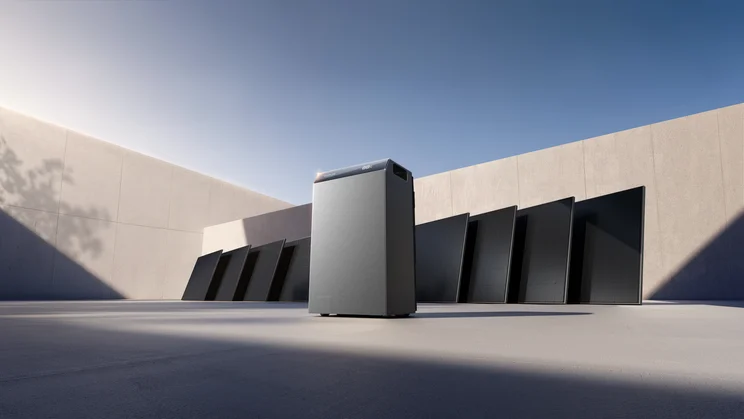
On top of government legislation and help, there are other products on the market that make solar more accessible than ever for renters. One innovation in particular now means every type of household now has solar within their reach: EcoFlow’s newly released STREAM series, the next-generation home battery platform that’s designed specifically to help overcome traditional barriers when it comes to home battery installation.
Why is EcoFlow’s STREAM series so important?
The STREAM series, which includes the STREAM 5000 and STREAM AC, is a gamechanger because it fits into what EcoFlow calls ‘the missing middle’. That is households who don’t have enough room for a large residential solar system and whose energy needs are too big for plug-in solar.
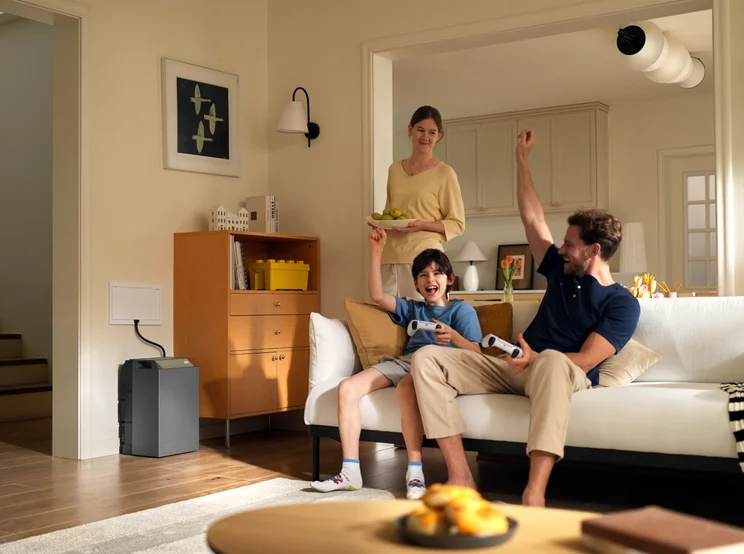
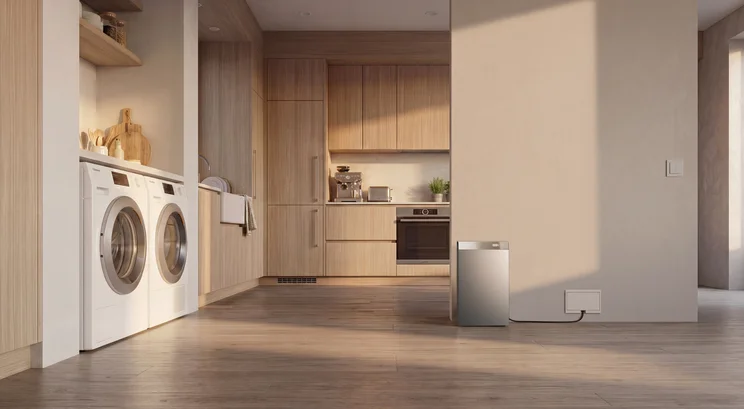
That could be someone who lives in a small two-storey house without a huge amount of roof space for a 13-solar panel system or simply someone who lives in a flat. Crucially, it could also be renters who need to show their landlords that the technology is compact enough to fit nicely into the building.
Essentially, the types of households who might not have been able to get solar power in the past.
How does the STREAM series overcome the traditional barriers?
- It complements plug-in solar – The STREAM series is not a plug-and-play system (so not to be confused with plug-in solar panels that were made legal on 27th August). For households generating their own solar energy, STREAM offers a comprehensive route to store and manage it.
- Time-of-Use optimisation – The STREAM series charges from the national grid when energy is cheap (such as overnight) and discharges it during peak-time hours, often around about 4-7pm.
- High-demand output – It has a potential output of 3,000W and this lets households run heavy appliances, such as washing machines and fridges
- It’s scalable – Households can scale up capacity as and when they need to do so
Tiny but mighty
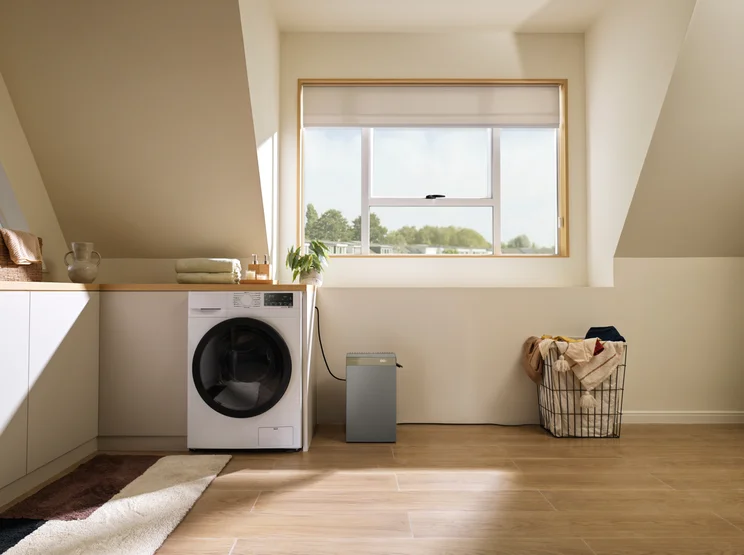
Despite its size, the STREAM series can pack in enough energy to run a huge number of critical household appliances, including washing machines, dishwashers, tumble dryers and much more. It also lets billpayers store energy at cheap times for use when electricity is most expensive. The result is a system that can easily be installed in compact household spaces, such as garages, utility rooms and in fact anywhere else that’s out of the way, all without compromising on power.
This is really important because it helps those households who might not have used solar power before. In fact, it could be their first effort of using anything clean energy technology, and that’s the point. It’s designed for those taking their first solar steps.
Conclusion: What has changed in the UK solar industry?
In short, a lot. It’s easier than ever for renters to access solar energy because of:
- Legislation to allow plug-in solar panels
- Landlords are motivated to give permission
- There’s loads of government support available
- Innovations such as EcoFlow STREAM series make it possible to store solar energy
The biggest thing is that every household now has the ability to make the use of solar energy through residential systems, plug-in, and now battery systems that integrate into a home’s energy consumption patterns. Now a lot more people have the ability to use solar energy. The technology is there, the market is ready, and the legislation is gradually changing. Solar in the UK is evolving, and everyone, including renters, are able to take part.
Key takeaways
- Plug-in solar, changes to the law, and technology like EcoFlow STREAM have made it much easier for renters to get solar
- Government legislation will force landlords to make sure their EPC rating is at least a C, motivating them to solar
- The Warm Homes Plan will offer huge financial help for all, including renters
- The EcoFlow STREAM is compact and makes using solar energy easier for people who live in flats
- Landlords can still refuse, but there are huge incentives for them to approve solar panels


