


We may receive a fee from trusted installers when you request a quote, or a commission when you buy through links on our site. This helps us keep our content independent, well-researched and up to date – Learn more
- Drilling in the North Sea would do almost nothing to cut our energy bills
- We’re still stuck paying market prices because of privatisation
- Renewables are better in the short, medium and long term
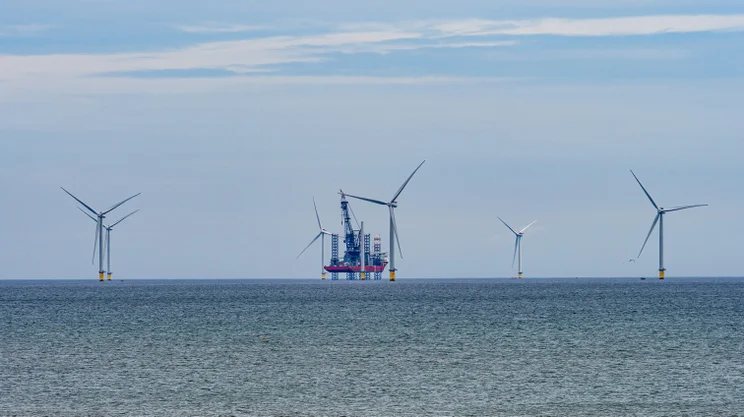
Drilling in the North Sea will do next to nothing to bring down energy bills, which is why approving the Jackdaw, as energy secretary Miatta Fahanbulleh has just done, is a mistake and a waste of time.
Aside from the obvious environmental disaster of drilling even more in the North Sea (see the catastrophic heatwaves that burned Europe to a crisp in the summer), it is a waste of time and money, for a number of reasons, mainly:
- Our energy bills won’t come down
- The North Sea is privatised and we are still stuck paying market prices
- We can’t refine the oil here
- Renewables are a better option and investment
Fahnbulleh’s decision isn’t really a surprise, as PM Andy Burnham has been hedging the question since he took office and claiming to take a “pragmatic” view of drilling. At this time it’s only the Jackdaw site that’s been approved, probably because it’s mainly a gas field. Rosebank, the UK’s biggest untapped oil site, is still waiting for a decision.
However, we’ve broken down the biggest reasons why allowing drilling in the North Sea is pointless.
Why North Sea drilling and energy bills are barely linked
Very simply, North Sea drilling would make little to no difference to the amount households spend each month on energy. Most estimates say it would be in the region of £16 to £82 a year per household at the very most.
By contrast, using renewables and electrification could cut costs by as much as £400 per household. A plug-in solar panel, when they are available in the UK, could cut energy bills by about £110. That is more than if the North Sea drilling were set at full capacity.
Another reason is that almost all of it is gone. The North Sea is what’s called a “mature basin”, which means it is almost entirely depleted. As of 2026, anywhere from 90–94% of the North Sea’s known reserves have been extracted. That means the North Sea only accounts for 0.11% of the world’s global gas reserves and 0.08% of the world’s oil reserves.
As a result, the UK’s reserves have no sway over the international wholesale price of either oil or gas. That is a massive reason why drilling will make no difference to how much we spend on energy. This connection between North Sea drilling and energy bills is weaker than many people assume.
The North Sea is privatised
At least the UK portion of it is. Unlike the Norwegians, the UK chose to sell off the drilling and extraction rights to the North Sea basin when it privatised the British National Oil Corporation in 1982 (it was spun off as Britoil and then fully bought by BP in 1988).
That means that while the area and its resources are officially owned by the Crown, the government has no means to take it out of the ground and has to rely on private companies to do so.
Because the industry is privatised, the oil and gas from the North Sea is not ours to use and the government has to buy it from the companies that extract it at the market price.

It also means that the UK’s sole income from the North Sea is through tax on the private companies’ revenue. This could be a source of revenue for the government, but it is too unreliable and would be short lived because, as we said above, the North Sea is running out of oil and gas, and any income is entirely dependent on the international wholesale price, which the UK can’t affect in any way.
This tax revenue has fluctuated wildly since its peak of over £10bn in 1984/85, and production actually cost the Treasury over £300mn in 2016/17 due to very low international oil prices. The Windfall Tax (a 38% additional tax on North Sea oil profits, bringing the total tax rate on North Sea oil and gas to 78%), set up following the beginning of the war in Ukraine, helped bring in just £9.9bn in 2022/23. Last year that figure fell to £4.5bn.
The Windfall Tax is set to expire in 2030, so even if Rosebank and Jackdaw were approved today, they wouldn’t be fully operational until the middle of 2027, meaning that the Treasury would only have three years worth of tax revenue from the North Sea as things stand. It could be renewed, but the oil and gas industry is lobbying heavily to have it scrapped for good, which raises the possibility that the already unstable tax receipts from the North Sea could plummet.
We can’t refine our own oil
As a result of the entire industry being privatised, almost none of the North Sea’s oil gets used here. In fact 80% of it gets exported. Why? Because not only would the government have to pay the wholesale market rate for the oil, it couldn’t process it at the necessary scale because the UK refineries are too old to process the specific type of crude that comes from the North Sea.
The four remaining refineries were built before North Sea oil was discovered in 1969 and are designed to process crude which is low in sulphur. The oil from the North Sea is sweet and high in sulphur and requires intensive ‘desulphurisation’ which our plants aren’t equipped to do.
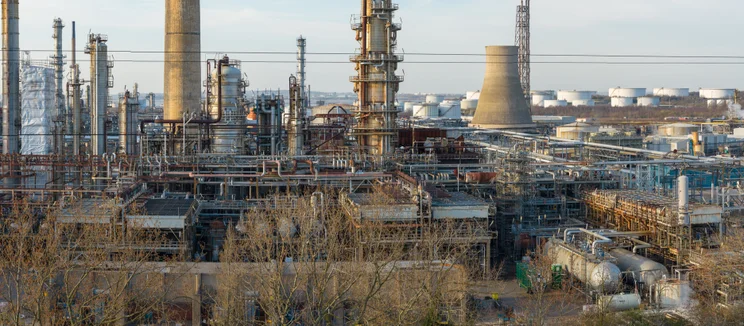
The 20% of North Sea oil which is brought here is mainly mixed with other blends of crude and quickly sold on as the basis for a secondary petroleum product, such as methanol. Some of it is also ‘”swapped”’ with other countries for crude we can actually use or refine ourselves.
There is a tiny amount of capacity to refine North Sea oil at the Humber refinery, and this amounts to about 7.7% of the petrol available in stations in the UK. The remaining 92.3% of the petrol at garages is imported from Norway or the US.
We can’t afford to nationalise it
Why doesn’t the UK simply upgrade the refineries to help it use North Sea oil? Because doing so would cost an estimated £80bn, all for a region that has had more than 90% of its resources depleted already.
While gas from the North Sea does provide about 10% of the UK’s primary energy consumption (that is the energy source before it’s processed) and accounts for about 30% of the UK’s gas use, we still have to buy it at market prices from the private sector. Buying North Sea gas that’s been privately extracted costs the government about £15bn a year. The rest of our gas is imported from Norway, the US (in the shape of liquified natural gas, called LNG) and Qatar.
Investing in renewable and clean energy would offer a far better return on investment. It’s estimated that between the end of February 2026, at the start of the US-Iran war, to late September 2026, the UK has saved £5.9bn by using wind and solar instead of importing LNG. That is with National Grid in the middle of a massive upgrade and only 5.8% of UK homes having solar panels.
Extrapolating that figure over time, it would take fewer than 20 years to save the cost of upgrading our four refineries. With better storage capacity we would reach and surpass that milestone far sooner. According to a study from UCL, clean, renewable energy has saved UK consumers about £100bn since 2010.
We can’t go back in time and follow Norway’s lead
Essentially, if you want to know why the North Sea is a dead end for the UK’s energy needs, you have to go back to the start and the moment it was sold. It raised about £1bn in 1985, but the government missed out on a possible £400bn that it might have had if it had chosen to keep it in state hands.
That is exactly what Norway did with its shelf of the North Sea. The Norwegian parliament voted to establish Statoil, a state-owned company to drill in the North Sea. This company was partially privatised when it floated on the stock market in 2001, but the Norwegian state still owns 67% of it. In 2018 it was rebranded as Equinor.
Similarly to the UK, Norway exports almost all of its crude oil from the North Sea. Also similarly to the UK, it doesn’t refine it as it does not have the infrastructure. The big difference is that Norway does not rely on gas or oil for its energy and so doesn’t need to import huge amounts of it.
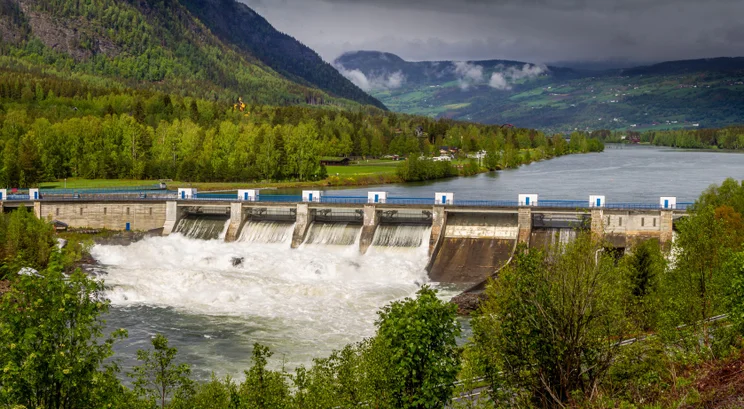
In fact, about 88% of Norway’s energy is from hydropower, a clean and renewable energy source that does not depend on international prices. As a result, Norway is almost entirely energy independent.
In 1990 Norway used the surplus revenues generated from the North Sea to launch the Government Pension Fund Global, a sovereign wealth fund that is now the largest in the world at £1.6tn. That is almost double the size of the Pension Investment Fund, the sovereign wealth fund of Saudi Arabia.
The domestic wing of Norway’s sovereign wealth fund is used mainly to protect Norway against price volatility but also to invest in its generous welfare state. Its foreign portion puts huge amounts into renewable energy projects around the world.
While the UK has made billions from tax revenues since the 1980s, it is a paltry sum when compared to Norway’s sovereign wealth success. If Norway proves anything, it is that it is possible to be energy independent without using gas or oil for your domestic needs, as long as you look ahead.
What should the government do instead?
The debate over North Sea drilling and energy bills misses the point, because only clean and renewable energy will keep the UK’s costs down and help solve the cost-of-living crisis. That means getting as many solar panels on roofs as possible and helping people replace boilers with heat pumps. Getting away from oil and gas, not running towards it, is what Andy Burnham needs to do.
These are the things he should concentrate on instead:
- Upgrading the National Grid so that it can cope with the clean energy our wind and solar farms are generating
- go big on plug-in solar panels to help those who can’t afford roof panels to generate cheap and clean electricity.
- Release details of the Warm Homes Plan and make sure it is as easy as possible for people of all incomes to access solar panels, batteries, insulation and double glazing
That would be a good start to making the UK energy independent. Quite simply, Fahnbulleh’s decision will do nothing to bring down our energy bills. Only pursuing clean and renewable energy will do that.


