


We may receive a fee from trusted installers when you request a quote, or a commission when you buy through links on our site. This helps us keep our content independent, well-researched and up to date – Learn more
- Andy Burnham is set to replace Sir Keir Starmer in Number 10
- Former Mayor of Greater Manchester should support clean energy
- Will he bring down our energy bills?
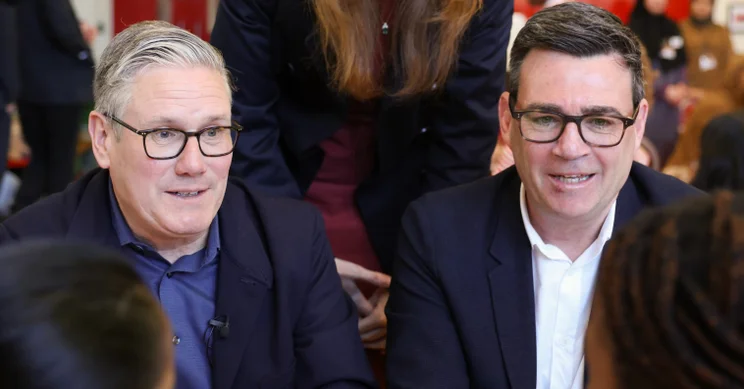
Andy Burnham is almost certainly going to be our next prime minister, but what does that mean for our energy bills?
There’s no getting around the fact that the task of reducing energy bills long term is not just challenging, it’s a gargantuan problem. Imagine trying to add new brakes to a car while it’s hurtling down the motorway at top speed, all the while with very loud passengers shouting that the old, broken brakes are still perfectly okay.
Perhaps that’s a bit dramatic, but it sums up quite well how hard it is to build enough clean energy capacity fast enough to free us from the yoke of fossil fuel reliance, while keeping the rest of the country running at the same time.
If and when he enters Number 10, one of Andy Burnham’s biggest challenges will be to keep the UK on the path towards energy independence.
As anyone without a vested interest in fossil fuels will tell you, the only way to do it is for the UK to produce more cheap and clean power. Only then will we be free of the ballooning energy price cap (currently £1,862), continuing to push millions of people into fuel poverty.
The policies, such as commitment to net zero and the Energy Independence Bill, are already there. The hard thing is delivery. Reform UK isn’t committed to it, predictably demanding we drill into the almost-empty North Sea for a few smidgens of oil and gas instead of using abundant solar, wind and electricity.
The question is: will Andy Burnham be able to do any better? The good news is that, based on his record, we believe he will. Why? Andy Burnham is a big fan of clean energy, particularly solar.
Community support for solar
Perhaps the biggest tick against Andy Burnham’s name is his support for solar community schemes. As Mayor of Greater Manchester, he backed the launch of Solar Together Greater Manchester.
This is a region-specific community scheme designed to help households buy solar panels at lower prices. It kicked off in 2019, two years after Andy Burnham became Mayor of Greater Manchester and it let pre-vetted solar panel installers bid for installations, the idea being that this would drive down prices.
At the launch of Solar Together Greater Manchester, Andy Burnham described climate change as “the biggest challenge we face in the world today”.
In 2019, under his leadership, Greater Manchester declared a ‘climate emergency’. In 2024, he launched a new five-year plan to help make the city carbon neutral by 2038, which included a target to build 30,000 affordable net-zero homes.
This sounds fantastic, and it suggests an Andy Burnham Government would keep much of what the current administration has done to support clean energy. But how successful was Andy Burnham in rolling out solar panels in Greater Manchester while he was mayor?
Despite his clear support for renewables, surprisingly few MCS-certified solar PV systems were installed in Greater Manchester between May 2017 and June 2026, the time in which he was mayor.
According to MCS data, a total of 41,797 solar PV systems were installed in that time. That’s 30.4% below the amount installed from January 2009 to April 2017, which saw 60,125 installed.
This isn’t Andy Burnham’s fault: as mayor there is little he can do about how generous grants are, but as prime minister he would have huge sway, particularly over the Warm Homes Plan.
Solar Together is already a nationwide-initiative, but Andy Burnham’s support of it in Manchester could be a sign that he sees more community-led schemes as being the main way the state helps people install solar panels.
What it definitely does suggest is that, under Andy Burnham, the UK would not slow down its efforts to get solar panels on roofs.
Don’t sacrifice energy for defence
There’s obviously a difference between being Mayor of Greater Manchester and being prime minister. For one thing, there’s no one calling for the Mayor of Greater Manchester to drill in the North Sea. Another thing is that, as prime minister, he’ll have to balance help for energy upgrades with other budgets, such as defence, the NHS, or welfare.
Defence is likely be the biggest area of government spending Andy Burnham will have to balance. It was the defence budget, or lack of one, that finally torpedoed Keir Starmer’s time in Downing Street. The new £15bn defence budget, announced on 30 June, includes £2bn from the budget for energy.
We don’t know what this means for the Warmer Homes Plan, but it is a worry. The country obviously needs a strong military, but real security can only be achieved if we’re not reliant on importing oil and gas. And no, that isn’t an invitation to drill in the North Sea, which is almost empty, privately owned, and far too small to make even the tiniest dent in wholesale prices.
This is what Andy Burnham can do to bring down energy bills:
Make electricity cheaper
It sounds easy, and while it might not be straightforward, there are things Andy Burnham’s Government could do. Policy costs could be taken off energy bills, we could move from marginal pricing to nodal pricing. However it’s done, electricity needs to be made cheaper in the long term.
Speaking to The Eco Experts at the Octopus Tech Energy Summit in June, Camilla Born, CEO of Electrify Britain, said electricity is “artificially more expensive than gas”, and that this was stopping people from accessing the technology needed to keep bills down long term, such as heat pumps, which have high upfront costs already.
Speed up the upgrade to National Grid
Demand for electricity is set to double by 2050, and the National Grid is already in the middle of the biggest upgrade in its history, to decarbonise by adding 35 gigawatts of new power generation. Recent reforms have also tried to get more clean energy projects online quicker. Every effort should be made to not slow this down.
Don’t sacrifice the Warm Homes Plan
It’s the biggest home upgrade project in UK history, but the new defence budget threatens at least part of the Warm Homes Plan as £2bn is being taken from energy to pay for the armed forces. It’s only through upgrading people’s homes that we will get bills down long term. Camilla Born says the Government has been “far too slow” in getting the Warm Homes Plan ready for people to take advantage of.
Don’t forget insulation
It’s easy to forget that insulation, while a lot less attention-grabbing than solar panels or heat pumps, is vital for cutting down on household emissions. The ECO4 scheme is being scrapped, but that could leave a big funding gap for insulation.
Go big on plug-in solar
This could genuinely be a game-changer for households as it allows them to get around the upfront costs of installing solar panels on their roofs and not be dependent on government grants.
The Government has changed safety laws to allow people to use plug-in solar panels and it is currently talking to retailers about making them available in supermarkets. Camilla Born expects plug-in solar panels to catch on because they make cheap electricity easier to access for more people, especially those in flats. Andy Burnham should make this a priority.
Give batteries a boost
Quite simply, help more households install domestic storage batteries. This will give homeowners the chance to take advantage of flexible pricing by charging their batteries during off-peak hours and using that stored energy when electricity is most expensive. According to Camilla Born, this could be particularly helpful for households struggling to pay their energy bills.
We believe Andy Burnham’s track record and public statements make him a good bet for cheaper, cleaner energy. If he continues what the Government has done already, and commits to clean energy, bills will eventually come down in the long term.
He must resist any calls from Reform UK to drill in the North Sea and must not sacrifice the Warm Homes Plan for easy political wins in the short term. He says he wants more state control over energy and utilities, which also sounds positive, but we don’t know any specifics at this time. Whatever direction his Government takes, clean energy must be at the centre of it.


