We may receive a fee from trusted installers when you request a quote, or a commission when you buy through links on our site. This helps us keep our content independent, well-researched and up to date – Learn more
- Report from IEA shows a lot of money going into perovskite solar cells
- Perovskite solar cells are a lot more efficient than common silicon ones
- Energy independence and security are the biggest drivers
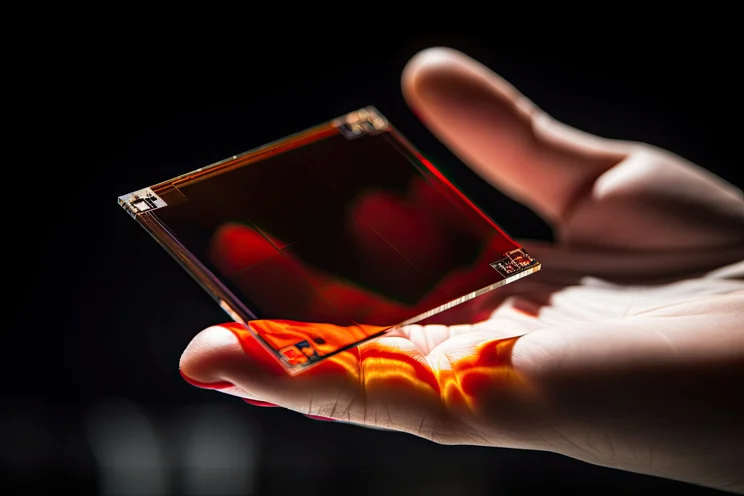
Solar panels could soon be much more efficient as the global clean technology world invests heavily in perovskite solar cells, in response to fears around energy security and costs.
The State of Energy Innovation 2026 report from the International Energy Agency (IEA) shows that there have been more than 150 clean energy technology breakthroughs globally in the past 12 months, with perovskite and storage batteries being the most popular.
This is important for homeowners and billpayers because perovskite solar cells can generate a lot more solar energy than normal silicon cells, which account for 95% of the solar panels available to buy.
For example, a silicon solar cell has an average efficiency of 20-22%, with the newest models reaching 24%. This means a single panel can produce a maximum of 450kWh a year.
By comparison, a perovskite solar panel can create as much as 520kWh a year as some have demonstrated 30% efficiency. If perovskite solar panels, which only account for a tiny amount of the global solar panel market, become more common, it will mean more energy savings for homeowners. Not only does this mean more energy, it means homeowners have to buy fewer solar panels to get the same result, which means less pressure on supply chains.
We’ve covered a number of solar products in the past year, all of which are designed to generate more energy through better efficiency.
Most recently there was the perovskite ‘flexible’ solar cell from Chinese manufacturer Longi, which recorded an efficiency level of 33.5%
There was also the research breakthrough at the University of New South Wales in Australia, which found that a process called ‘singled fission’ could increase efficiency by 10% and make solar panels last up to four years longer than they usually do.
Most interestingly of all was in October last year, when we reported on Japan’s ‘solar super-panel’, a perovskite solar panel more powerful than 20 nuclear reactors and designed to generate clean energy in big cities.
The report from the IEA said that 70% of all solar cell patents are now for perovskite technology, and that it expects it to “expand the market” rather than replace common silicon cells. China remains the leading country when it comes to perovskite cell innovation.
On top of that, batteries accounted for 40% of all 2023 energy patents, with preliminary data suggesting an even higher percentage in the following years.
In total, the world spent $55 billion on clean energy technology last year. This is down 2% on 2024, but new growth areas are cropping up, with funding for nuclear fission, geothermal energy, carbon dioxide removal and low-emissions industries on the rise.
China is spending big on energy storage and industrial efficiency, while Japan, highly specialized in batteries, is making advancements in perovskite solar, hydrogen-based fuels and fusion. The EU spent about 0.08% of its GDP on public energy R&D.
Fatih Birol, IEA Executive Director, said that energy innovation has become “a strategic priority for governments around the world.”
“With energy security and industrial competitiveness at the top of the agenda, countries that sustain investment in research, demonstration and early deployment will be best positioned to lead the next generation of energy technologies.”
How efficient are your solar panels? If you’ve installed solar panels, we’d love to hear how much more energy efficient they’re making your home. Let us know by emailing us or connecting on Instagram or TikTok.