Government launches £1bn Local Homes Plan to cut energy bills
Government launches £1bn Local Homes Plan to cut energy bills
Written By
Reviewed By
Published on
10 February 2026
We may receive a fee from trusted installers when you request a quote, or a commission when you buy through links on our site. This helps us keep our content independent, well-researched and up to date – Learn more
The Local Homes Plan is designed to support locally-owned clean energy projects
The up to £1bn investment is the largest in history
Community ownership is the norm in other countries
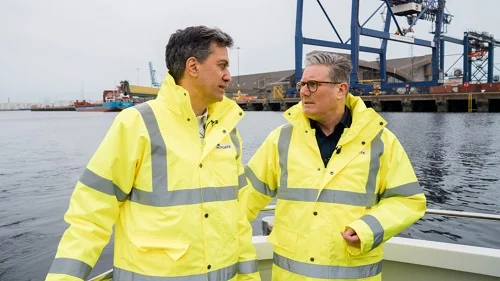
The plan, according to secretary of state for energy security and net zero Ed Miliband, delivers the biggest public investment in community energy in UK history
Communities across the UK will be able to own and control their own clean energy projects, thanks to an up to £1bn funding as part of the Local Homes Plan, from the Department for Energy Security and Net Zero (DESNZ).
The newly-launched Local Homes Plan will support locally-owned clean energy generation projects such as solar on community buildings, like libraries and leisure centres, as well as support local projects to reduce energy bills.
Today we publish the Local Power Plan, the biggest investment in community energy in British history.
We’re empowering communities to take control of their energy, to drive wealth and power back into their local areas. pic.twitter.com/Z9YGVXieIn
The plan, according to secretary of state for energy security and net zero Ed Miliband, delivers the biggest public investment in community energy in UK history. Miliband described it as a “transformative tool” that will make included areas wealthier.
“Community ownership is already transforming Britain through community-owned pubs, leisure centres and libraries; and community-owned energy is the norm in other countries,” Miliband said.
In Germany, around two-fifths of installed renewable energy generation capacity is citizen-owned. Miliband said that despite its huge potential, community energy in the UK has been held back by a lack of funding, advice and central government support.
1/2
Alongside @GBEgovuk we have published the Local Power Plan – the biggest investment in community energy in British history.
We are backing community energy with up to £1bn, giving people the power they need to take back control of their energy. pic.twitter.com/wwlmIUMSgD
— Department for Energy Security and Net Zero (@energygovuk) February 10, 2026
“Britain’s drive for clean energy is about answering the call for a different kind of economy that works for the many, not just the wealthy and powerful in our society. Local and community energy is at the heart of our government’s vision,” he said.
“By giving local people the chance to take control of their energy, this government is making a fundamental choice to transfer wealth and power back to communities across Britain.”
Great British Energy aims to support an initial 1,000 clean energy projects, helping to deliver clean power by 2030 while improving energy security for the whole country and protecting bill payers. The projects will be developed and led by communities or local governments who best know how to deliver for their area or alternatively allow people to buy shares in nearby larger-scale renewable projects.
Written By
Tamara BirchNewsletters and sponsored content editor
Tamara is a journalist with more than six years experience writing about environmental topics. This includes advising small businesses on cost-effective ways tom become more sustainable, from installing to solar panels and heat pumps and reducing waste. She has used her journalist and research skills to become highly knowledgeable on sustainable initiatives, issues, and solutions to help consumers do their bit for the environment – all while reducing monthly costs. Now, she’s using this experience to advise homeowners on the benefits of installing low-carbon technologies. She is also qualified in offering innovative initiatives to improve sustainability practices in businesses, from advertising to marketing and publishing.
Her passion for sustainability and eco-friendly solutions stems from a long obsession with nature and animals and ensuring they feel looked after. In her free time, Tamara enjoys reading fantasy novels, visiting the gym, and going on long walks in new areas.
Max joined The Eco Experts as content manager in February 2024 and became deputy editor in 2025. He has written about sustainability issues across numerous industries, including maritime, supply chain, finance, mining, and retail. He has also written extensively for consumer titles like City AM, The Morning Star, and The Daily Express.
He has represented The Eco Experts on national television several times, including the BBC’s Sunday Morning Live and ITV Tonight .
In 2020, he covered in detail the International Maritime Organisation’s (IMO) legislation on sulphur emissions and its effects on the global container shipping market as online editor of Port Technology International.
He also explored the initiatives major container ports and terminals have launched in order to ship vital goods across the world without polluting the environment.
Since then, he has reported heavily on the impact made by environmental, social, and governance (ESG) practices on the supply chain of minerals, with a particular focus on rare earth mining in Africa.
As part of this, in 2022 Max visited mines and ports in Angola to hone in on the challenges being faced by one of the world’s biggest producers of rare earth minerals.
His most recent sustainability-related work came much closer to home, as he investigated the eco-challenges faced by independent retailers in the UK, specifically looking at how they can cut emissions and continue to thrive.
Max lives in South London and is an avid reader of books on modern history. He has also recently learned to play the game Mahjong and takes every opportunity to do so. He is also yet to find a sport he doesn’t enjoy watching.
How much do plug-in solar panels cost?
Plug-in solar panels cost from £599 to £1189, with Argos being the first retailer in the UK to stock and sell them.