We may receive a fee from trusted installers when you request a quote, or a commission when you buy through links on our site. This helps us keep our content independent, well-researched and up to date – Learn more
- Plug-in solar panels could save James in London about £100 a year
- The big attraction of plug-in solar panels is their ability cut energy bills
- They can be put in a garden, balcony, or anywhere with space
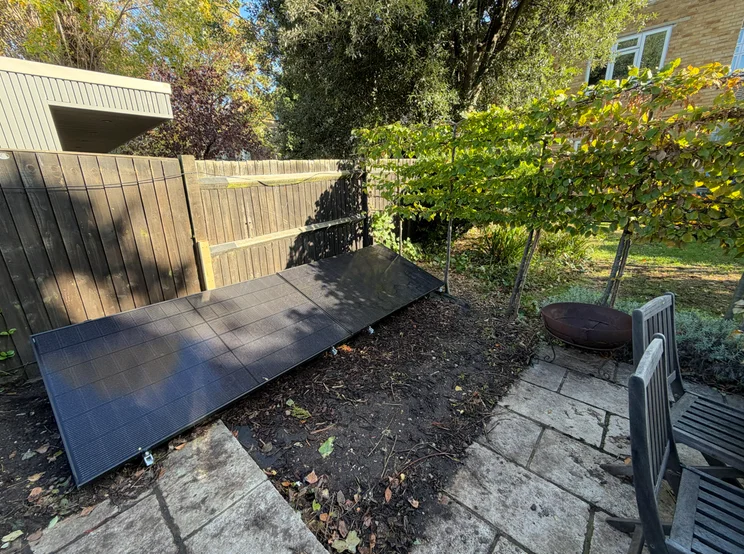
Plug-in solar panels are one of the most exciting new bits of technology on the market. Thanks to a change in the law back in August, it’s now possible to plug solar panels straight into your socket without the hassle of a rooftop installation.
That means billpayers who might not have been able to access solar energy because they either can’t afford the upfront cost or because they don’t have roof space can now shave hundreds from their energy costs.
We spoke to Octopus Energy plug-in solar panel customer James from London about his experience with plug-in solar. James told us that the big attraction was cutting energy bills. It’s no secret that the energy price cap is going to increase again in January, and that means any saving extremely valuable. he says his plug-in solar panels will save him plenty.
Why did you install plug-in solar panels?
“With the rising cost of energy, I wanted to do something. I live in a ground-floor flat with a large garden, so I’m not able to put solar panels on the roof.
“I’m very pro-green energy and really interested in the technology, but until now I haven’t been able to benefit from it. That’s where my interest in plug-in solar came from, and when it became available, I wanted to give it a try.”
“One of the big attractions was being able to access solar even though I live in a flat. Rooftop solar just isn’t an option for us, whereas plug-in solar gives us a way to generate some of our own electricity using the space we do have.”
Where did you put your plug-in solar panels?
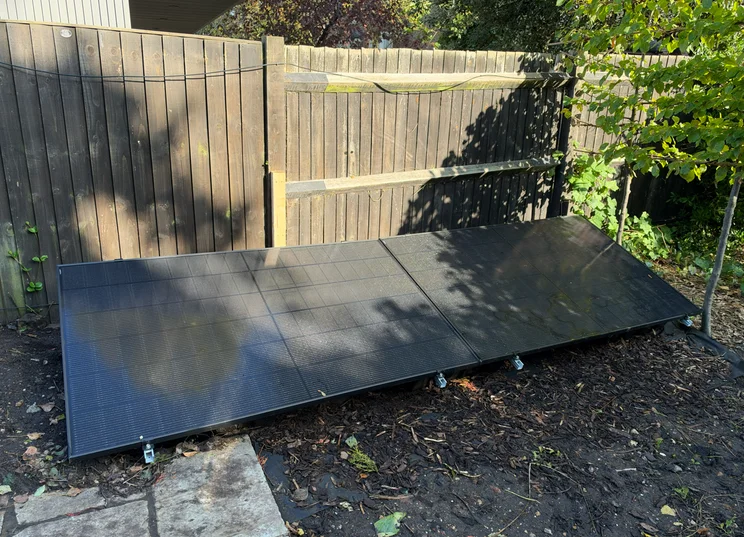
“It’s quite a big system, so I had to find somewhere in the garden where it would work and, importantly, where my wife was happy with it too. I’m now rearranging the garden around it so it fits in properly.”
How much do you think your plug-in solar panels will save you?
“I’m looking at what energy might cost over the next 12 to 18 months and thinking it could get really expensive.
“Plug-in solar isn’t a huge-capacity system, but it gives me a way to generate something myself and offset a little bit of the rising cost of energy. From around March onwards it should really start producing, and I think it could save us about £100 a year.”
“We’ve always been quite green-minded, but saving money is a big part of it too. We have an electric car and I use a cargo bike to take the kids around, and I’m on an Octopus Tracker tariff so we try to use more energy on windy days. I like being able to think about where our energy is coming from as well as what it costs.”