We may receive a fee from trusted installers when you request a quote, or a commission when you buy through links on our site. This helps us keep our content independent, well-researched and up to date – Learn more
- The geothermal plant reaches three miles below the earth’s surface
- It will help drive turbines to generate 3MW of renewable electricity
- There are around 30,000 ground source heat pumps already in the UK
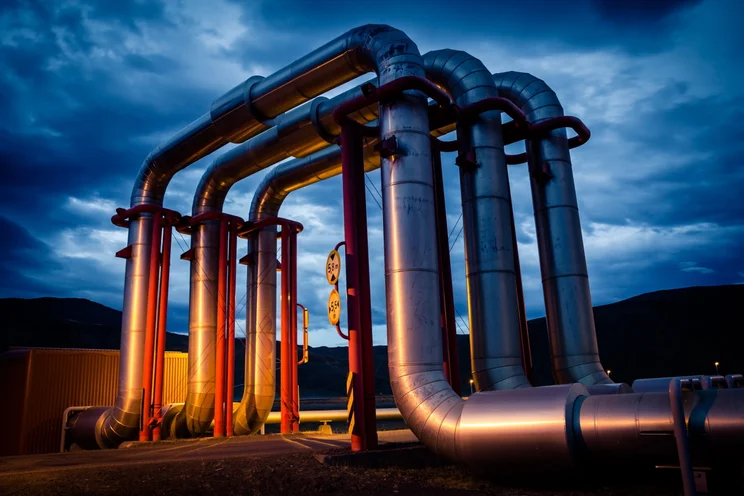
Around 10,000 homes will soon be powered by clean energy from the earth after the UK’s first geothermal power plant went online.
The plant, on the United Downs site in Cornwall, will produce 3 megawatts (MW) of energy a year, creating energy from water that has been super-heated by rocks 5,000 metres underground. Building the plant meant Geothermal Engineering Ltd (GEL) had to drill the deepest on-shore well in the UK.
As well as electricity, it will also be the UK’s first domestic supply of lithium, which is an important mineral used in the construction of low-carbon technology.
The plant has so far cost £50m, funded by private investors and a further £15m from the European Development Fund.
Anne Murrell, head of industry body, Geothermal UK, said that while there is a “great energy resource, underneath our feet”, the UK is not making the most of it because the government isn’t doing enough to help the geothermal industry.
“The challenges we have include investment, and to unlock investment and increase investor confidence, we need a supportive government policy framework,” Murrell commented. “Geothermal needs to be recognised by government as a key part of our energy strategy.”
Ryan Law, CEO, GEL, said he was tremendously excited that “after 15 years of hard graft, difficulties, we’re finally there,” and explained how geothermal power was “really important” for the UK due to no price fluctuations.
“Unlike other renewable sources like wind and solar we are constantly on, 24/7 electricity.”
According to the British Geological Survey (BGS), the plant was a “major step forward” for geothermal energy, but it would be hard to create clean energy from the earth elsewhere because of high drilling costs.
On top of the United Downs plant, GEL is hoping to build two more with a potential 10MW of geothermal energy by 2030. While Cornwall is ideal for geothermal drilling due to its geological composition, it is also feasible to drill in Scotland and the Northeast of England, but there are no approved plans to do so.
In order to meet the energy needs of up to 10,000 homes, power generated at United Downs has been sold to Octopus Energy, who will deliver it via the national grid.
An Octopus spokesperson called the project “a genuine game-changer,” saying that the UK is tapping into ‘always-on’ green power which will provide a “steady stream of clean, home-grown energy.”
The International Energy Agency (IEA) explained that global investment in deep geothermal for electricity is up 80% year on year since 2018, mainly because of electricity for data centres.
As well as geothermal energy, these projects could also be a source of necessary minerals. The new plant will produce 100 tonnes of lithium carbonate, alongside heat, becoming the first commercial source of a critical mineral in the production of electric batteries. This will be enough for batteries in 1,400 electric vehicles (EVs) annually, but GEL has plans to upscale to 18,000 tonnes per year.
How is geothermal energy made?
Around 300 million years ago, magma from beneath the Earth’s surface cooled, forming large bodies of igneous rock with trace amounts of naturally radioactive elements, including uranium, thorium, and potassium. Over millions of years, these elements give off heat, known as a granite-hosted geothermal system.
Dr Monaghan, head of geothermal, British Geological Survey, explained: “You drill deep boreholes into the ground, and then fractures within the granite rock are used to circulate the water that pick up the heat used for electricity production.”
A great example of geothermal energy is ground source heat pumps, which take heat from the ground and use it to provide heating and hot water. A ground source heat pump only goes 1-2 metres, or 3-6 feet, underground. By contrast the GEL plant has bored three miles below the earth’s surface, where temperatures reach nearly 200°C.