We may receive a fee from trusted installers when you request a quote, or a commission when you buy through links on our site. This helps us keep our content independent, well-researched and up to date – Learn more
Britain generated more 127 TWh of renewable energy last year
Solar panels made up 6% of Britain’s power last year
However, fossil fuel still generation increased
Last year, renewable sources including solar, hydro and biomass generated more than 127 terawatt hours
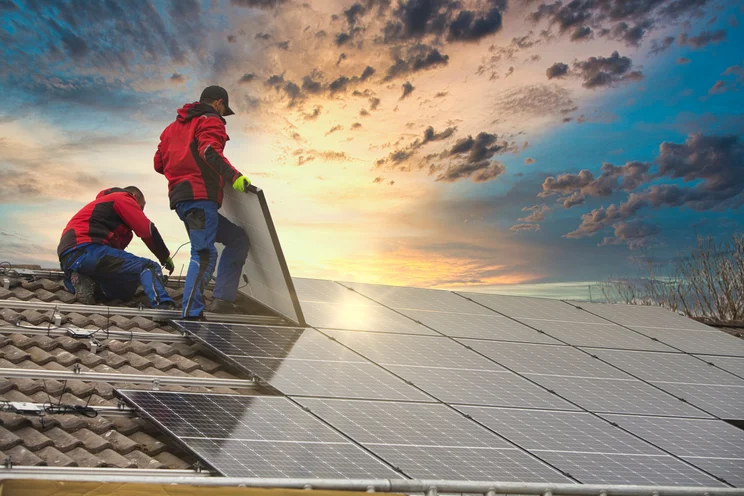
Britain experienced record-breaking amounts of renewable energy in 2025, thanks, in part, due to the growth of solar panel installations.
According to analysis from the BBC, Britain’s solar-powered electricity rose by almost a third in 2025, pointing to data from the National Energy System Operator (NESO).
Last year, renewable sources including solar, hydrogen and biomass generated more than 127 terawatt hours (TWh) of electricity in the UK, smashing the previous record of 119 TWh in 2024.
Solar panels contributed more than 18TWh, which is more than 6% of the country’s electricity, a growth of over 4TWh, according to the BBC. Put simply, solar was the fastest-growing renewable energy source in Britain in 2025 due to their falling solar panels costs and the fact they can bring down energy bills.
During July, solar was producing more than 40% of the country’s electricity at times. By comparison, as recently as 2013, solar didn’t contribute more than 5% at any one time.
Michael Grubb, professor of energy and climate change, University College London, told the BBC that solar is “a bigger part of the system” than expected, pointing to the fall in costs of installation.
Despite the good news, Britain’s electricity grid still relies on fossil fuels, with gas generation increasing from 77TWh last year compared to 72TWh in 2024.
Written By
Maximilian SchwerdtfegerDeputy editor
Max joined The Eco Experts as content manager in February 2024 and became deputy editor in 2025. He has written about sustainability issues across numerous industries, including maritime, supply chain, finance, mining, and retail. He has also written extensively for consumer titles like City AM, The Morning Star, and The Daily Express.
He has represented The Eco Experts on national television several times, including the BBC’s Sunday Morning Live and ITV Tonight .
In 2020, he covered in detail the International Maritime Organisation’s (IMO) legislation on sulphur emissions and its effects on the global container shipping market as online editor of Port Technology International.
He also explored the initiatives major container ports and terminals have launched in order to ship vital goods across the world without polluting the environment.
Since then, he has reported heavily on the impact made by environmental, social, and governance (ESG) practices on the supply chain of minerals, with a particular focus on rare earth mining in Africa.
As part of this, in 2022 Max visited mines and ports in Angola to hone in on the challenges being faced by one of the world’s biggest producers of rare earth minerals.
His most recent sustainability-related work came much closer to home, as he investigated the eco-challenges faced by independent retailers in the UK, specifically looking at how they can cut emissions and continue to thrive.
Max lives in South London and is an avid reader of books on modern history. He has also recently learned to play the game Mahjong and takes every opportunity to do so. He is also yet to find a sport he doesn’t enjoy watching.
Tamara BirchNewsletters and sponsored content editor
Tamara is a journalist with more than six years experience writing about environmental topics. This includes advising small businesses on cost-effective ways tom become more sustainable, from installing to solar panels and heat pumps and reducing waste. She has used her journalist and research skills to become highly knowledgeable on sustainable initiatives, issues, and solutions to help consumers do their bit for the environment – all while reducing monthly costs. Now, she’s using this experience to advise homeowners on the benefits of installing low-carbon technologies. She is also qualified in offering innovative initiatives to improve sustainability practices in businesses, from advertising to marketing and publishing.
Her passion for sustainability and eco-friendly solutions stems from a long obsession with nature and animals and ensuring they feel looked after. In her free time, Tamara enjoys reading fantasy novels, visiting the gym, and going on long walks in new areas.