


We may receive a fee from trusted installers when you request a quote, or a commission when you buy through links on our site. This helps us keep our content independent, well-researched and up to date – Learn more
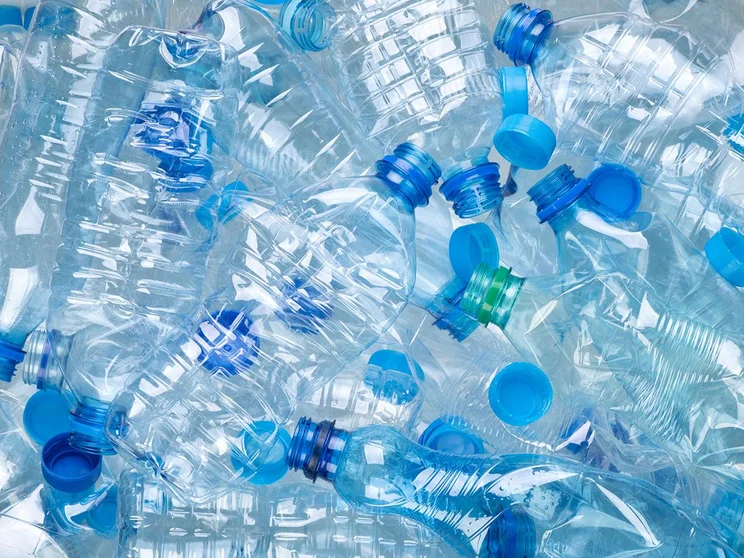
Recycled plastic bottles could one day be used to power solar batteries, electric vehicles, smartphones and much else, according to researchers at Penn State in the US.
How do you turn plastic into a battery for a solar storage system? By turning the material into crystals…sort of.
The study, the results of which were published in Diamond and Related Materials, converted waste polyethylene terephthalate (PET, for short). This formed into “large, well-ordered crystallites” or “microscopic regions of well-aligned carbon layers”, Penn State said.
These properties, Penn State said, “exceeded those of commercial natural graphite samples, indicating that PET-derived material had a more ordered crystal structure”.
What does this mean? It means that plastic bottles, when broken down, can be used in batteries just as natural graphite is used to power energy storage systems, smartphones, laptops and even EVs.
Graphite is so important to the world of electronics and energy systems that US, the UK, and the EU all consider it a critical mineral, alongside lithium, nickel, cobalt and manganese. It’s a crucial part of lithium-ion batteries because it’s the anode material that stores and releases electrical charges.
As well as being a critical part of clean energy and electronics, PET is also one of the most common plastics on Earth, and much of it, despite plastic bottles being put into recycling bins, ends up in landfill.
That begs the question: how did the researchers turn plastic bottles, which would otherwise have been thrown away, into something that can store clean energy?
They mixed together shredded PET plastic with small amounts of graphene oxide and heated it through “a carefully controlled thermal process” and then “reorganised the carbon atoms within the plastic into highly ordered graphitic structures”.
They claim to have done so by using “graphene-based additives” to promote what Penn State calls “graphitisation without introducing metallic contaminants”. This essentially means the process uses fewer chemicals and creates less waste.
This means it could be possible to “simplify future manufacturing and reduce the environmental footprint associated with producing battery materials”. This means that not only could more batteries be produced in a shorter space of time but that doing so would be less damaging to the environment.
Shakshi Sekar, lead author of the study and a doctoral student in Penn State’s John and Willie Leone Family Department of Energy and Mineral Engineering, said that the work shows that PET plastic can be a “valuable resource for producing graphite”, which is “essential for modern battery technology”.
“Instead of viewing plastic as a disposal problem, we can see it as a resource that helps support clean energy technologies,” Sekar remarked.


