


We may receive a fee from trusted installers when you request a quote, or a commission when you buy through links on our site. This helps us keep our content independent, well-researched and up to date – Learn more
- Bills have increased by more than 26% since 2013
- Cornwall Insight says the price cap will be £443 higher on January 1st
- If they’re right, bills will have increased by 45% since the release of GTA V
There are two big stories this week: Cornwall Insight’s final pre-price cap prediction and the release of GTA VI.
No, before you ask, we’re not going to review the game (your editor doesn’t own a PS5 or any game console for that matter. If you’re interested in tech reviews, take a look at our sister site Expert Reviews), but there is a connection between the two.
First of all, Cornwall’s prediction makes grim, if unsurprising, reading. The price cap will increase by £443, or close to it, on January 1st. That’s an increase of 26%, and it means a price cap of £2,166 until 31st March 2027.
We know why bills are going up: our dependence on the wholesale price of gas. It’s not, as Richard Tice from Reform UK would have you believe, a result of green policies which amount to a tiny amount of your energy bill.
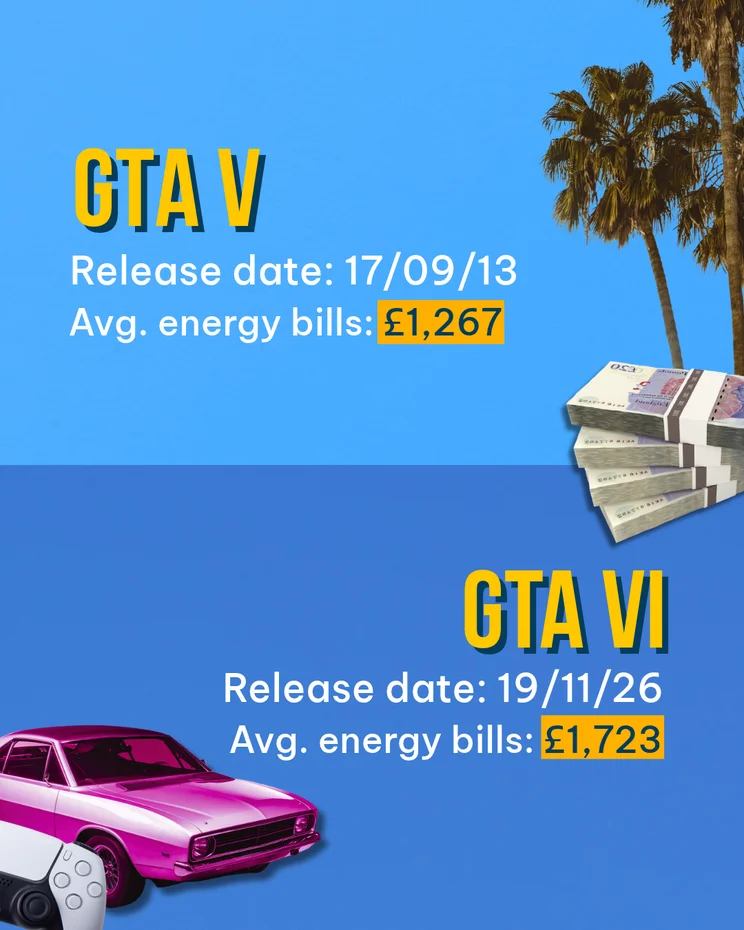
Where does GTA VI fit into this? Because we did some digging to find out the difference in how much we’re paying for energy now compared to when the last game, GTA V, was released on 17th September 2013.
There was no energy price cap back in 2013, but the average household energy bill in the UK was £1,267.
The current energy price cap of £1,723 is 26% higher than the average energy bill when the last GTA game was released.
If Cornwall Insight is right, and they usually are, the energy price cap will by 41.5% higher than the average bill in September 2013. This is largely driven by 213% increase in the price per therm of UK gas since 2013.
That is a shocking statistic and proof of how much has changed in the past 13 years. Are the government doing enough? At this time we’d argue not, having scaled back support for heat pumps through the Boiler Upgrade Scheme and putting VAT on clean tech, including solar panels and batteries.
However, there is good news as well. This week we published a case study from one of Octopus Energy’s plug-in solar customers. James from London says the technology has already cut his bills and he expects to save hundreds over the coming years.
That shows while the numbers may be unsettling, we can get our bills down as long as we know what technology is available to us. Solar panels, heat pumps, and batteries are all proven to make energy cheaper, and plug-in panels are a new weapon in the fight against booming bills.
The length of time it took GTA VI to be available became something of an internet joke in the time between September 2013 and today. From an energy bill POV, the world has changed, but there is also more available to us now to keep costs under control.
This time next week, we’ll know for sure how bad the price cap hike is going to be. However, don’t be disheartened: with clean technology you have the cheat code to cheaper bills.


