We may receive a fee from trusted installers when you request a quote, or a commission when you buy through links on our site. This helps us keep our content independent, well-researched and up to date – Learn more
- You could potentially save hundreds of pounds by using solar film
- The savings depends on the size of your window, overall efficiency of your home and type of glazing
- You might need planning permission
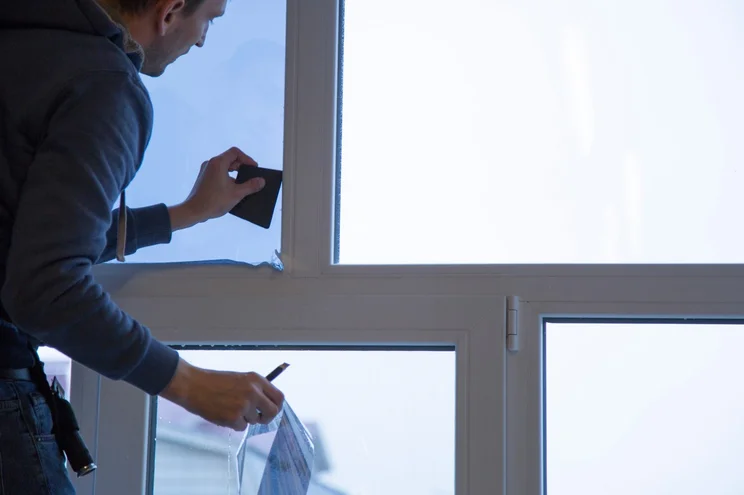
Solar film is an easy way to save money and keep your home cool in the summer without a big upfront cost or replacing your windows. The right kind of solar film blocks out 99% of UV and cuts down heat build up and glare.
How much can you save on your energy bills? This depends on if you have double-(or triple) glazing and the overall efficiency of your home, but some estimate you could cut your bills by as much as 30%.
Apply that to the current energy price cap of £1,862, that’s £558 you could save by putting solar film on your windows. That’s a great return on something that costs as little as £15 per square metre.
But what kinds of solar film are there and what do you need to think about before you buy?
How does solar film work?
Essentially, solar film is a flexible, transparent sheet that you can apply directly to a thin layer of glass, such as a glass door or window. It keeps your home cool in the summer, cuts down the glare caused by sunlight.
You can get solar film with a reflective or tinted finish, meaning you keep your privacy.
Isn’t that basically the same as a blind or a curtain?
No, it sounds similar, but solar film has a big advantage over a blind or a curtain in that you still get loads of natural light into your home without the excess heat or the UV rays.
Solar film contains:
- metal or ceramic layers that block too much sunlight getting into your house by reflecting it or absorbing it
- Specific radiation-blocking materials
What types of solar film are there?
There a few types of solar film you could buy.
- Ceramic films – these are often considered the most premium available. Instead of using dyes or metals, they have ceramic particles to block heat and UV rays while maintaining high visibility and durability.
- Dyed films – these reduce glare and provide some heat reduction while darkening windows. They don’t reduce heat as much as other types of solar film.
- Low-E films – a reliable choice for all seasons, they can also keep your home warm in the winters
- Metalised films – these reflect solar away from the window by using microscopic metallic particles. Be careful through because
- Privacy films – these provide the same benefits as the others but they do limit visibility during daytime hours
- Reflective films – these do the same but have a mirror image on both sides
- Self-healing films – repair themselves if accidently scratch it. This only works for small marks.
- Spectrally selective films – these block infrared heat and UV rays while allowing a large amount of visible light to pass through.
How much does solar film cost?
| Solar film type | Supply only (per m2) | Professionally installed (per m2) | Typical per window range |
|---|---|---|---|
| Standard internal reflective | £12-18 | £40-65 | £90-200 |
| High-performance internal | £18-30 | £60-100 | £150-350 |
| External-grade solar film | £25-40 | £80-140 | £200-250 |
| Ceramic/nano-ceramic | £30-50 | £100-180 | £250-600+ |
Can I install solar film myself?
Yes, you absolutely can apply solar film yourself. Installing solar film will actually save you a bit of money. This is how you do it:
- Clean your glass thoroughly – this is really important, your solar film won’t work as well if the glass is greasy or dirty. Make sure to spray the glass with soapy water.
- Carefully measure how much film you need – a good rule is to cut slightly more than you need (basically a couple of inches taller and wider than your door/window. This allows for any adjustments you have to make when applying it.
- Peel off the backing – be really careful when you do this to not tear the film
- Apply the film to the glass – make sure to keep it straight and stick it adhesive side first
- Get rid of the air bubbles – if you have a squeegee window cleaner, use it to smooth out any air bubbles. If you leave them behind the solar film won’t work as well.
- Cut off any excess – if you cut off more than you needed, this is where you make sure you trim your solar film down so that it fits your window or door perfectly.
Do I need double glazing to get solar film?
No, you don’t need double glazing before you get solar film. In fact it’s probably easier if you don’t because in some types of double or triple glazing, adding solar film can trap heat within the sealed cavity between the panes of glass. This can create thermal stress, which can cause fogging between the panes, seal failure, or even glass to crack. This is particularly the case with triple glazing, for which solar film will not be suitable.
Whether solar film is suitable for your windows depends on the glass you have. If you have:
- Toughened or safety double glazing – you can very likely use any kind of solar film, including reflective or moderately dark tints
- Non-toughened standard double glazing – it’s better to use a lighter, neutral film instead of a darker one
- Low-E coated double glazing – check the compatibility of the specific film
- Triple glazing – don’t use solar film
If you’re unsure about what type of glazing you have, ask your installer.
Can I get solar film if I rent or live in a listed building?
Yes, if you rent your property getting solar film shouldn’t be a problem because solar film can be removed and doesn’t leave any lasting damage. However, you should always ask your landlord first as your tenancy agreement might stipulate that you can’t add anything.
Do I need planning permission to install solar film?
It’s very unlikely that you need planning permission to install solar film. However, you might need planning permission for solar film installation if you:
- Live in a listed building.
- Live in a conservation area.
- Live in a commercial building.
If you’re unsure, check with your local authority.
Summary
- Solar film can potentially cut your energy bills by £558
- They block out 99% of UV rays
- Don’t use them if you have triple glazing
- The cost will depend on the size of your window or glass door
- You might need permission from your landlord or local council
- Make sure to check what type of glazing you have