We may receive a fee from trusted installers when you request a quote, or a commission when you buy through links on our site. This helps us keep our content independent, well-researched and up to date – Learn more
- You can put a plug-in solar panel, as long as it’s not made from timber wood
- It’s still best to consult an electrician beforehand
- Make sure you have the right cable before installation as well
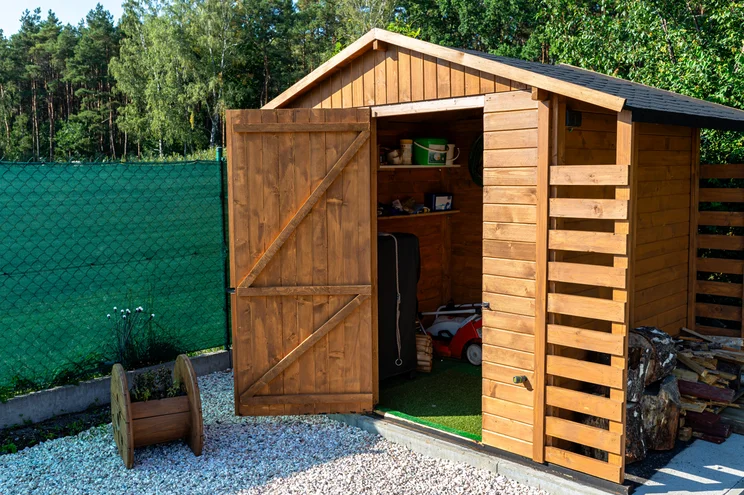
Can you put a plug-in solar panel on a wooden garden shed? The answer is yes, but you need to know exactly what type of material your garden shed is made from before you do so because otherwise plug-in solar might not be suitable.
The most important thing is not to put your plug-in solar panel on wood, particular timer. Why shouldn’t a plug-in solar panel be put on timber wood? Because the inverters can potentially overheat, which causes a fire risk.
According to garden shed expert, Sam Jenkinson, from garden building retailer Tiger, while plug-in solar panels are a really exciting piece of technology, they shouldn’t be installed on a wooden, particularly timber, surface.
“While sheds can seem like a good location for plug-in panels, particularly if the roof gets plenty of direct sunlight, homeowners need to check the small print first,” Jenkinson told The Eco Experts.
The new rules that came on in the 27th August allowing plug-in solar panels contained specific condition that means they cannot be installed on a wooden wall, balcony or enclosure, or on a timber-clad part of the exterior of the dwellinghouse.
“As the vast majority of UK garden sheds are timber-built, this could rule out a straightforward installation for many households, even where the roof and sunlight would otherwise be perfect,” Jenkinson said.
“Unlike traditional rooftop solar, compliant plug-in systems don’t require the same level of professional installation,” Jenkinson said.
While this makes solar more accessible, households should still consult with a qualified electrician if they have older wiring or need a suitable outdoor socket installed first.
Plug-in solar panels have huge potential to cut energy bills. With each kit producing up to 800W, plug-in solar could provide up to a fifth of an average household’s electricity use, and could save households up to £110 a year, with kits priced at around £400-£500 depending on capacity.
Households in Germany, Europe’s leading market for plug-in solar panels, have had huge success installing them on balconies since the law changed to make them more accessible in 2024.
Such has been the success that by the end of 2025, more than one million households have installed plug-in solar panels and by 2045 roughly 5% of Germany’s domestic energy generation could be accounted for by plug-in solar.
However, there is a big difference between the UK and Germany and that’s mainly down to where people live. As many as 61% of the German population live in flats, whereas in the UK that figure is about 21%.
But that doesn’t diminish the UK’s potential for plug-in solar because, as has been pointed out by experts, households here usually have more space, which means more room for the panels.
That includes gardens, garages, and also sheds.
“This is a really exciting area for cleaner energy, but as with any new product, suitability comes down to the individual building, its construction, its intended use, and what the specific product actually requires,” Jenkinson explained.
“As these products are still relatively new, it’s worth speaking to the relevant supplier directly to understand what’s right for your situation.”
“Before installing anything, check the direction of the shed roof and how much shade it receives from nearby trees and buildings. You should also inspect the shed itself, ensuring the structure is in good condition and the roof is strong enough to carry the additional weight.”
“You’ll also need a suitable mains socket to safely plug the solar panel into. The cable run should be short and safe, without extension leads stretching across the garden.”
“Once installed, each system must be registered with your local Distribution Network Operator. It’s also important to check whether you need permission from your landlord, freeholder or your local council before installing.”
What do you need to think about before installing solar panels on a garden shed?
- Make sure the material is not wooden
- Make sure it’s framed using stainless steel mounting bracket
- Inspect the shed itself, ensuring the structure is in good condition and the roof is strong enough to carry the additional weight.
- Check the direction of the shed roof and how much shade it receives from nearby trees and buildings.
- Use suitable mains socket to safely plug the solar panel into. The cable run should be short and safe, without extension leads stretching across the garden.