We receive a small fee from trusted installers when you request a quote through our site. This helps us keep our content independent, well-researched and up to date – Learn more
- Solar battery sizing: key facts
- Understanding usable capacity vs. total capacity (kWh)
- What size solar battery do I need for my solar panel system?
- How do EV chargers and heat pumps change battery requirements?
- Should I buy a large solar battery or a small solar battery?
- Can I have multiple storage batteries?
- Can you use a solar battery to charge an electric car?
- Key considerations before finalising your solar battery purchase
- Summary
- A three-bedroom home will need an 8kW storage battery
- The average cost of a storage battery is £4,500
- Storage battery capacity ranges from 1kWh to 13kWh
- Homeowners pay 0% VAT on retrofitted residential solar batteries
To determine what size solar battery you need, match your daily electricity consumption to the battery’s usable capacity; for example, an average three-bedroom UK home typically requires an 8 kilowatt per hour (kWh) battery.
If you want to make the most of your solar panels and break even on the cost of your solar panels more quickly, you’ll want the best solar batteries for your home.
It can be tricky knowing what size battery you need, though, because you don’t want to have one too small and find yourself relying on the grid more than you’d planned. However, you also don’t want to spend too much on an oversized battery.
Solar battery sizing: key facts
- An average three-bedroom UK home requires an 8kWh solar battery to optimise self-consumption from a standard solar array.
- Usable capacity (depth of discharge) is between 90 and 95% for most batteries
- Most storage battery capacities range from 1–13kWh
- A one-bedroom house will likely need a 2kWh battery, whereas a four-bedroom house will require a 9.5kWh battery
- Homes with a 4-kilowatt peak (kWp) solar panel system will need a storage battery with a capacity of 8–9 kWh
- The ideal size solar battery for a 10 kWp solar panel system is 20–21 kWh
- You’ll need either multiple batteries or one large battery to go off-grid
- It’s better to buy an oversized solar battery as long as your solar panel system is big enough

Understanding usable capacity vs. total capacity (kWh)
Battery sizes are measured by their capacity to store electricity, but it’s important to consider usable capacity rather than just what the total capacity is.
That’s because you don’t want to actually use a battery’s entire capacity, as this can damage it. The usable capacity is called depth of discharge (DoD), and most modern batteries have a DoD of between 90 and 95%.
Most storage battery capacities range from 1 to 13kWh, and you’ll typically spend more money for a larger capacity.
You also need to consider power output, because size isn’t everything. If you have a battery with a large capacity but low power output, it’ll last for a long time, but you won’t be able to power all the appliances in your home.
As of 2026, UK solar battery installation costs typically range between £3,000 and £10,000, depending on capacity.

What size solar battery do I need for my solar panel system?
The size of the solar battery you need depends on your home’s size — specifically, its number of bedrooms.
To work out what size battery you’ll need, you can start by calculating your electricity usage. Look at either your smart meter or your monthly energy bill, which will tell you how much you use on average.
Then, divide by thirty to get a rough estimation of your daily energy use, and you’ll be able to work out what size battery is best for you.
If you use 8kWh per day, then you’ll need a battery with a capacity of at least 8kWh to provide all of your energy needs during the day. Keep in mind that you won’t always be at home, though, so you could get away with a smaller battery.
For example, if you have a 6kWp solar panel system, a battery with around 8–10kWh of storage is typically a good match. This size allows you to store most of the electricity your system generates during the day and use it later in the evening when solar drops off.
How do EV chargers and heat pumps change battery requirements?
Having a heat pump or EV charger would significantly increase your battery’s requirements because both a heat pump and an EV significantly increase your home’s electricity demand, which demands a bigger battery.
An EV draws substantial power (about 7.2kWh), and a heat pump will draw about 10kWh daily, and more in the winter. If you have both an EV charger and a heat pump, you should definitely think about buying a bigger battery.
What size solar battery for solar panels?
- 4kW solar system with a battery — Homes with a 4kWp solar panel system will need a storage battery with a capacity of 8–9kWh. This capacity will allow the solar system to efficiently charge it.
- 5kW solar system with a battery — If your home has a 5kWp solar system, you’ll want a battery capacity of between 9.5–10kWh. Keep in mind that you’ll want to use most of the electricity you generate during the day for charging your battery
- 6kW solar system with a battery — Consider getting a storage battery with a 12kW capacity if your solar panel system is 6kWp.
- 8kW solar system with a battery — Own an 8kWp solar panel system and wondering what size battery you’ll need? Go for a solar battery with a capacity of 16kWh if you want your solar panel system to efficiently charge it during the day.
- 10kW solar system with a battery — The ideal size solar battery for a 10kWp solar panel system is 20–21kWh, as it’ll be able to make sure the battery is properly charged throughout the day.
What size battery do I need to go off-grid?
You’ll need either multiple batteries or one large battery to go off-grid, but even then, you might not be able to go completely off-grid. Actually going fully off-grid requires multiple renewable energy sources to guarantee you can charge your batteries, and these batteries need enough capacity to provide power 100% of the time.
Consider pairing a solar panel system with a small wind turbine, or if the environment permits, a small-scale hydroelectric system to charge your battery. This is because the sun will not always shine bright enough to charge your battery optimally, and having a backup energy source helps ensure your battery has enough charge at night.
Can a solar battery be too big?
Getting a battery that’s too big for you to properly charge can lead to chronic undercharging and poor performance, which can reduce its long-term lifespan.
It can also mean that your solar panel system is unable to provide enough charge.
How big is your solar panel system, and how roughly much did it cost?
“We had a combined package of solar panels and solar batteries, with a capacity of 13.8 kilowatts (kW). The total cost was £14,500. The panels were about £5,000.”
Do your solar panels generate enough power to cover all your electricity needs?
“In June, which was sunny, we used solar for almost all our electricity needs, including the car and hot water. In July and August, we had to use some grid power overnight to charge the batteries because the weather wasn’t so good.”
Have you managed to break even on your solar panels?
“We won’t break even for a few years yet, but feel we have pre-bought our energy and are protected from the vagaries of the energy market.”

Kassy lives in North Yorkshire, and has owned solar panels and solar batteries since February 2023.
Should I buy a large solar battery or a small solar battery?
Generally speaking, it is better to buy an oversized solar battery, but only as long as your solar panel system is big enough. Otherwise, you’ll want a smaller storage battery, because there’s little point paying more for a large battery you’ll barely be able to charge.
Smaller batteries work better for homes with lower energy needs and are typically well-suited to homes with limited space for larger batteries. You can still have home battery storage without solar panels, but you’ll be paying your energy supplier’s electricity rates to charge your battery.
Bear in mind that a solar battery might not be worth it if you get the wrong size, and could cost you more in the long run. Choosing to buy an oversized battery for your property depends a lot on what you expect your energy usage to increase by.
You should get a larger capacity battery if you’re planning on getting technology such as a heat pump or an electric car with a home charger.
You can also get an oversized battery just in case, but if you’re getting a storage battery to save on energy bills, this won’t make sense financially.
There are some interesting options. If you do want a battery, you can scale up as and when needed. Acceleron, a company offering scalable battery modules, lets you increase your battery’s capacity simply by slotting in an extra battery unit.
Can I have multiple storage batteries?
Yes, but there are caveats. You’ll struggle to fill multiple batteries without a large solar panel system.
There’s also the risk of one or several batteries failing in a multi-battery system, which can reduce the overall effectiveness and how much power you can access.
You’re typically better off sticking to one or two larger batteries, as a single larger unit often offers better system integration and a more streamlined warranty, potentially making it more reliable.
Can you use a solar battery to charge an electric car?
While you can charge an EV with a solar battery, it is generally inefficient, as a typical 40kWh EV battery would immediately deplete a standard home storage unit.
You’ll need either a battery with a very large capacity or multiple batteries. This is due to the high energy demand, as the typical capacity of an electric car battery is around 40kWh.
It’s much better instead to use your solar panel system or the grid to charge your electric car directly, and save your storage battery for other uses.
Key considerations before finalising your solar battery purchase
How to calculate your required power usage
There’s little point in buying a battery with a capacity much larger than your power usage (both current and future), so taking a moment to figure out what you use each month is a good idea.
Having a smart meter makes this much easier, because it’ll tell you exactly how much you’re using.
If you don’t have a smart meter, you’ll need to work out roughly what you use each day and multiply it by the days in the month. Look at your monthly bill, and it’ll tell you how much electricity you’re using each month.
You can then work out what size battery you’ll need based on your rough electricity consumption. It’s a good idea to go a little over what you consume, but not so much that you spend more than you need.
How much space does a battery take up?
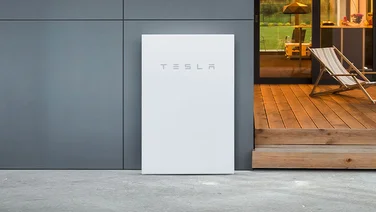
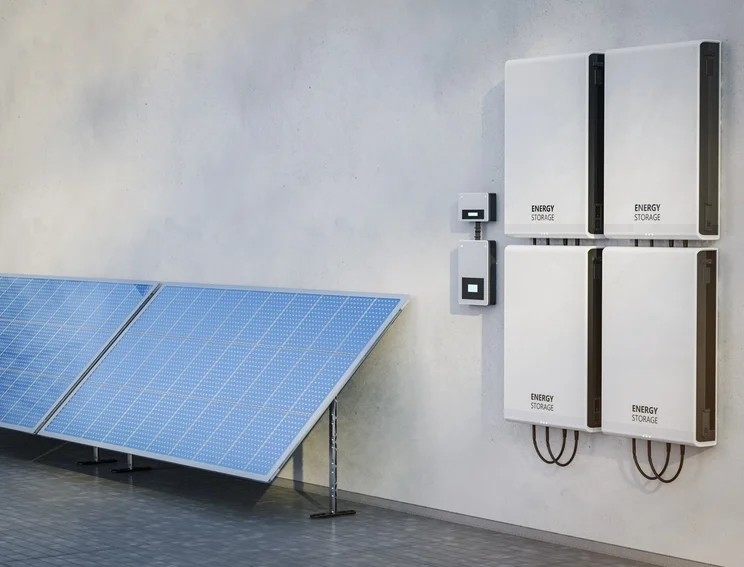
Most home batteries (e.g. a 10kWh one) are roughly the size of a small fridge or a large suitcase. They typically measure around 100–120cm high, 60–75cm wide, and 20–30cm deep, though exact dimensions vary by manufacturer.
Fox ESS’ EVO10, for example, is 100.9 cm tall by 58.4cm wide, by 19.7cm deep.
Many models are wall-mounted, which helps save floor space, while larger units may be floor-standing and installed in garages, utility rooms, or external cabinets.
Installers will also need a small amount of clearance around the battery for ventilation and maintenance.
How powerful is your solar panel system?
You’ll need a solar panel system capable of providing enough power to charge your storage battery during the day.
If not, you’ll spend multiple days charging your battery and eliminating the benefit of accessing clean, solar-powered electricity at night.
Don’t forget battery cycles
A storage battery’s cycles mean how many times it can be charged and discharged — a greater number of cycles is better because you can use your battery more before it starts to degrade.
Your battery’s warranty is typically connected to how many cycles it has, though many newer batteries offer time-specific warranties with unlimited cycles, such as the Tesla Powerwall 2.
There are also throughput warranties available, which are measured by the total energy guaranteed to pass through the battery. This has advantages over the number of cycles, as it more accurately reflects energy usage.
Check out our list of the best storage batteries for expert advice on home battery storage.
Are you planning on going off-grid?
If your aim is to stop or drastically reduce your grid reliance, consider spending extra to get a battery with enough capacity and power output to meet your needs.
Summary
- The size of the battery you need typically depends on how many bedrooms your home has and how much electricity you use each month
- It’s generally better to buy an oversized battery, but make sure you have a solar panel system large enough to charge it efficiently
- You can have multiple storage batteries, as long as you have a solar panel system big enough to charge them
- If you have an electric car, you can use your solar battery to charge it, but it’s typically not worth it. You’ll almost always end up using the grid to fully charge your electric vehicle
- Consider your power usage, how powerful your solar system is, battery cycles, and whether you plan to go off-grid when thinking about purchasing a solar battery.