We may receive a fee from trusted installers when you request a quote, or a commission when you buy through links on our site. This helps us keep our content independent, well-researched and up to date – Learn more
- Households in England and Wales can get £2,500 off the price of an air-to-air heat pump, which works the same way as an air conditioning system
- Only 45 people took up the offer in May
- Heatwaves are going to become a regular thing, which means we need to keep homes cool
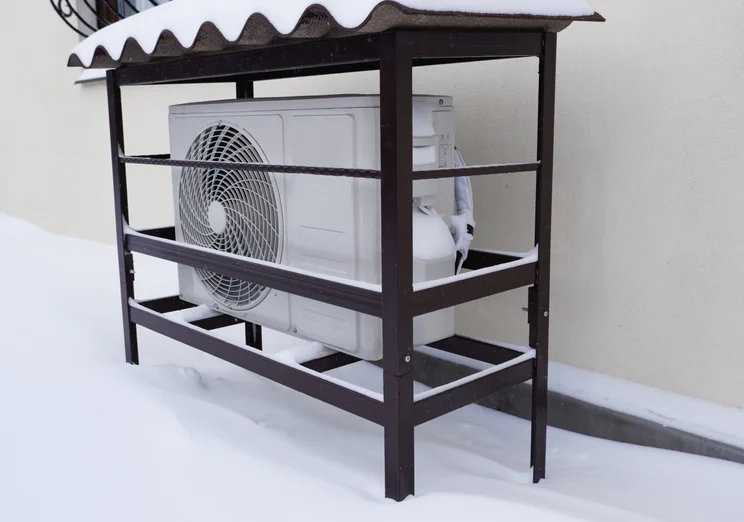
The Boiler Upgrade Scheme is offering everyone in England and Wales a £2,500 discount off an air conditioning system to fight the next heatwave, but not enough people know about it.
The discounted air conditioning system comes thorough using the scheme to buy an air-to-air heat pump, which, some people would surprised to hear, works in exactly the same way.
As Jan Rosenow, professor of energy and climate change policy at Oxford University, explains, an air-to-air heat pump is “essentially an air conditioner that runs in both directions”.
“In winter it moves heat from outside into your home, in summer it reverses and moves heat out; it’s the same technology sold under two different names, and millions of homes across Europe and Asia use it for both heating and cooling,” Rosenow explained.
In the words of Joanna O’ Loan, Knowledge Manager at Energy Saving Trust, said, air-to-air heat pumps take “unwanted heat from inside your home and move it outside”, which helps to keep your rooms at a comfortable temperature.
“Many people know this technology as air conditioning, but it does much more than cool your home,” O’ Loan told us.
“The same system also provides heating during colder weather, giving you complete temperature control throughout the year.”
She also said people who live in flats or smaller homes could find air-to-air systems particularly useful as other types of heat pump may be “less practical to install”.
Why is it important to get air conditioning?
Because this summer the UK has had two massive heatwaves with temperatures hitting close to 40C. Not only has this made day-to-day living much harder, it has contributed to more than 2,700 excess deaths between May and June.
In fact, the Met Office estimates that 42% of those deaths were came about by the extra heat caused by human-induced warming.
Dr. Clair Barnes, Research Associate in Extreme Weather and Climate Change, Imperial College London said as a society we need to “wake up to the fact that we now live in a country with dangerously hot summers” and we must urgently adapt to the reality of the climate we now have”.
“We now live in a country with dangerously hot summers,” Barnes said. “To protect people during future extremes, we must urgently adapt to the reality of the climate we now have, and double down on global efforts to reach net zero emissions to stop this from getting worse.”
Do people know they can use an air-to-air system as air conditioning?
No, it seems not. The Boiler Upgrade Scheme was extended to air-to-air heat pumps in November 2025 and made available in April 2026. According to government data, on 45 people used vouchers from the Boiler Upgrade Scheme to get the £2,500 discount.
Depending on the size of house, could bring down the cost of the heat pump/air conditioning system and almost pay for the whole heat pump system or leave you with a few hundred pounds left over.
While this shouldn’t necessarily be a surprise as it’s the first month the help is available, it does suggest that more needs to be done to show how the scheme can help people suffer when the next heatwave hits.
Hamid Salimi, Residential Product Manager at heat pump manufacturer Daikin UK, said that many homeowners are “surprised to learn that modern air conditioning systems are actually air-to-air heat pumps” and that a “single system can help keep your home cool and comfortable during hot weather, while also providing efficient heating when temperatures drop”.
“Air-to-air heat pumps can help maintain a comfortable indoor temperature throughout the year, making them a flexible solution for both heating and cooling.”
According to Salimi “many homeowners simply don’t realise that eligible air-to-air heat pumps can provide both efficient heating and cooling from a single system or that government support will soon be available to help with the cost.”
The important step, according to Salimi, is for ministers to tell people that an air-to-air heat pump can work in exactly the same way as an air conditioner and that can get £2,500 off the price.
“Government has an important role to play in raising awareness of the scheme and helping people understand the benefits of this technology.
“Clearer public information and continued support for air-to-air heat pumps would help more households move away from fossil fuel heating while improving comfort in every season.”
O’ Loan from Energy Saving Trust agrees, saying that to support uptake “it’s important that households have access to clear, impartial information about air-to-air heat pumps work.
“Better understanding will help people make informed decisions when considering low carbon heating and cooling options.”