We may receive a fee from trusted installers when you request a quote, or a commission when you buy through links on our site. This helps us keep our content independent, well-researched and up to date – Learn more
- How expensive is petrol right now?
- What taxes do you pay on petrol in the UK?
- Can the UK government make petrol cheaper?
- Could tax cuts help with the price of petrol?
- UK fuel bosses summoned to No. 11
- What is the UK's Fuel Finder?
- How does the UK's Fuel Finder work?
- The bottom dollar
- How can I make my energy cheaper?
- Summary
- Fuel prices in the UK are climbing again as geopolitical tensions disrupt global oil supply and shipping routes
- Yet only around one-third of what motorists pay at the pump actually reflects the cost of the fuel itself
- What tools does the UK government really have to ease the pressure on drivers?
“In this world nothing can be said to be certain, except death and taxes,” as Benjamin Franklin once famously wrote. But if you live in a country like the UK, you can probably add a third: the ever-changing cost of fuel.
From the problem of inflation to energy price shocks, fuel prices seem to never be stable. In fact, thanks to the US-Iran war, we could soon be looking at record prices for all forms of energy, including fuel.
Operational shutdowns and shipping restrictions in the Strait of Hormuz have already seen rising oil prices from the Middle East, with a barrel hitting $119 earlier this month.
The longer this conflict goes on, the more likely that fuel prices, especially at the petrol pump, are set to rise. What then can the UK government do to help? And what steps can you take to cut costs in the long term?
Let’s find out.
How expensive is petrol right now?
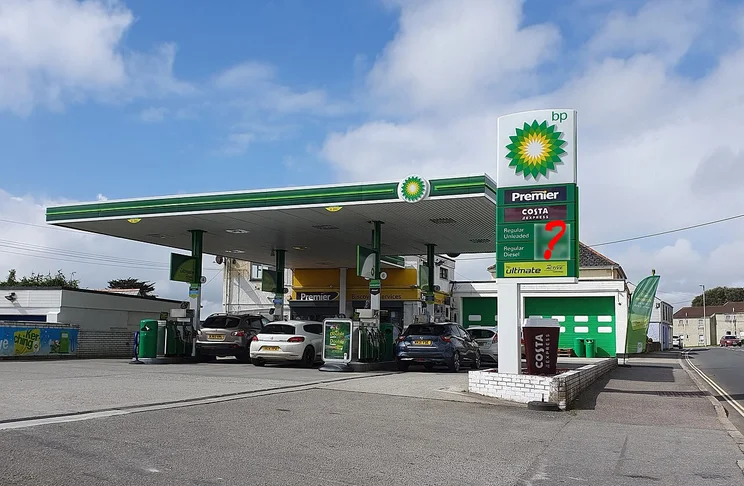
At the time of writing, according to the Royal Automobile Club (RAC), prices range from 140.60p per litre (161p at a service station) UK-average for unleaded to 172.78p for diesel (at service stations).
This is high, but is still somewhat below the record of 191.6p per litre of unleaded in July 2022. To put that into perspective, that was during the outbreak of the Ukrainian War that saw oil prices soar to $120 per barrel.
Again, according to the RAC, since the 2 March, 2026, unleaded has risen about 8p/l with diesel rising 16.8p over the same time period. The US-Iran war has had a huge effect on the price of petrol, but there are things ministers could do to help.
But before we get into all that, let’s take a quick look at what exactly you pay for when you top up at the petrol station. Obviously, the supplier costs are included, plus some profit, but it’s not all as it seems when you get the bill.
What taxes do you pay on petrol in the UK?
The bill you pay (whether a little top-up or a full tank) is not just about the wholesale price of fuel (i.e., what the retailer buys then sells to you), however. It includes some other important things like:
- The pound to dollar exchange rate – Oil prices are in US dollars as a global standard per metric tonne
- Distribution costs of the retailer – The cost of physically moving the fuel from imports to your petrol station
- The retailer’s profit margin – Like you, they need to make some money for their time and effort
- UK government imposed fuel duty – This is an excise tax levied on fuel which goes into the same pot as general taxation to cover government spending, like the NHS, defense, welfare, etc.
- Value-added tax (VAT) – This is an additional consumption tax placed on a product or service, like fuel, to further support government spending.
Some elements of this are largely static (such as VAT), while others can vary widely over time (like oil prices and exchange rates). How much of this is for the actual liquid energy you buy? Answer: just around 1/3.
For petrol, according to the RAC, of the rest, 5% pays for any mandated bio-content in the fuel, 1% pays for the retailer’s delivery costs, and around 6% is the retailer’s take-away “profit”.
About 50% of the rest is tax – 38% fuel duty and 17% VAT. Diesel percentages vary a little, but the rough slices or pie are comparable, i.e., taxes are the lion’s share.
Can the UK government make petrol cheaper?
Yes, they could remove some of the tax burden on fuel to help out, and this would make petrol cheaper. It is very unlikely to do so because the government expects to make £24bn a year in 2025/2026 from fuel duty alone.
This would be welcomed, as the UK already has one of the highest fuel duty rates among major European economies, making pump prices particularly sensitive to global oil shocks.
That said, previously, UK governments have responded in just that way. The former Conservative government Chancellor of the Exchequer, Rishi Sunak, for example, reduced fuel duty by 5p a litre in the face of rising costs during the early months of the Ukraine War.
This was set to expire in September of 2026. In fact, the encubmant Chancellor, Rachel Reeves, is currently under growing pressure to scrap this plan.
Further reductions would be welcome, but, ultimately, would constitute small fry if no significant reductions are made. Especially if wholesale oil prices rise further. Another 5p per litre could be wiped out in a day of spiking oil prices, for example.
Other areas of the UK’s tax regime could also be tweaked. For example, many petrol stations have increasing labour tax bills that could, in theory, be changed to help improve their bottom line. Business rates could also be looked at to help incentivise retailers to be fairer with prices.
Could tax cuts help with the price of petrol?
Yes, tax cuts could bring the price down, particularly bringing down VAT.
While not specifically intended for such purposes (being considered general taxation), fuel duty, in part, is used to fund government-funded environmental incentives.
This includes things like Electric Vehicle (EV) support, Low-Carbon Transport incentives, the Renewable Transport Fuel Obligation (RTFO), energy efficiency schemes, and other decarbonisation efforts.
But, again, given the current Energy Secretary, Ed Miliband’s, penchant for decarbonisation of the UK economy, this is highly unlikely to happen. That said, there is something in the works that could help: the UK’s Fuel Finder initiative.
UK fuel bosses summoned to No. 11
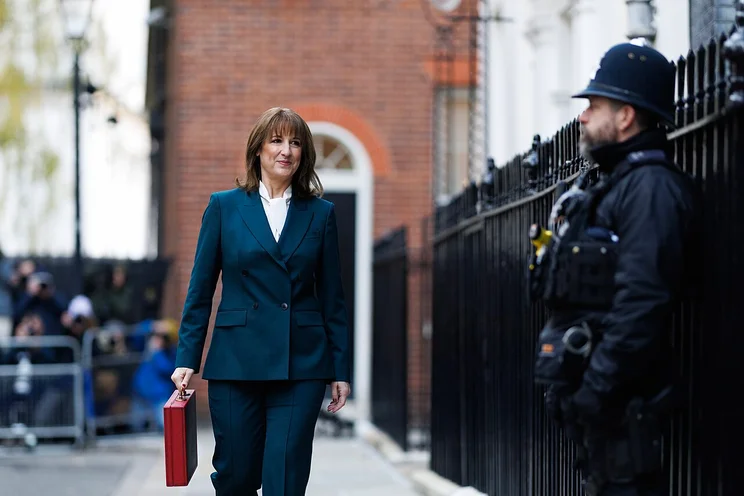
According to an official UK government press release, both the Chancellor and Energy Secretary are putting UK “fuel bosses” on notice that they intend to “crack down” on pump prices.
“Rachel Reeves has written to the Competition and Markets Authority (CMA) requesting it stay on high alert for unjustifiable price rises on petrol, diesel, and heating oil, to support families and businesses,” the press release reads.
To this end, Number 11 Downing Street held a roundtable of petrol retailers and energy suppliers to explain why prices vary so widely. It also called for them to explain “how quickly forecourts respond when costs ease, and what immediate steps firms will take to make sure motorists aren’t left paying over the odds,” the press release explains.
As the press release explains, this is especially notable given prices ranging from 127p per litre to 180p per litre in some areas of the country.
“I will not tolerate any company exploiting the current situation to make excess profits at consumers’ expense. I’m backing drivers and families — and I expect a fair deal at the pump,” Rachel Reeves is quoted as saying.
To help with this, the UK government has announced what it calls its “Fuel Finder” initiative to record prices at the pump daily from around the UK. The idea is that this data can be used to better inform consumers (you) to find the “best deal” near you.
“Tackling the cost of living is our number one priority – all fuel retailers must sign up for Fuel Finder so drivers can find the lowest price at the pump. We will not hesitate to act to protect consumers against any unfair practices,” Ed Miliband added.
What is the UK’s Fuel Finder?
In short, as the UK government explains, “the Fuel Finder scheme is expected to incentivise competition between Petrol Forecourt Stations, lowering fuel prices and resulting in fuel cost savings for consumers.”
Under this initiative, all petrol stations irrrespective of size and geographical coverage, are now required to provide real-time data (within 30 minutes of changes) to the Fuel Finder scheme.
According to the press release, well over 90% of all retailers have already registered for the scheme, with the government promising “action” against the remaining 10% if they don’t comply.
This scheme is driven (no pun intended) to help consumers not have to guess if they are being overcharged at the pump. It is also hoped that better transparency of this data will help “inspire” the market to be more competitive with its pricing.
“Greater transparency on prices will drive up competition and is set to see households who own a car save on average £40 a year at the pump,” the press release states.
“The message to any retailer dragging their feet is straightforward: if you won’t be transparent, you’ll be called out — because sunlight on prices is one of the strongest tools consumers have to force competition and drive costs down,” it adds.
How does the UK’s Fuel Finder work?
Strong words, but will it work? It is important to note that the Fuel Finder scheme merely provides open-source data and doesn’t have its own dedicated smart device app or website. This can be accessed via direct data dump, subscriptions to the service, or Application Programming Interface (APIs).
Instead, the intention is for third parties (like the RAC) to use the data as they see fit. To this end, there are several handy apps and websites you can access to get the most from the scheme.
The first is the RAC, as we’ve mentioned, but other options also exist, including the independently-created fuel-finder.uk by UK-based software developer “Scott” from Norfolk.
Other pre-Fuel Finder initiative apps and websites also exist, which undoubtedly also take advantage of this treasure trove of data.
The bottom dollar
Quite how much petrol prices are set to rise in the coming months is anyone’s guess, but you can bet your bottom dollar you’ll end up paying for it. Hopefully, the crisis in the Middle East will not drag on for months or years, but the short-term outlook for fuel prices in the UK is not looking particularly “peaky.”
That said, incentives like the Fuel Finder are very much welcome and will help scratch an itch that many drivers have had around prices rising like a rocket and falling like a leaf at the pump.
How can I make my energy cheaper?
Driving less helps, but it’s far from the only option. Here are some practical ways to reduce your overall energy costs:
- Install rooftop solar panels – Generate your own electricity and reduce reliance on grid power. Pairing solar with smart tariffs can significantly cut household energy bills.
- Add a home battery (e.g., Tesla Powerwall) – Store excess solar energy or charge overnight on cheaper tariffs, then use it during peak times when electricity is expensive.
- Switch to an electric vehicle (EV) – Charging at home (especially overnight) can be far cheaper per mile than petrol or diesel. Some tariffs are designed specifically for EV owners.
- Use time-of-use tariffs – Energy suppliers often offer cheaper rates overnight. Running appliances or charging batteries/EVs at these times can cut costs without major lifestyle changes.
- Improve energy efficiency – Better insulation, draught-proofing, and efficient appliances reduce overall consumption, lowering both electricity and fuel costs.
- Consider smart energy management systems – These optimise how you use, store, and export energy, helping you maximise savings automatically.
Summary
- Roughly half of UK fuel prices come from taxes, primarily fuel duty and VAT.
- Governments could temporarily cut these taxes, but doing so would significantly reduce a major source of public revenue.
- Wholesale oil prices and global events, such as conflicts affecting shipping through the Strait of Hormuz, remain the biggest drivers of pump price volatility.
- The government’s Fuel Finder initiative aims to improve price transparency and encourage competition between petrol stations.
- While the scheme may help drivers find cheaper fuel locally, its overall impact on national fuel costs is likely to be modest.