We receive a small fee from trusted installers when you request a quote through our site. This helps us keep our content independent, well-researched and up to date – Learn more
- Solar panels can cut your bills and dependence on the grid
- But they’re expensive and don’t produce energy at night
- There are solar panels grants available to help you afford them

As installation costs continue to fall (in part thanks to grants for solar panels), solar energy is becoming increasingly accessible, helping households save up to 70% on their electricity bills.
This has led to solar panels becoming more popular than ever, with over 1.7 million homes in the UK now using them.
Of course, there’s more to consider than just savings. That’s why we’ve broken down the key pros and cons of switching to solar. Ready to take the next step? Fill out our quick form to get a quote from trusted local installers.
Where do you want to install solar panels?
Get startedThe ten pros of solar panels
There are many excellent reasons to get solar panels. Here are the best advantages you can gain by installing solar panels on your roof.
1. Solar panels save you money on your energy bills
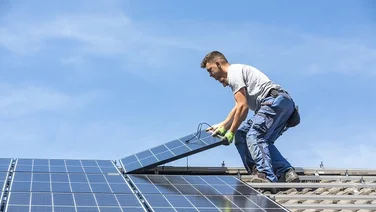
Switching to solar-generated electricity can significantly reduce your monthly energy bills. On average, a 3.5 kilowatt (kW) solar panel system will cost £7,000, but it’ll save you roughly £450-£600 each year, depending on where you’re located in the UK.
Your energy bill savings will depend on two factors:
- How much energy your solar panels produce. To increase your quantity of solar-generated electricity, you can buy high-efficiency solar panels, or add more panels to your roof (if you have the space).
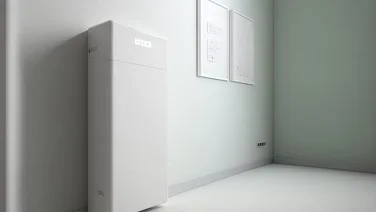
- How much of this electricity you actually use – You can buy a solar battery to store the electricity that your panels generate during the day while you’re out, so it’s available for you to use in the evenings (when the sun’s gone down). Solar batteries will increase the time it takes to break even on your solar system.
2. You can cash in on the electricity you don’t use
For many homes in the UK, solar panels generate more electricity than homeowners realistically use, which is where the Smart Export Guarantee (SEG) can you make money from the surplus energy your system generates.
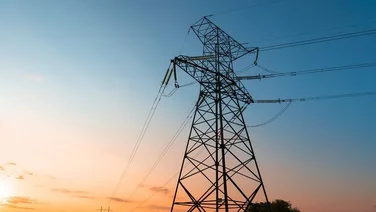
The SEG requires licensed electricity suppliers to offer tariffs to small-scale, low-carbon generators, such as households with solar panels. Any solar-generated electricity you don’t use is sent back to the National Grid, and you get paid for it.
3. Solar panels will shrink your carbon footprint
The average residential solar panel system in the UK saves about 0.9 tonnes to 1 tonne of carbon dioxide each year. Depending on how much carbon your home emits, that could be anywhere from 1/10th to 1/8th of its overall footprint, and it is the equivalent of driving 3,600 miles in a petrol car.
Over the course of 25 years, solar panels will save the average UK household on average 23 tonnes in carbon emissions.
4. Solar panels are silent
Solar panels create a lot of clean, cheap energy, and they are quiet and non-invasive about it as well..
Since there aren’t any moving parts inside a solar panel, they are entirely silent – a far cry from the racket of many types of small generators.
5. Solar panels can reduce your dependence on the grid
Solar panels reduce your reliance on the grid, and with a battery, you can store unused energy for use at night or on cloudy days. For true off-grid living, even flexible solar panels are an option—check out our 2025 guide to see what it takes to achieve this.
Leasing solar panels offers a way to access renewable energy without the upfront cost of ownership. Instead of buying the system outright, you sign a long-term lease (typically 20 to 25 years) during which the provider installs, maintains, and repairs the panels while you pay a fixed monthly fee.
This makes solar power more accessible for households that want predictable energy costs and immediate savings without the burden of managing the system themselves. While leasing provides short-term financial benefits and convenience, it also comes with limitations.
For example, you won’t own the panels, miss out on government incentives, and may face challenges if you sell your home. Also, over time, lease payments could exceed the cost of purchasing a system outright, which typically pays for itself within 7 to 8 years.
Ultimately, the choice between leasing and buying depends on your budget and long-term goals.
6. Solar panels are easy to scale up
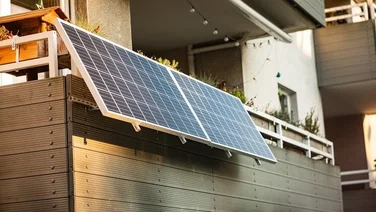
Solar panels are scalable, which means you can simply add panels to an existing system, rather than having to uproot it and build a larger one.
The same goes for solar energy storage. Many models of solar batteries are like LEGO bricks, in that they can be stacked into towers and/or arranged side by side.
7. Solar panels are low maintenance
Solar panels are fiercely independent, meaning they don’t require constant monitoring.
You still need to keep solar panels clean and unobstructed, however. Most dirt and debris will just slide right off, and regular rainfall also helps to keep things squeaky clean.
The vast majority of solar panels come with a 25-year warranty and will be operational for upwards of 40 years, so they’re with you for the long haul.
8. There are grants and schemes available
The upfront cost of solar panels can be high, but there are numerous solar panel grants available to help:
- The Smart Export Guarantee (SEG). The SEG enables households that generate low-carbon electricity to receive payments for the surplus energy they export to the grid
- ECO4. This government scheme can cover up to 100% of the cost of solar panels, but only for energy-inefficient households with certain benefits
- Home Upgrade Grant (now discontinued). Until March 2025, 45 local authorities were able to offer grants of up to £10,000 to subsidise the cost of solar panels for energy-inefficient homes that aren’t on the gas grid. This has now been replaced with the Warm Homes Local Grant.
- Warm Homes Local Grant. Like the now-discontinued Home Upgrade Grant, the Warm Homes Local Grant aims to improve energy efficiency for homes, but it covers a broader range of eligible households and includes those in private rental properties.
9. There are different solar options
Solar energy covers all bases, whether you’re after renewable electricity or a green way to heat your home. Two primary types of solar energy can be utilized for your home: solar thermal and solar panels.
Solar panels absorb the sun’s heat and convert it into electricity, whereas solar thermal systems transform the sun’s energy into heat for household water.
Whilst solar panels’ popularity has exploded in recent years, it’s worth considering whether solar thermal panels are worth it, given they can only save an average of £1,350 over their lifetime.
10. They can increase the value of your home
Installing solar panels can enhance your home’s value by making it more energy-efficient and appealing to potential buyers. With lower energy bills and greater sustainability, properties with solar systems often sell faster and at a premium.
- They can save you money on your energy bills
- You can cash in on the electricity you don’t use
- They'll shrink your carbon footprint
- They’re silent
- They can reduce your dependence on the grid
- They're easy to scale up
- They're low maintenance
- There are grants and schemes available
- There are different solar options
- Increase the value of your home
- The installation is expensive
- Their performance is affected by the weather
- Not all roof types are suitable
- They take up a lot of space
- They contain toxic materials
- They're expensive to move
- Their return on investment (ROI) is over a decade
The seven cons of solar panels
Every technology comes with drawbacks that you should be aware of before deciding whether to purchase it, and solar panels are no exception. Here are their disadvantages.
1. The installation is expensive
A typical 3-4kWp solar PV system will set you back around £7,00 – not exactly a cheap purchase, although solar panels are becoming increasingly affordable, and there are grants to help with the cost.
The average price of solar panels has fallen by about 70% over the past decade, and this trend is expected to continue as solar energy becomes increasingly widespread. For a comprehensive overview, refer to our detailed guide on solar panel costs.
2. Their performance is affected by the weather
We’re stating the obvious here, but solar panels work much better in the gleaming summer months than in the dark days of winter. When the skies are clear and the sun is beaming down on your rooftop, your solar panels will naturally be at their most productive.
But if there’s one thing Brits can agree on, it’s that our weather is not the most reliable. So during dreary days and winter woes, you’ll rely more on the grid, but that doesn’t mean your solar panels will stop working entirely.
Sunlight is not an essential ingredient in solar power, although it certainly helps. All your solar panels will need to work in daylight, regardless of whether it’s a clear or cloudy day.
3. Not all roof types are suitable
Ideally, your roof should be facing southwards at a 30-45 degree angle – although east- and west-facing solar panels can work well too. You’ll also need to ensure the roof is free from shade.
If your roof doesn’t fit the criteria, then you might struggle to set up an effective solar PV system.
There’s a lot you can do to optimise your roof conditions, including buying high-efficiency solar panels (if you have limited space), cutting back trees (to reduce shading), and using tilted racks (to angle your panels perfectly).
4. They take up a lot of space
One of the problems with solar panels is that they’re rather sizable pieces of kit, averaging around 2m² per panel – and the more electricity you want to generate, the more panels you’ll need to install. So, the bigger the roof, the better.
If you find yourself running out of room, you can opt for premium, high-efficiency models. Although more expensive, a small number of high-efficiency panels can do the same job as a larger number of standard panels.
For more information, refer to our guide on determining the number of solar panels you might need.
5. They contain toxic materials
As with most electronic items, solar panels contain compounds that can be toxic if released into the environment. That’s why it is important to buy from reputable manufacturers and ensure that at the end of their life (which could be 40 years or more), they are recycled correctly.
For more helpful information about solar panel recycling, visit our dedicated page.
A study published by Nature Energy showed that the ecological benefits of using them vastly outweigh the global environmental impact of creating solar panels. Only 4% of the energy generated by a solar panel is offset by the energy required to produce it, making solar power one of the world’s cleanest renewable energy sources.
6. They’re expensive to move
Like a trusty friend, your panels are here to stay. So, if you’re considering installing solar panels on your home, make sure you’re set on living in that property for a substantial amount of time.
These panels are substantial pieces of equipment and will be expensive to transport from one location to another, not to mention the cost of reinstallation. If you decide to leave them behind, you’ll be pleased to learn that solar panels can increase the value of your property.
If you’re interested in living off the grid and want to know how solar panels can help, read our dedicated guide.
7. Their return on investment (ROI) is over a decade
We calculated that, as of 2025, it’ll take homeowners 14.55 years to break even on their solar panels, with an average annual savings of 70% on electricity bills.
Although it seems far away, this return on investment is much better than it’s been in previous years – and you’ll never break even on grid electricity.
Additionally, once you’ve paid off your solar panels, the profit will be pure from then on. Solar panels are great for the planet and your wallet – a win-win in our book.
Yes, you absolutely should because.:
- Big savings: Cut your electricity bills by up to 70% and protect yourself from rising energy prices.
- Boost your home’s value: Solar panels make properties more attractive and energy-efficient.
- More pros than cons: While there are upfront costs and some limitations, the long-term benefits far outweigh them.
Summary
- The benefits of going solar far outweigh the downsides, from savings to sustainability.
- While the upfront cost is significant, you’ll save money year after year and cut your carbon footprint.
- According to our latest survey, 87% of solar panel owners are satisfied with their decision.
- Yes, solar panels have limits — but unlike grid electricity, they’ll eventually pay for themselves.
- Even in cloudy weather, solar panels keep generating free, green electricity.
- Ready to start? Fill out our quick form to get a tailored quote from trusted local installers.