We receive a small fee from trusted installers when you request a quote through our site. This helps us keep our content independent, well-researched and up to date – Learn more
- Solar panel costs: Key Facts
- What is the average solar panel cost by house size? (2026)
- How much does it cost to install solar panels in England?
- Solar panel installation costs in Scotland
- Solar panel installation costs in Wales
- Solar panel installation costs in Northern Ireland
- Solar panel installation costs explained
- How do I know if it's worth getting solar panels where I live?
- How do I choose the right size solar panel system for my home?
- Is my roof suitable for solar panels?
- What affects the cost of solar panels?
- What makes up the cost of solar panel installation?
- Are there hidden costs of installing solar panels?
- Do I need planning permission for solar panels?
- Do I need permission to connect my solar panels to the grid?
- Best solar panel installers in the UK
- How can I reduce solar panel costs?
- How long do solar panels last?
- How much do solar panels cost to maintain?
- How much do solar batteries cost?
- What do I need to consider before I buy solar panels?
- What is the Smart Export Guarantee?
- What are the benefits of solar panels?
- Summary
- Solar panel costs in the UK typically range from £4,000 to £10,000, depending on your property size, energy usage, and system specifications.
- Long-term savings and government incentives can help offset upfront costs, with most homeowners breaking even in just over 15 years.
- This guide includes everything you need to know about installation pricing, financing options, maintenance, and choosing the right installer.
- The price of installation differs massively depending on where you live due to labour costs, with the gap being as much as 50% in some cases.

Solar panels are one of the best things you can get if you’re looking to cut your energy bills, especially with the US-Iran war pushing gas prices to near record levels.
But how much do solar panels cost? That will depend on a lot of things, including the size of your system you’re fitting, your location, and whether or not you’re using one of the solar panel government grants.
However, we can say that as of April 2026 the average price of a solar panel system is £7,829, according to data from the MCS.
Important to remember: that average price is the average for solar panel systems of all sizes and the price you pay could be much lower or higher, with the biggest factor being labour costs. Our advice is to shop around for the best price because you are likely to save a bit if you don’t take the first quote that comes your way.
To install a typical 3-4 kilowatt-hour solar PV system, you will likely pay anywhere from £6,500 to £8,000.
To give you the best picture of how much solar panels will cost you, we’ve analysed prices from across nine regions in England and across Scotland, Wales, and Northern Ireland.
That’s why we feel confident saying that the average cost of installing a 4kw solar panel system on a three-bedroom house in the UK costs £7,505, as of April 2026.
We can also say a small 2.1 kilowatt-hour system for a 1-2-bedroom property will likely cost around £4,000. The price can also vary by location due to labour costs. Installing solar panels in London or the southeast, for instance, could cost 10-30% more than it would do in a less well-off region.
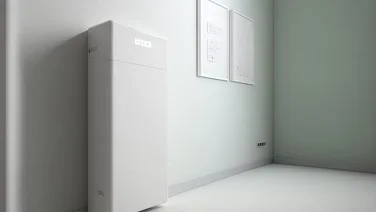
You can also add a battery storage system at the same time as installing solar panels. The upfront cost will be higher, but it can significantly increase how much of your solar energy you use at home.
In the UK, a typical solar battery costs between £2,500 and £5,000+, depending on its capacity and brand. As a result, a combined solar panel system with battery storage for an average home will usually cost around £6,000 to £15,000+ in total, though larger systems or premium batteries can push this higher.
Government grants for solar panels and other financing options can help massively with the upfront cost, making installation more accessible than ever. The new Warm Homes Plan, for example, will offer 0% loans for solar panel installation, regardless of income.
The return on investment, or payback period, is about 10 years on average. At that point, the cost of solar panels falls to £0, and you can even start making money from them if you use the Smart Export Guarantee.
Solar panel costs: Key Facts
- The average solar panel system in the UK costs £7,829, as of April 2026.
- A small 2.1 kWh system for a 1-2 bedroom property will cost around £4,000 for six panels
- The South East of England is the most expensive region to install solar panels, with prices hitting £9,064
- The North East is the region where costs are lowest, with average costs being £6,306
- The biggest single expense with solar panel installation costs is materials, which can account for about 40% of the overall bill
- Labour costs account for about 10% on average, but these are the biggest variable and the reason why prices fluctuate so much between regions
- There is 0% VAT on solar panel installations, resulting in a 20% reduction in upfront costs
- If you sell excess energy back to the grid using the Smart Export Guarantee, you can make money from your solar panels long term
- Maintenance costs range from £80 for minor fixes to £1,500 for major ones
- Professional cleaning is recommended twice a year at around £100 per visit
What is the average solar panel cost by house size? (2026)
A solar panel system for a three-bedroom house costs an average of £7,505 in March 2026, typically ranging from £4,000 to £10,000 depending on system size. This is the average price of a 3.5 kilowatt-peak (kWp) system, which is typically the right fit for a standard three-bedroom house.
A household with one or two bedrooms generally needs a 2.1kWp system, which costs around £4,000 for six panels.
The cost of solar panels depends on numerous factors, including the size of your roof, your electricity usage, whether you want to include the price of a solar battery, and the number of solar panels you need. Even the type of roofing, the height of your home, and where your electric cables are will affect the cost.
|
Property size
|
Annual electricity usage
|
Number of solar panels
|
Average installation cost*
|
Annual electricity bill savings**
|
Time it takes to break even
|
Solar panel profit after 25 years
|
|---|---|---|---|---|---|---|
|
1-2 bedroom house |
3 bedroom house |
4 bedroom house |
||||
|
1,800 kWh |
2,700 kWh |
4,100 kWh |
||||
|
6 |
10 |
14 |
||||
|
£4,216 |
£7,026 |
£9,837 |
||||
|
£272.67 |
£454.45 |
£636.23 |
||||
|
6-10 years |
6-12 years |
7-11 years |
||||
|
£3,026 |
£4,335.11 |
£6,069.16 |
* Please note: These prices are based on Microgeneration Certification Scheme (MCS) cost data (March 2024), the average price of electricity (April-June 2024), and Ofgem’s latest typical domestic consumption values (2024). Total costs may increase with more complex installations. The above estimates do not include the cost of a solar battery.
** Includes estimated Smart Export Guarantee payments
How much does it cost to install solar panels in England?
As of March 2026, the average cost of buying and installing a solar panel system in England is £7,348.88. As of April 2026, the average solar panel installation cost per kW in England is £1,565, according to the MCS.
This is how much solar panels cost per region in England, according to the MCS:
| Region | Average solar panel cost by installation | Solar panel cost per kWh |
|---|---|---|
| East of England | £8,073 | £1,533 |
| West Midlands | £7,569 | £1,570 |
| East Midlands | £7,232 | £1,560 |
| South West | £8,536 | £1,560 |
| North West | £8,407 | £1,871 |
| Yorkshire and the Humber | £7,272 | £1,531 |
| South East | £9,064 | £1,642 |
| London | £8,543 | £1,695 |
| North East | £6,306 | £1,593 |
Solar panel installation costs in Scotland
As of May 2026, the average cost of buying and installing a solar panel system in Scotland is £7,234. As of May 2026, the average solar panel installation cost per kW in Scotland is £1,657.
Solar panel installation costs in Wales
As of March 2026, the average cost of buying and installing a 4kw solar panel system in Wales was £7,396. As of May 2026, the average solar panel installation cost per kW in Wales is £1,520.
Solar panel installation costs in Northern Ireland
As of May 2026, the average cost of buying and installing a 4kw solar panel system in Northern Ireland was £8,130. As of May 2026, the average solar panel installation cost per kW is £1,303.
Solar panel installation costs explained
How do we know much solar panels cost? Very simply, we’ve drilled into data from the MCS to how much solar panels cost across the UK, including countries and local authorities. There is one caveat we have to add: because solar panel installers don’t have to be registered with the MCS, the figures won’t be 100% complete.
The total installation costs are the MCS average for all solar panel system sizes. The MCS worked it out by adding up the cost of every single solar panel installation and dividing that figure by the number of systems installed.
It’s a similar process with the average cost per kW figure. To work this out, the MCS has divided the average installation cost of an individual system by that system’s size. It’s then divided that answer by the total number of solar panel system installations. That’s how the MCS works out the average cost per kW of a solar panel system in the UK.
How do I know if it’s worth getting solar panels where I live?
Whether solar panels make sense for you depends on three main things:
- Your energy use – The more electricity you use during the day, the more you can directly benefit from what your panels generate.
- Your property’s suitability – Factors like roof direction, angle, shading, and condition will affect how much electricity you can produce. We’ll go into more detail on this later in the article.
- Local economics – UK households can benefit from the Smart Export Guarantee (SEG), zero-rate VAT on installations, and in some areas, regional grants or loans. Again, we’ll dive into this in more detail later.
- Labour costs – This is the biggest variable between regions
If your home gets good sunlight, you use a fair share of power during daylight hours, and you plan to stay put for several years, solar panels are often a solid long-term investment.
They also come with the added benefit of reducing your carbon footprint. A win-win in our book.
How do I choose the right size solar panel system for my home?
The right system size depends primarily on your annual electricity usage and roof space, with a typical person requiring approximately 1-2 panels (350-400W each). Remember, it can be more cost-effective to buy a bigger solar panel system (4kw instead of 2kw) because the smaller the system, the higher the cost per KW.
The fixed costs, such as scaffolding and labour, are spread over fewer panels. For example, it costs less per kW to buy a 10kW system. This is called the economy of scale.
Is my roof suitable for solar panels?
South-facing roofs with a pitch between 30 and 40 degrees offer optimal suitability for solar panels in the UK. Here’s a breakdown of what to consider when assessing your roof:
Sunlight and orientation
- South-facing roofs are best, as they provide the most consistent sunlight throughout the day.
- East and west-facing roofs also work well, though slightly less efficiently.
- North-facing roofs receive minimal sun and are often unsuitable without alternative solutions.
Roof pitch
- Optimal pitch: 30–40 degrees for maximum sun exposure in the UK.
- Most UK roofs fall between 30 and 50 degrees, which is ideal for optimal drainage.
- Flat roofs can still be used, but may need angled mounting systems.
Size of roof and layout
- You will need space for at least 10 solar panels (~4 kW system).
- Larger systems may be needed for EV charging, electric heating, or full grid independence.
- Obstacles like chimneys, vents, or skylights reduce usable space.
- More complex roofs (e.g., varying pitches, cross-gables, etc.) can limit the size of some solar installations.
Roof condition
- Your roof must be structurally sound to support panels.
- Look for damage like missing tiles, water leaks, moss, or rotting structures; these will need repairs before installation.
- New roofs may have warranty limitations, so check with your contractor.
Roof type
- Most materials (e.g., tile, concrete) are fine.
- Slate roofs are more challenging and more expensive to install.
- Unsuitable roofs: thatch (fire risk), asbestos (health risk), and glass (not structurally sound).
- Ground-mounted systems are a viable option if your roof isn’t suitable.
Shading
- Trees, buildings, chimneys, and even satellite dishes can reduce system efficiency.
- Even partial shading affects all panels unless optimisers like SolarEdge or Tigo are used (at extra cost).
- Installers must avoid systems with 30% or more shading, as per the Energy Performance Validation Scheme (EPVS) rules.
Note that even if your roof isn’t ideal, professional installers can often tailor solutions using optimisers, creative layouts, or ground-mounted panels. A free remote survey is usually available to help assess your roof’s potential.
What affects the cost of solar panels?
The answer to the question, ‘how much do solar panels cost?’ depends on a few things. Three key factors affect the price of solar panels:
- Panel type: Some solar panel types, such as monocrystalline solar panels, cost more than others. This is because they use the latest technology and are highly efficient, but are currently quite rare on the UK market.
- Panel efficiency: The more sunlight a solar panel can convert into electricity per square metre, the more expensive it will be.
- Panel number: More solar panels mean more materials, which means a higher cost. You can limit the number of panels you need by choosing highly efficient ones (although they may cost more).
If you want to know more about solar panel efficiency or find out how many solar panels you need, visit our guides.
| Technology | Upfront costs | Long-term costs and maintenance | Energy savings and return on investment |
|---|---|---|---|
| Solar Panels | £4,000-£10,000 | Low maintenance; long lifespan (25–30 years) | High savings on electricity bills – 70%; possible earnings via export (SEG); ROI in 7–15 years |
| Heat Pumps | £8,000-£15,000 (£1,000-£8,000 with Boiler Upgrade Scheme | Moderate maintenance; higher for ground systems | Efficient heating and hot water, strong long-term savings, and a variable payback period |
| Other Renewables (e.g., biomass, wind) | Highly variable – depends on system type and scale | Maintenance and costs vary; some systems can be complex to manage | Energy savings vary widely; ROI depends on usage patterns and local conditions |
Notes:
- Government incentives (e.g, the Warm Homes: Local Grant and the upcoming Warm Homes Plan are available across all technologies and can significantly reduce upfront costs.
- Export potential (SEG payments) generally applies only to electricity-generating systems, such as solar panels or wind turbines.
- System suitability and site-specific factors (space, climate, demand) often determine which technology is best for a household or business.
What makes up the cost of solar panel installation?
The total cost of installing solar panels varies between suppliers, but generally breaks down into three main categories: materials, business overheads, and labour. Understanding these can help you spot fair quotes—and avoid inflated ones.
1. Materials (40–50%)
This includes the panels, brackets, inverter, cables, and other necessary equipment. For an average three-bedroom home, expect materials to cost around £3,150. Installers usually apply a 30% markup on base material prices to cover profit, which is standard across the industry. When comparing quotes, don’t hesitate to ask for a breakdown of material costs.
2. Business Costs (30–40%)
These are the operational costs your installer absorbs, including:
- Planning permissions and approvals
- Scaffolding setup
- Transport, fuel, and equipment
For a typical 3.5kWp system, this category adds about £2,450 to the total bill.
3. Labour (10–30%)
This covers the physical installation, wiring, and system setup. Labour costs vary based on system size and complexity—larger systems or tricky rooftops will cost more.
Labour costs are the biggest variable when answering the question ‘how much do solar panels cost?’ and the main reason why costs vary between different regions.
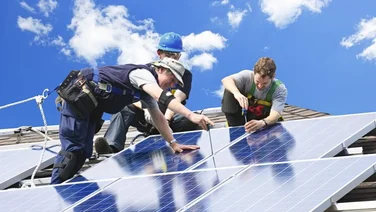
Solar panel installation usually takes one to two days, but larger installations – over 14 panels – can take up to four days.
Much of this time is spent constructing the scaffolding, so don’t be concerned if it’s been a few hours and there still aren’t panels on the roof. Customers should be aware that installers may attempt to push limited-time offers on solar panels.
Instead, you should get quotes from at least five reputable installers and check their Trustpilot reviews before signing a contract.
Are there hidden costs of installing solar panels?
Yes, there are some hidden costs when installing solar panels, particularly with labour. These will probably not be in your quote, so make sure to ask your installer about them. The most common hidden costs include:
| Possible hidden cost of installing solar panels | Average price |
|---|---|
| Scaffolding/access | £300-£1,200 |
| Roof repairs/reinforcement | £300-£1,000 |
| Fuse box | £400-£800 |
| Bird proofing | £500-£900 |
| New Energy Performance Certificate | £60-£120 |
| Inverter replacement | £700-£1,400 |
Do I need planning permission for solar panels?
You need planning permission to install solar panels if you live in a listed building or a conservation area. It is possible you will also need planning permission if your solar panel sticks out more than 20cm from your roof or if you are installing ground-mounted solar panels.
You will also need planning permission if you are installing solar panels for commercial use.
However, solar panels are considered a ‘permitted development’, which means that, for most people, you don’t need planning permission, as long as none of the above applies.
To check if you need planning permission, find out if your home is a listed building or use the national Planning Portal for guidance. A Lawful Development Certificate will tell you if you need planning permission.
Do I need permission to connect my solar panels to the grid?
You need permission from your local Distributor Network Operator (DNO) before installation if your solar panel system is over 3.68kWp on a single-phase supply, or 11kWp on a three-phase supply.
A single-phase supply is considered the standard for most solar panel systems because most houses use one for everyday appliances. A three-phase supply is usually for much larger systems, such as you might find on an industrial site.
If your home has more than four bedrooms, it will need a solar system larger than 3.68 kW. A four-bedroom house requires a 4.5 kW to 5.2 kW solar system. If you need a solar system bigger than 3.68 kW, you will need to submit a G99 application to your local DNO for approval before installation.
How do I apply for a G99 application?
The first thing to do is choose an installer from the MCS. Your installer will assess your site and the exact system size you need. The next thing is documentation, which your installer will organise. They will need system layout and single-line electrical diagrams.
Other documentation your installer will need is your property address, your Meter Point Administration Number (MPAN), and a letter of authority from the homeowner or landlord.
Once the application is submitted to your DNO, the DNO will assess the potential impact of your system on the local grid. This process will take between four and eight weeks. You might have to pay for any potential costs to upgrade the local network. Once you have done so, your system must undergo specific commissioning tests to prove compliance with G99 standards.
After this, your installer sends a report to the DNO, who will then give you an export MPAN, which lets you sign up for the Smart Export Guarantee.
Best solar panel installers in the UK
Our team analysed 643 of the UK’s 4,000+ MCS-certified solar panel installers. Below, we’ve ranked the top 15 based on customer service, warranties, accreditations, affordability, and experience.
- Project Solar UK – Lifetime product warranty, 10-year labour warranty.
- Solar Fast – Panels covered for 25 years, performance for 30 years, inverters 10–12 years. Labour warranty: 2 years.
- Octopus Energy – 25-year product warranty, 5-year labour warranty.
- Solar4Good – 25-year panel warranty, 30-year performance warranty, 10-year labour warranty.
- Geo Green Power – Similar to Solar4Good. 2-year labour warranty. Est. 2010.
- Heatable- 25-year panel warranty, 2-year labour warranty.
- Soly – Dutch company with UK launch in 2023. Up to 12-year labour warranty, 25-year panel warranty.
- Egg – 25-year product warranty. Labour warranty is not specified.
- Glow Green – Up to 30-year product warranty, 5-year labour (20 years under subscription).
- Everyone’s Energy UK – 25-year product, 2-year labour warranty.
- Effective Home – 25-year panel warranty, 2-year labour warranty.
- 0800 Repair – Labour warranty 1 year. Product warranty not disclosed.
- Clever Energy Boilers 0 Up to 30-year panel warranty, 10–12-year inverter warranty, 2–5-year labour.
- Warma UK – 25-year panel warranty, 2-year labour warranty.
- Greener Energy Group – 25-year product warranty. Labour warranty not disclosed.
How can I reduce solar panel costs?
You can reduce solar panel costs through government grants like the Warm Homes Grant. Don’t forget, you also pay 0% VAT when you buy solar panels and through the Warm Homes Plan you’ll soon be able to get interest-free loans.
Here are the main ones:
- Solar Together: A group-buying scheme that can save you 30-50% on the cost of solar panels
- The Home Energy Scotland Grant and Loan: A grant and optional interest-free loan for solar panels available for households in Scotland with low EPC ratings or on benefits
- Warm Homes Local Grant: This grant provides funding for low-income households with EPC ratings between a G and D. It covers various energy efficiency measures, including solar water heaters, particularly for homes off the gas grid
- The Warm Homes Plan: This is the biggest energy efficiency upgrade initiative in UK history and will see the government offer 0% interest loans to help people install solar panels. We will know more about how to apply next year
- NEST – A scheme for people in Wales with poor EPC ratings to install solar panels
For more information on eligibility requirements and how to apply for these schemes, check out our guide to solar panel grants. You can get solar panels on finance from a variety of established companies, including:
- E.ON
- Scottish Power
- SolarStyle
- Sunsave
For E.ON solar panels, for example, prices for a typical six-panel (2.61kWp) solar system start at £5,785 and can be bought on finance.
Its interest-free option enables you to install this for £241.04 per month over 24 months.
Can I get solar panels on finance?
Installing solar panels in the UK is more affordable thanks to a range of government-backed incentives, tax relief, and financing schemes. Here’s a quick overview of what’s available to homeowners and businesses:
- Tax Benefits
- 0% VAT on Solar Panel Installations – Residential installations now benefit from zero-rated VAT, resulting in a 20% reduction in upfront costs.
- Capital Allowances for Businesses – Companies investing in solar panels can deduct some or all of the cost from their taxable profits using First-Year Allowances or Writing-Down Allowances.
- Smart Export Guarantee (SEG)
- Earn money for the surplus electricity you generate and export to the grid. All large energy suppliers are required to offer Smart Export Guarantee tariffs.
- Financing Options
- Green Deal Loans – Government-supported loans repaid through energy bill savings. Available for solar panels and other energy efficiency upgrades.
- Power Purchase Agreements (PPAs) – Ideal for businesses, installers retain ownership and maintenance, and the business pays only for the energy used at a fixed rate.
- Local Grants & Council Rebates – Some councils offer financial support for renewable energy installations. Check your local authority’s website for current opportunities.
- Green Loans – Offered by banks and credit providers for renewable energy systems. These can spread installation costs with manageable repayments.
When will I break even on solar panels?
Average UK households break even on solar PV systems after 8-10 years, but this is highly dependent on costs, energy usage, and whether they use the Smart Export Guarantee.
Solar panels typically last at least another 10 years after this point. On average, a three-bedroom household will profit from energy bill savings and SEG revenues of £4,335.11. A one-to-two-bedroom home will benefit from £2,601.07, while a four-bedroom home will generate £6,069.16.
We base our calculations on the latest MCS data on solar panel costs and the yearly daylight hours in the UK. For all the nuts and bolts, please check out our full page, “Are solar panels worth it?“
In the meantime, use this table to determine the break-even point and savings you can make for each different panel system:
| System size | System cost | Annual savings | Break even point |
|---|---|---|---|
| 2.1 kWp | £4,216 | £272.67 | 15.46 years |
| 3.5 kWp | £7,026 | £454.45 | 15.46 years |
| 4.9 kWp | £9,837 | £636.23 | 15.46 years |
*Note that the figures above are illustrative only.
How long do solar panels last?
Solar panels have an expected operational lifespan of 25 to 30 years with minimal maintenance required. Modern solar panels have a degradation rate of around 0.5% a year, which means after 25 years they could retain 80-90% of their original capacity.
If you want your solar panels to last longer, make sure you avoid physical damage to the glass, as scratches can make them degrade faster. Make sure you maintain your solar panels regularly and clean them, especially after snow or bad weather.
Perhaps the most important thing to do is to make sure your solar panels are installed properly, which you can do by checking that your installer has MCS qualifications.
How much do solar panels cost to maintain?
Solar panels require minimal upkeep, but you should budget for three key maintenance costs over time. First, the inverter, which converts solar energy into usable power, costs £500 to £1,000 and typically needs replacing every 10 years.
Second, while solar panels are durable, occasional repairs may be required due to weather or wildlife damage. Minor fixes, replacing damaged cables, resealing connectors, or repairing mounting brackets, can cost around £80 to £200.
Major repairs, such as replacing a damaged panel, replacing an inverter (needed every 10-15 years or so), repairing mounting rails, or addressing electrical faults within the system, can range from £500 to £1,500. Alternatively, preventative measures like bird-proofing mesh can reduce the risk of these issues.
Lastly, while UK rainfall helps keep panels relatively clean, professional cleaning twice a year is often recommended, particularly after dry periods or heavy bird activity. This typically costs around £100 per visit.
How much do solar batteries cost?
A solar battery costs anywhere from £3,000-£10,000, depending on size. According to the MCS, the average cost (taking into account all sizes) is £9,375 which seems high but remember that your quote will likely be a lot less than that if you’re not buying a premium type or high capacity solar battery.
Because batteries typically last around 12 years, you may need to purchase two or even three over the lifetime of your solar panels, significantly increasing costs. Higher-capacity batteries store more energy but are more expensive.
For more details, including grant availability and comparisons, see our complete guide to solar batteries.
What do I need to consider before I buy solar panels?
Before investing in solar panels, ask yourself these key questions to make sure you’re mBefore investing in solar panels, ask yourself these key questions to make sure you’re making the right choice for your home and budget:
- Is your roof suitable? Ideally, it should be south-facing (though east or west is acceptable) and angled between 10 and 60 degrees for maximum efficiency.
- Can your roof support the weight? A standard 10-panel system weighs around 441 pounds (200 kg), so a structural inspection is often a wise step.
- What size system do you need? Your household’s electricity usage will determine the number of panels and overall system size required.
- Should you include a solar battery? Batteries let you store unused power and reduce reliance on the grid, but can add £2,500–£8,000 to your total cost.
- Would selling energy via the SEG be better? If you skip the battery, the Smart Export Guarantee (SEG) lets you sell excess electricity back to the grid—just ensure you have a compatible smart meter installed.
- Have you compared quotes? Get prices from at least five MCS-certified installers and check customer reviews to ensure you choose a trustworthy provider.
When selecting an installer, don’t just compare costs. Look at the type of solar panels they use, warranty terms (ideally 20–30 years for products and at least 10 years for workmanship), and whether they help you access grants or financing schemes.

What is the Smart Export Guarantee?
The Smart Export Guarantee is a UK government-backed scheme that requires large energy suppliers to pay homeowners for the excess renewable electricity they export to the National Grid.
Eligible technologies include solar panels, small wind turbines, micro combined heat and power (micro-CHP), hydropower, and anaerobic digestion.
How it Works
- You generate renewable electricity at home.
- Any unused power is exported to the grid.
- Your energy supplier pays you a fixed rate per kilowatt-hour (kWh) exported.
- To qualify, you must:
- Have a certified (MCS) installation
- Use an export-capable meter (usually a smart meter)
- Apply with a SEG-registered supplier
Typical SEG earnings
| System Size | Bedrooms | Panels | Annual SEG Earnings (avg) |
|---|---|---|---|
| 2.1 kWp | 1–2 beds | 6 | £95 |
| 3.5 kWp | 3 beds | 10 | £159 |
| 4.9 kWp | 4+ beds | 14 | £222 |
Note: These figures assume a 12p/kWh SEG rate (available to all via Scottish Power). Better rates are available for customers with batteries and those using certain suppliers (e.g., up to 27p/kWh with Octopus).
Typical SEG earnings by location (3.5 kWp System)
| Region | Annual SEG income | Estimated payback time |
|---|---|---|
| South Wales | £181 | 12.4 years |
| South East England | £179 | 13.0 years |
| Midlands | £156 | 14.8 years |
| North West England | £157 | 14.3 years |
| North Scotland | £133 | 17.7 years |
Note: Sunlight exposure affects SEG income, with southern regions earning more due to longer hours of sunshine.
We spoke with Ken Munro from Pen Test Partners, about the company’s experience with getting solar panels.
How much did your solar panel system cost and how long did it take to break even?
“We spent around £21,000 (ex VAT) for three 8.5 kWp arrays. The break-even is hard to calculate, as the price of electricity has been very variable over the last couple of years. We also introduced a scheme to encourage use of EVs and allow team members to charge for free at the office. This significantly increased our power consumption, though most of this was offset through PV generation.”
“The three arrays generated ~5MWh over the last 12 months. We calculated at the time of install that break-even point would take three years, though this assumed no movement in the price of electricity or increased consumption from EV charging.”
What do you spend on maintenance for your solar panels?
“Nothing!”
Did you install solar batteries and if so, what did it cost you?
“Yes, we have three 13.5 kWh batteries, one for each office unit. Each cost ~£6k. The result is that we rarely consume grid power overnight when the office is closed. During the winter we charge the batteries overnight at a cheaper rate.”
What advice would you give to other businesses on reducing the cost of solar panels and what to look out for?
“You don’t necessarily need MCS certification for the install, though may be required for certain Smart Export Guarantee tariffs. Installer margins can be high, particularly for batteries, so shop around. Maintaining MCS certification can be expensive for installers, which can add cost to your install. If you let your office premises, do speak to your landlord and consider structural load on the roof. If your lease ends or you need to move, what happens to the solar panels?
My advice would be to install the largest system you can justify. Individual panels are cheap, so the marginal cost of a larger system seems very worth it to me.
What are the benefits of solar panels?
Solar panels offer many benefits, such as significantly cutting your electricity bills by generating your own clean power, and you can earn extra by selling surplus energy back to the grid through the Smart Export Guarantee.
But there are more besides that. As Simon Peat, CEO of Project Solar UK, explained to us in episode 9 of our popular Positive Energy podcast series, solar panels are “better for the environment because you’re generating power, better for your home because you’re creating a more efficient home.”
He also pointed out that in this sense, they are “lowering [your] bills and creating [much needed] energy security” for people.
“And of course, let’s not forget,” Peat added, “we are creating a world around electrification from a mobility perspective and from a heat perspective… All of that is complemented by solar.”
Summary
- Solar panel costs vary, but most UK households can expect to pay between £4,000 and £10,000, depending on system size and complexity.
- While the upfront cost may seem high, long-term savings on energy bills and Smart Export Guarantee earnings can make solar panels a wise investment.
- Most households break even after around 15 years, with potential profits of £2,600 to over £6,000 over a typical panel’s lifespan.
- Costs can be reduced through government grants, financing options.
- Adding a solar battery increases your self-sufficiency and reduces total system costs.
- For the most accurate pricing and savings estimates, compare quotes from multiple MCS-certified installers in your area.