We receive a small fee from trusted installers when you request a quote through our site. This helps us keep our content independent, well-researched and up to date – Learn more
- Solar panel grants and schemes: Quick facts
- Is the government still offering grants for solar panels?
- Solar panel grants and solar panel funding schemes explained
- What can I do until the Warm Homes Plan is ready?
- How do I qualify for solar panel government grants?
- What grants and funding are available in Wales, Ireland, and Scotland?
- Is it worth using government solar panel grants?
- The Warm Homes Plan
- What is the Warm Homes Local Grant?
- Do solar grants cover battery storage?
- What is the Smart Export Guarantee?
- What is Solar Together?
- What do people who have bought solar panels think?
- Case Study: How Lilly saved 20% with Solar Together
- How does the 0% VAT relief for solar panels work?
- Are there any solar panel finance and loan schemes?
- How can I get solar panels without a grant or loan?
- How to spot solar panel grant scams
- What do I do if I don't qualify for any solar panel grants?
- Are there any grants for replacing existing solar panels?
- Which solar panel grant should I choose?
- Summary
- Next steps
- The government has committed extra funding to the Warm Homes Plan
- The Smart Export Guarantee (SEG) helps homeowners with solar panels earn money from selling energy back to the grid
- Homeowners pay 0% VAT on residential solar panel installations
- Finance options and payment plans help spread the upfront costs of solar
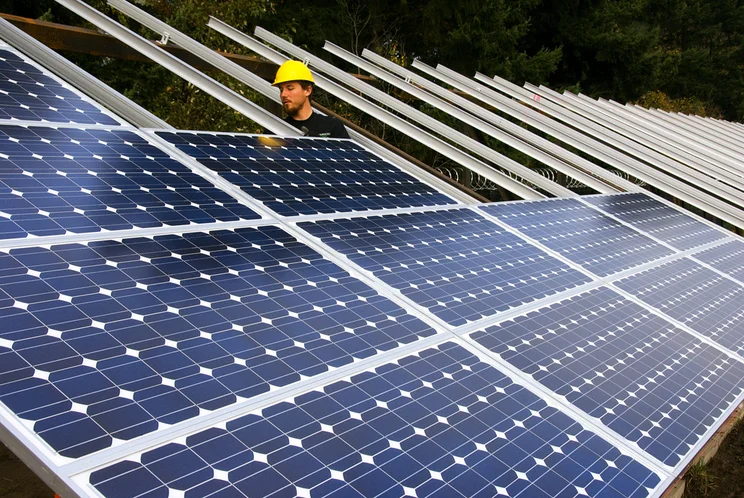
You will soon be able to get a 0% interest or low-interest loan for solar panels as part of the £15bn Warm Homes Plan, which was launched in January 2026.
We don’t know all the details yet, such as how to apply and the finalised eligibility criteria yet, but we’ll let you know as soon as we do. In the meantime, there are plenty of other solar panel grants and schemes available. These can massively help bring down solar panel costs (about £4,216 and £9,837).
For example, right now you can get £30,000 towards installing solar panels with the Warm Homes: Local Grant. This can be a huge help when you’re calculating solar panel costs.
Once you have solar panels installed, you can use the Smart Export Guarantee to sell unused energy back to the grid, earning you more money at the same time as cutting your bills. The Smart Export Guarantee is a great way to earn money and we highly recommend you use it. Before you have solar panels installed, make sure your installer has an MCS certificate as this is essential to getting paid.
The ECO4 scheme is not available anymore as it was scrapped on 31st March 2026.
Solar panel grants and schemes: Quick facts
- The £15bn Warm Homes Plan will provide 0% interest loans for solar panels and batteries to all UK homeowners, regardless of household income. It was launched in January 2026 but is not expected to be fully operational until 2027.
- The Warm Homes: Local Grant works with offers up to £15,000 for energy upgrades, such as solar panels and batteries, for low-income homes.
- Solar Together is a community-based scheme that helps groups of households buy solar panels together for a better price.
- The Smart Export Guarantee lets households sell excess energy back to the grid.
Is the government still offering grants for solar panels?
Yes, the government is still offering grants for solar panels. As of May 2026, there are grants for solar panels in every part of the UK, except Northern Ireland. However, if you live in Northern Ireland, the 0% VAT for solar panels still applies.
If you live in England the best solar panel grant to use is the Warm Homes: Local Grant. You can use the Warm Homes: Local Grant if you live in England in a privately-owned property (owned by either you or your landlord) with an EPC rating of D to G.
If you live in Scotland, you can use the the Home Energy Scotland if your household income is £36,000 or less to get £6,000 towards your solar panel installation (£1,250 grant and a £4,750 loan).
If you’re a homeowner in Wales, the NEST scheme offers advice and funding for solar panel installation if your home’s EPC rating is E or lower (if it’s D and someone in your home has an eligible health condition, you can also apply) and your household income is £38,456 or less).
If you live in Northern Ireland, there are no solar panel grants, but you still pay 0% VAT when you buy solar panels.
Later in 2026, the government will unveil details of the Warm Homes Plan, the biggest home energy improvement scheme in UK history. This is set to offer interest-free loans to households to install solar panels.
Solar panel grants and solar panel funding schemes explained
There are several options available to help reduce the upfront costs of solar panels. Use the table below for more information:
| Grant or scheme | What is it? | Who’s it for? |
|---|---|---|
| Warm Homes: Local Grant | A grant that helps to ensure homes are energy efficient. The government says its primary objective is to tackle fuel poverty and cut carbon emissions. It is the first part of the Warm Homes Plan, and it gives local authorities at least £500 million for home upgrades. | Properties must have an EPC rating within bands D to G to be eligible, or receive certain state benefits. |
| Smart Export Guarantee | The Smart Export Guarantee (SEG) is a government-backed scheme and was launched in 2020. It enables homeowners to receive payments from energy suppliers for any unused solar-generated electricity they export back to the grid. This includes solar panels, wind turbines and other low-carbon technology | You must use have an MCS certificate or equivalent, as well as an export meter |
| Solar Together | A group-buying initiative that allows communities to buy solar panels for their homes at a competitive price | Low-income households & live within a participating council’s district |
| 0% VAT | Homeowners will pay 0% VAT on solar panels until April 2027. Exceptions include needing to use the same provider to supply and install the solar panels | UK homeowners |
| Home Energy Scotland Grant and Loan | Launched in 2023, homeowners in Scotland can get up to £6,000 – a £1,250 grant and an optional £4,750 loan | Homeowners and landlords in Scotland with a low income of £36,000 or less |
| Nest | The Nest scheme is to help people install solar panels, including advice and support | Homeowners based in Wales |
| Warm Homes Plan (expected to be fully operational in 2027) | The government’s £15.2bn energy upgrade scheme. It will offer 0% interest loans for solar panel and battery installation. | All UK homeowners |
Each grant has different eligibility criteria, as well as the benefits they provide. Applying for them isn’t always straightforward. You can learn more about applying for each grant and scheme later in this article.
What can I do until the Warm Homes Plan is ready?
Great question, and the answer is check your EPC rating and what benefits you’re currently receiving, because right now whatever grant you apply for will depend on the energy efficiency of your home and your household income.
If you live in England, we recommend seeing if you’re eligible for the Warm Homes: Local Grant. We go into more detail below, but the Warm Homes: Local Grant is designed to help poorer households, especially those with low energy performance certificate ratings.
If you live in Scotland, take a look at the Home Energy Scotland Grant and Loan, again designed for people with low EPC ratings. If you live in Wales, look at the NEST scheme, which also tries to help people who live in energy inefficient homes.
Aside from government grants and loans, there are lots of help you can get if you’re looking to get solar panels installed.
The first is the fact that solar panels are subject to 0% VAT, which massively helps bring the cost down.
Another things you can do is get a green mortgage to improve your home. These are loans from banks that aim to help people install solar panels and improve their energy efficiency in other ways. The difference between a green mortgage and one of the grants is that they often need a very good EPC rating, usually an A or a B.
How do I qualify for solar panel government grants?
For the time being, it depends on where you live in the UK, because there isn’t a single, UK-wide government grant for solar panels, at least until the Warm Homes Plan is ready.
However, there are some common overlapping criteria for the regional government grants. These include:
- Having an EPC rating of D or lower
- Living in a ‘low-income’ household (usually if everyone living in the household has a combined income of £36,000 a year or less)
- In receipt of certain state benefits, such as Universal Credit
- Be a homeowner in the specific country/region
Yes, in most cases, schemes can be combined, but they apply to different parts of the cost.
The VAT relief on energy‑saving materials removes VAT from eligible installations such as solar panels, batteries, and heat pumps, while the Warm Homes: Local Grant covers the upfront cost of installing energy-efficiency measures for eligible households.
Because VAT relief applies to the tax on the installation and the grant covers the installation cost itself, they generally work together rather than replacing each other. However, exact rules can vary depending on the installer and funding conditions, so it’s worth confirming with the scheme administrator before applying.
What grants and funding are available in Wales, Ireland, and Scotland?
The Home Energy Scotland Grant and Loan and the Welsh government’s NEST scheme are the only government grants for household energy improvements outside England. The Scotland’s Solar Sector Energy Efficiency Loan Scheme is also available to households in Scotland, although only from financial years 2025/2026 to 2026/2027. Sadly there is no solar panel grant or scheme in Northern Ireland.
Scotland – Home Energy Scotland Grant and Loan
The Home Energy Scotland Grant and Loan, launched in December 2022, provides a total amount of £6,000, consisting of a £1,250 grant and an optional £4,750 loan. To be eligible for the grant, you must meet all of the following criteria:
- Those residing in a dwelling not connected to the main gas supply (such as those using oil, coal, LPG, or electric heating).
- Have an Energy Performance Certificate (EPC) between ratings D and G. Homes without an EPC rating will receive a free assessment.
- Meet the low-income threshold (below £36,000) or live in the most economically deprived areas (IMD 1-3)
Combined with the optional loan, this grant can cover the potential costs of a 3kW system, which would be ideal for a 2-bedroom house or a small 3-bedroom one.
We have an entire article dedicated to solar panels in Scotland, including grants and financing, if you want to know more.
Scotland’s Solar Energy Efficiency Loan Scheme
Scotland’s Solar Energy Efficiency Loan Scheme is a £2mn initiative from the Scottish government and Great British Energy to help with the installation of solar panel systems.
It’s no longer possible to apply for this loan scheme as the window to do so was only open from 12th February 2026 to 31st March 2026. The scheme’s main job is to “support efficient and timely delivery of renewable generation capacity”. Solar installations have to be completed work by 30th September 2026 to get funding.
Wales – Nest
The NEST scheme offers free solar panels to low-income households in Wales. To be eligible, you must:
- Receive a means-tested benefit or live in a ‘low-income’ household (earning no more than £38,456) AND
- Have an EPC rating of E or less
Means-tested benefits include:
- Child Tax Credit and individual income below £18,660 a year
- Council Tax Reduction related to income
- Housing Benefit
- Income-based Jobseeker’s Allowance
- Income-related Employment and Support Allowance
- Income Support
- Pension Credit
- Universal Credit
- Working Tax Credit and an individual income below £18,660
You’ll have to provide evidence that you receive a means-tested benefit, including a benefit award letter or a Council Tax letter.
You’re still eligible if your home has an EPC rating of D and someone in your home has an eligible health condition.
Eligible health conditions include:
- Respiratory disease (respiratory infections, broncho-constriction in asthma, and chronic obstructive pulmonary disease)
- Circulatory disease (including cardio-vascular disease, strokes, and heart attacks)
- Mental health (including depression, anxiety, psychosis, and bipolar disorders)
- Dementia
- Intellectual and development disorders
You will have to provide evidence of your health condition. You can use a prescription, medication package, treatment plan, or GP or hospital or referral letter.
Eligibility for NEST will depend on how many people live in your home and how much you earn because the scheme is meant for ‘low-income’ households. Your household income is how much everyone in your home earns after any mortgage repayments and minus any benefits you earn.
Benefits or disability-related payments are not considered part of your household income, meaning you will still count as ‘low-income’ even if they take you over the threshold.
NEST income thresholds for an adult couple
| Household type | Weekly | Monthly | Annual |
|---|---|---|---|
| Couple with no children | £446 | £1,931 | £23,166 |
| Couple with one child under 14 | £535 | £2,317 | £27,799 |
| Couple with one child 14 years or over | £593 | £2,563 | £30,811 |
| Couple with two children under 14 years | £624 | £2,073 | £32,433 |
| Couple with two children 14 years or over | £740 | £3,205 | £38,456 |
NEST income thresholds for a single adult
| Household type | Weekly | Monthly | Annual |
|---|---|---|---|
| Single adult householder with no children | £298 | £1,293 | £15,521 |
| One adult with one child under 14 | £388 | £1,680 | £20,155 |
| One adult with one child 14 years or over | £446 | £1,931 | £23,166 |
| One adult with two children under 14 years | £477 | £2,066 | £24,788 |
| One adult with two children 14 years or over | £593 | £2,568 | £30,811 |
NEST income thresholds for adults receiving the state pension
| Household type | Weekly | Monthly | Annual |
|---|---|---|---|
| Single pensioner | £298 | £1,293 | £15,521 |
| Pensioner couple | £446 | £1,931 | £23,166 |
Northern Ireland
There are currently no government-funded solar grants for homeowners in Northern Ireland, though VAT reductions and export tariffs may still apply.
Northern Ireland currently has no domestic incentives for solar panels, and this situation is unlikely to change anytime soon.
Businesses can receive funding for up to 20% of the cost of their solar panel system installation.
As of 1st May 2023, solar panels are now available with 0% VAT, resulting in a saving of approximately £1,000 on installation and a yearly saving of £500 on electricity bills.

Is it worth using government solar panel grants?
Yes, it is absolutely worth taking advantage of the available getting solar panels for these reasons:
- Solar panels can help reduce your monthly energy bill by 70%. On average, a 3.5 kW solar panel system will save you between £450 and £600 a year.
- The Warm Homes Plan will offer 0% loans for solar panel installation, regardless of your income.
- You can cash in on the solar power you don’t use through the Smart Export Guarantee. This means you can make money back from your solar panel system.
- Solar panels can cut your dependence on the grid and make you energy independent. This might take 10-15 years, as that’s the payback period for solar panels, but it is worth it.
- Installing solar panels can increase a UK property’s value by up to 14%, according to industry data.
- Solar panels are low-maintenance and easy to clean. Most solar panels come with a 25-year warranty and will be fully operational for 40 years or so.
- You can lease solar panels if you can’t buy them upfront – typically if you can’t afford the cost and don’t qualify for a grant.
Am I eligible for solar panel grants?
- The Warm Homes Plan – Yes. The 0% loans offered by the Warm Homes Plan are available to everyone, regardless of income, so it’s very likely you will be eligible for at least one grant encouraging solar panel installation.
- The Warm Homes Local Grant – Maybe. You’ll be eligible for the Warm Homes Grant if you live in England, have an EPC rating of between D and G, earn less than £36,000 a year, and live in a privately-owned home.
- Solar Together – Maybe. You’ll be eligible for Solar Together if you live in a participating council and own your own home.
- 0% VAT on solar panels – Yes. This applies to all solar panels.
- Smart Export Guarantee – Maybe. You’ll be eligible for the Smart Export Guarantee if your solar panel installer is MCS-certified and you have a smart meter.
- NEST – Yes. If you live in Wales and receive and means-tested benefit and have an EPC rating of E or less.
- Home Energy Scotland Grant and Loan – Yes. If you live in Scotland, have an EPC rating between D and G, are not connected to the main gas supply, and have a household income of less than £36,000.
Use the table below to find potential savings, the average cost of a solar panel, and your typical percentage savings on your electricity bills.
|
Grant/discount
|
How much can you save/earn?
|
Who can apply?
|
Typical % saving
|
Average cost of solar panels after saving
|
|---|---|---|---|---|
|
Smart Export Guarantee |
Solar Together |
VAT discount |
||
|
£160 per year |
£2,555 on average |
£393 |
||
|
Small renewable generators |
Homeowners and tenants (with permission) in an active scheme area |
Solar panel buyers get it automatically |
||
|
21% of your electricity bills |
30-35% |
5% |
||
|
N/A |
£5,305 |
£7,860 |
*Quoted prices and grant information correct as of February 2026
The Warm Homes Plan
Not to be confused with the Warm Homes: Local Grant (an England-only scheme), the Warm Homes Plan is the biggest home energy improvement scheme the UK government has ever launched. Worth about £15bn, it aims to cut the cost of heating by helping people buy clean energy tech, such as solar panels and solar batteries.
As part of the Warm Homes Plan, families could receive fully-funded installations of solar panels and a battery to the full average cost, somewhere between £9,000 and £12,000.
On top of that, everyone will be able to get government-backed zero or low-interest loans to install solar panels, regardless of income. Through these offers, the government is hoping to triple the number of homes with solar panels on the rooftops by 2030.
Who is eligible for the Warm Homes Plan?
Everyone because anyone can apply for the zero or low-interest loans regardless of income. The process for these loans will likely be similar to that of the Boiler Upgrade Scheme for heat pumps.
How do I apply for the Warm Homes Plan 0% loan?
The Warm Homes Plan isn’t expected to launch until around 2027. It is also anticipated that guidance on eligibility and how to apply will become available closer to that time (subject to industry consultation). But there are a few things you can do to prepare for now (note is not intended as actual guidance, but rather what we can likely expect to be the case).
1. Check which support you might qualify for
You’ll likely fall into one of three groups:
- All households: Future interest-free or low-interest loans for upgrades such as solar panels, batteries, and heat pumps.
- Low-income households (England): Free upgrades through Warm Homes: Local Grant.
- Heat pump upgrades (England & Wales): Up to £7,500 through the Boiler Upgrade Scheme.
If you qualify for a grant, apply for that first rather than waiting for the loan scheme.
2. Check your home’s energy status
Before applying, gather relevant information such as:
- Your Energy Performance Certificate (EPC)
- Details of your heating system
- Insulation status (loft, walls, windows)
- Roof orientation (if considering solar)
This information will likely be required for eligibility checks.
3. Decide which upgrades you want
Typical upgrades expected to qualify include:
- Solar panels
- Battery storage
- Heat pumps
- Insulation or other efficiency measures
You may be able to combine multiple upgrades under one loan.
4. Get quotes from installers
Even before the scheme launches, you could have a go at:
- Getting 2–3 quotes from certified installers
- Ask for estimated energy savings and total installation cost
- Check warranties and accreditation
This helps determine how much you might need to borrow.
5. Estimate what you could borrow
- The Government says loans will:
- Be interest-free or low-interest
- Be applied for through banks or lenders
Have a maximum borrowing limit high enough to cover multiple upgrades
Work out what monthly repayment you could comfortably afford.
6. Prepare basic documents
You’ll likely need standard loan documentation, such as:
- Proof of identity
- Proof of address
- Property ownership details
- Income information for affordability checks
7. Apply once the scheme launches
When the Warm Homes loan scheme opens (estimated 2027):
- Choose upgrades and an installer
- Apply for financing through a participating bank or lender
- Combine with grants (e.g., Boiler Upgrade Scheme) if eligible
- Install upgrades and start repayments
In the meantime, you could investigate other financing options if you don’t want to wait until 2027 in the next section.
How to apply for zero or low-interest solar panel loans
The government hasn’t yet said how exactly the application process for zero or low-interest solar loans will work, only that funding will be available to lenders who apply to participate in it.
Ministers say they are working with the finance industry to make sure consumers have as many options as possible when applying for a zero or low-interest loan. They say consumers will have a choice of either increasing their mortgage or taking out a separate loan altogether. The scheme will be combined with roughly £300mn of additional government funding to make the loans as cheap as possible.
There isn’t a word yet on the exact interest rates these loans will be, or what percentage will be 0%, but the government has insisted that its goal is to make “a range of low-cost finance solutions available for homeowners”.
The plan is to roll out the scheme in phases, and the government says it will work with devolved administrations and mayoral authorities, saying this will allow it to test approaches and expand the scheme in response to demand. More details on eligibility will be available later in 2026.
The loans could be used for other clean energy technologies as well, including solar batteries, and it can be used alongside the Boiler Upgrade Scheme to apply for a heat pump. All households, no matter their income, are free to use both a zero or low-interest solar panel loan and the Boiler Upgrade Scheme.
What is the Warm Homes Local Grant?
The Warm Homes Local Grant aims to improve access to low-carbon heating technology for homes with a poor Energy Performance Certificate.
The Warm Homes Local Grant offers up to £30,000 for a household in England. This money is split into two pots: one £15,000 for energy upgrades, such as insulation or double glazing, and the other for heating, which involves a heat pump.
As well as solar panels, the grant also offers insulation and heat pumps via partnerships with local authorities.
Announcing the grant’s launch in October 2024, energy secretary Ed Miliband said government intervention was necessary to “transform living standards and deliver the safety and security of warmer, cheaper homes that are free from damp and mould.”
The Warm Homes Local Grant: Eligibility requirements
To qualify for the Warm Homes Local Grant, you must:
- Live in England in one of the eligible postcodes
- Earn £36,000 or less a year
- Have an Energy Performance Certificate (EPC) between D and G
- Live in a property that is privately owned (owner-occupied or privately rented)
- Have someone in your household who gets a means-tested benefit, such as Universal Credit, Pension Credit, Housing Benefit, or Jobseeker’s Allowance.
Below is a table of all the local authorities in England where the Warm Homes: Local Grant is applicable, with the amount each local authority has in funding as part of the grant.
| Local authority | Available funding |
|---|---|
| Ashford | £1,500,000 |
| Barking and Dagenham | £2,644,879 |
| Barnsley | £1,538,552 |
| Basildon | £1,500,000 |
| Blackpool | £30,039,099 |
| Bradford | £7,106,823 |
| City of Bristol | £13,458,463 |
| Broadland | £3,999,037 |
| Broxbourne | £1,070,786 |
| Buckinghamshire | £3,023,682 |
| Calderdale | £3,206,150 |
| Cambridge | £8,568,050 |
| Canterbury | £1,500,000 |
| Cheshire | £7,792,725 |
| Cornwall | £3,383,632 |
| County Durham | £2,055,853 |
| Dacorum | £2,337,982 |
| Darlington | £13,953,865 |
| Devon | £5,250,000 |
| Doncaster | £1,064,111 |
| Dorset | £3,871,782 |
| Dover | £1,868,398 |
| East Hertfordshire | £1,500,000 |
| East Lindsey | £5,639,746 |
| East Riding of Yorkshire | £1,500,000 |
| Essex | £6,000,000 |
| Gateshead | £1,500,000 |
| Gravesham | £1,117,648 |
| Great Yarmouth | £2,638,910 |
| Greater London Authority | £53,470,910 |
| Hartlepool | £2,391,408 |
| City of Kingston upon Hull | £3,402,806 |
| Leeds | £5,963,439 |
| Leicester | £4,507,699 |
| Lewes | £3,901,852 |
| Liverpool City Region Combined Authority | £31,805,813 |
| Medway | £1,500,000 |
| Newcastle-upon-Tyne | £2,294,325 |
| North East Derbyshire | £5,160,618 |
| North Hertfordshire | £1,500,000 |
| North Northamptonshire | £2,003,912 |
| North Tyneside | £4,281,163 |
| North Yorkshire | £5,974,078 |
| Northumberland | £2,530,853 |
| Norwich | £4,745,409 |
| Midland Net Zero Hub | £69,859,402 |
| Oxfordshire | £3,750,000 |
| Plymouth | £3,024,995 |
| Portsmouth | £26,037,063 |
| Sevenoaks | £1,500,000 |
| Sheffield | £3,406,008 |
| Shropshire | £6,717,405 |
| Slough | £1,500,000 |
| Somerset | £6,066,116 |
| South Tyneside | £1,500,000 |
| St Albans | £1,500,000 |
| Stevenage | £1,500,000 |
| Stroud | £5,250,000 |
| Suffolk | £4,624,418 |
| Sunderland | £1,500,000 |
| Surrey | £13,914,375 |
| Thanet | £1,548,220 |
| Tonbridge and Malling | £1,500,000 |
| Tunbridge Wells | £1,382,964 |
| Wakefield | £1,500,000 |
| Watford | £3,750,031 |
| Welwyn Hatfield | £1,500,000 |
| West Devon | £3,315,320 |
| West Northamptonshire | £2,606,931 |
| Westmorland and Furness | £11,828,581 |
| Wiltshire | £3,035,320 |
| Wyre Forest | £1,500,000 |
| York | £2,037,677 |
Do solar grants cover battery storage?
Yes, there are government grants for solar battery storage, and they are often tied to broader energy upgrades. The Warm Homes Plan, the new initiative launched by the government this year, includes low-interest loans to help people buy and install solar batteries.
Other existing schemes include 0% VAT on battery storage, the Smart Export Guarantee (not a grant, but a way to sell excess energy back to the grid), and the Home Energy Scotland Loan/Grant, which offers up to £6,000 for energy-saving technology, including solar batteries.
What is the Smart Export Guarantee?
The Smart Export Guarantee is a government scheme that pays solar panel owners for the energy they don’t use. If you own solar panels then you can get paid £90 to £270 a year at a tariff rate from 4p per kWh to 25-30p per kWh.
If you’re really looking to make as much as you can from your solar panels, we recommend shopping around and going for one of those big 25-30p per kWh tariffs, which will get close to that £270 figure.
It’s a government-backed scheme launched in 2020, and it includes solar and wind energy.
The Smart Export Guarantee is not technically a grant, but we’ve included it here because it can be a big help when making your money back from your solar panels. worth including it in this guide, as it can help increase the savings you make from solar panels. It also reduces the time it takes to break even, so rather than taking 14 years, it could be significantly less.
Energy suppliers who are registered as an Smart Export Guarantee Licensee determine the rate, contract length, and other terms that SEG homeowners receive. The tariff rates must always be above zero, and payments are calculated by using export meter readings.
For example, Octopus Energy offers homeowners a flat rate of 4.1p per kilowatt hour (kWh) for every unit of power exported. However, its Intelligent Octopus Flux scheme can see rates of up to 29.3p per kWh, and its Outgoing rate offers 12p per kWh.
Meanwhile, British Gas offers a rate of 3.02p per kWh, which is available to anyone who’s eligible. For existing customers of British Gas, homeowners can earn 15.1p per kWh.
As you can see, the rates vary from supplier to supplier, so it’s worth doing some research and shopping around. Each energy supplier also has their own application process.
The savings – as you can see from the table below – will also vary depending on a variety of factors. This includes how often you’re home, whether you’re in all day or after 6 pm. The table below gives a rough idea of the savings you could make with the SEG in London (other locations may vary).

Potential savings with the SEG
| Solar panel saving with Smart Export Guarantee (SEG) | ||||
|---|---|---|---|---|
| House size | Annual household electricity consumption | Solar PV system size | Annual savings without SEG | Average annual savings with SEG |
| 1-2 bedrooms | 1,800kWh | 3kW | £440 | £480 |
| 2-3 bedrooms | 2,700kWh | 4kW | £660 | £700 |
| 2-3 bedrooms | 2,700kWh | 5kW | £660 | £745 |
| 4-5 bedrooms | 4,100kWh | 6kW | £1,005 | £1,060 |
Prices and savings figures shown are estimates. For the best prices, we recommend contacting professional installers.
A typical household exporting 50% of a 3,000kWh annual generation could earn approximately £80 per year via SEG, or up to £160 if exporting 100% of the energy they create.
Realistically, however, the average household will actually use about half of the electricity being generated, so savings will be approximately £80 per year.
But over the course of a solar panel’s lifespan, this adds up to between £2,000-£5,000 – just from the SEG.
If you want to utilise the higher savings, you’ll need to use all the electricity that your panels generate. To achieve this, instead of exporting the electricity, you should consider getting a solar battery. Installing one enables you to store the excess electricity your panels produce during the day and use it at night.
Getting a solar battery will increase the time it takes to pay back your solar system, however.
SEG eligibility requirements for solar panels
The scheme is open to anyone with an installation of one of the following technology types up to a capacity of 5MW, or up to 50kW for micro-CHP.
These types are:
- Solar photovoltaic (solar PV)
- Wind
- Micro combined heat and power (micro-CHP)
- Hydro
- Anaerobic digestion (AD)
These installations must be located in Great Britain, and you must have a Microgeneration Certification Scheme (MCS) certificate, or equivalent document. This will be provided by your installer once you are up and running.
You must also have an export meter, which is a meter that’s capable of measuring your exported electricity.
Good news if you have a smart meter, as that automatically qualifies. If you’re unsure whether you have an export meter or want to install a smart meter, check with your SEG supplier.
Once a smart meter has been installed, you can start to make savings under the SEG.t meter has been installed, you can start to make savings under the SEG.
How to apply for the SEG
To apply for the SEG, contact your chosen energy supplier, as each one has its own application process.
If you want to join Octopus Energy, for example, you can sign up online, and the process takes two days to finalise. This is because Octopus Energy applies to the DNO for an export MPAN, which is a unique number for the electricity meter in your property.
The creation of the MPAN takes approximately one to four weeks, which is the longest part of the application process. After this, your export MPAN number is enrolled onto your account, and you will receive an email for your first meter reading.
You’ll need to submit a photo to confirm it’s the correct reading. Your account is then checked to ensure that any crediting has been successful.
It’s worth adding that you don’t have to get your SEG tariff from the same company that you buy your electricity from, but some suppliers offer higher SEG rates to their own customers. If that’s the case, you can switch energy suppliers to get the best SEG rate.
- Receive payments for any unused electricity
- It’s possible, in some cases, to get a better rate if you take an SEG tariff with your existing supplier
- It’s a simple application process where your supplier will do most of the work
- It’s open to everyone
- It can be a long application process
- You need to submit a photo with your reading
- You might get lower rates if you use a different supplier than your main supplier

What is Solar Together?
Solar Together is a group-buying initiative that allows communities to buy solar panels for their homes at a competitive price. You can also choose to fit a domestic battery system to store surplus electricity generated by the solar panels and use it when it’s needed.
The initiative is owned by iChoosr, which has been running collective schemes for energy-switching and solar panels for more than a decade.
Once enough people in a participating council have signed up, solar installers are allowed to enter an auction for the right to do the job, with the lowest bid winning.
You will fully own your new solar panel system and it would have cost less than it would if you purchased solar panels on your own.
- Allows a group of people to bid on solar panels, installing them at a more competitive price
- Easy application process
- Wide range of approved installers
- You aren’t tied into anything straight away
- Small deposit needs to be paid
- Time frame can be longer due to auction dates
Like most of the grants and initiatives available, there’s a set list of installers working with the Solar Together initiative. These include:
- Project Solar
- CRC Electrical and Renewables Ltd
- Everyone’s Energy UK Limited
- The Eco Roof and Wall Company
- 0800 Repair
- Solar Fast
- Warma UK
- Greener Energy Group
Within this, Everyone’s Energy told The Eco Experts that 80% of their customers came from Solar Together.
Solar Together eligibility requirements for solar panels
To join a Solar Together scheme, you must receive the following:
- Live in a council that’s participating in a Solar Together scheme. You can find out which local authority is part of the scheme through the Solar Together website.
- Own your own house or workplace, have your landlord’s permission, or be part of a commonhold association. Small and medium-sized enterprises (non-domestic) are also eligible.
- Be able to pay a £150 deposit, should you choose to go ahead with the installation
Potential savings with Solar Together
On average, participants of Solar Together can cut their costs by 30-35% compared to if they installed solar panels themselves.
This means that for a typical three-bedroom household, there’s savings of around £2,555 to be had on the upfront cost of solar panels.
The average three-bedroom household will then pay between £4,471 and £5,000 instead of £7,026 for a solar panel system, so it’s definitely worth floating the idea around with your neighbours.
How to apply for Solar Together
All you need to do is register on the Solar Together website where you will be asked questions about your house, roof, and electricity usage.
If you are registering for battery storage only, you will also be asked about your current solar PV system and electricity usage.
If you don’t have these, that’s fine – Solar Together can help you estimate industry and local averages if you aren’t sure of the exact figures for your roof size or electricity usage.
Once you’ve registered and you fulfil the eligibility requirements listed above, you’ll automatically be accepted onto your local scheme. There’s no obligation to go ahead with any solar panel installation.
The next step is the auction. The winning bid (the lowest bid) sets the price for all solar systems and battery systems. All installers are vetted by Solar Together and have to meet compliance criteria before they are accepted.
After the auction, you’ll receive a personalised recommendation, which will include information about the winning installer, a complete system, costs, and savings. This recommendation is for consideration, but the Solar Together Helpdesk is on hand to help as well.
If you want to accept the recommendation, you’ll need to put down a £150 deposit to cover the costs of a roof survey and then pay the cost of your solar panel system. If you’re struggling to pick your installer, it’s worth checking out our guide, ‘How to choose a solar panel installer’.
What do people who have bought solar panels think?
We spoke to Therese, from the North East of England, who installed solar panels using the Warm Homes: Local Grant. Many thanks to Thrift Energy for making this happen.
System size: 3.69kW
Upfront cost: £0 (funded via Warm Homes Local Grant)
Bill impact so far: £125+ saved within 6 months by using less grid electricity
Smart Export Guarantee (SEG): £95 credit received (December) within 4 months of installation
Which government grants or initiatives did you use to buy your solar panels?
“I had my solar panels installed through the Warm Homes Local Grant, funded by Newcastle City Council and delivered via Warmworks, with the installation carried out by their trusted delivery provider, Thrift Energy. Thrift Energy had previously installed cavity wall insulation, loft insulation, and flat roof insulation in my home, so I already knew and trusted their work. I qualified for the grant based on my income after my son recommended I apply. Without this funding, I wouldn’t have been able to afford solar panels.”
What was the total installation cost?
“The total installation cost was £0, as everything was fully funded through the Warm Homes Local Grant. This included the solar panels and additional insulation improvements. I still can’t quite believe I was able to have it done for free.”
How much has your monthly energy bill changed since you installed your solar panels?
“My panels were installed in August, and since then I’ve saved over £125 by using less electricity from the grid. I now try to use appliances such as my washing machine during the day when the sun is shining so I can maximise the benefit from the solar energy I’m generating.”
Have you been able to generate solar energy during cloudy weather?
“Yes, the panels began generating electricity as soon as they were installed and continue to generate energy during normal UK weather conditions. While they produce more on sunny days, they still generate useful electricity even when it’s cloudy.”
Have you used the Smart Export Guarantee to sell excess energy back to the grid?
“Yes, I registered for the Smart Export Guarantee shortly after installation. In December, I received around £95 credit on my account from exporting excess electricity, which was a great bonus – especially as the system had only been installed towards the end of summer.”
We also asked UK homeowners on r/SolarUK (a UK-based community for solar panels, batteries, and EV chargers) about their experience with solar panels and whether they took advantage of any grants. Here are some of the responses we received. Huge thanks to the moderators of r/SolarUK for allowing us to post in their sub-board.
Solar panel owner 1
Which government grants or initiatives to buy your solar panels?
“No grants, but I didn’t pay any VAT.”
What was the total installation cost (after any grants used)?
“£9,500, but we did some work ourselves.”
What was your average energy bill BEFORE you installed your solar panels?
“£125 per month.”
What is your average energy bill since you installed your solar panels?
“£1, but it wasn’t only solar that got us here.”
Has your EPC rating improved since you installed your solar panels?
“Yes. From E to A (score of 101). That isn’t just due to solar as should be obvious!”
Have you also installed a solar battery? If yes, how much did it cost and did you use any government grants?
“In with the cost above 19.5kWh. No grant used.”
Have you been able to generate solar energy during cloudy weather? This is often one of the biggest concerns people have.
“Yes.”
Have you used the Smart Export Guarantee to sell excess energy back to the grid? If so, how much money have you made, do you think?
“I use Octopus at 15p per kWh. The summer months pay for my winter months.”
Solar panel owner 2
“No grants available other than 0% vat, and even that required me to get them “professionally installed”. When I added solar to my garage myself, I ended up paying 20% VAT.”
“£13,850 for main array (30x445W) and Tesla Powerwall 3 for £8,450. Later, for 2x Powerwall 3 DC expansion packs it was £2,500 for self install of 14x645W panels on the garage.”
Monthly bills BEFORE and AFTER solar panels?
“£300 per month before. After installation, about net-zero bills over the course of the year.”
Did your EPC rating improve?
“EPC went from D to A, although I did also do cavity wall and loft insulation. The EPC score is now 118.”
Do your panels generate electricity when it’s cloudy?
“Some cloudy generation but very little, it is a rounding error, on cloudy days I cycle the battery for profit.”
Have you had any problems with your solar panels?
“No problems.”
Have you used the Smart Export Guarantee?
“Yes I use Smart Export Guarantee. I have made enough to offset all my usage. Total export payments in year 1 (2025) were around £2,450. I should make more this year as garage only came online may last year.”
If you haven’t had solar panels installed in your home, will the UK government’s promise of 0% loans in the Warm Homes Plan make it more likely you will choose to do so?
“Yes 0% loans would appeal. I may add more solar via this route (north roof still empty!).”
Solar panel owner 3
Which government grants or initiatives to buy your solar panels?
No grants as non available at the time.
What was the total installation cost (after any grants used)?
£16,500.
What was your average energy bill BEFORE you installed your solar panels?
Average before was approximately £280. Average after is approximately £95.
Have you been able to generate solar energy during cloudy weather?
There can be reasonable generation on cloudy days, but this completely depends on the formation/type of clouds.
Have you used the Smart Export Guarantee to sell excess energy back to the grid? If so, how much money have you made, do you think?
Yes, in 10 months I’ve made approx £850 (x40 panels).
Case Study: How Lilly saved 20% with Solar Together
We spoke to Lilly, a UK homeowner who got her solar panels via Solar Together, the group-buying scheme that can help cut the costs of a solar system, and has also been able to make money via the Smart Export Guarantee.
“I got my solar panels through Solar Together and genuinely, it was a great choice. I’d estimate I saved around 20% on the cost of my solar panels than if I’d just bought them solo, so I’m already well on my way to paying them back!
“It was all easier than I thought. The installer was pre-vetted, the price was competitive, and there was the additional assurance that the scheme was endorsed by the local council. I’d been on the fence with solar panels for ages but Solar Together was the nudge in the right direction. There’s something reassuring about a bunch of people all committing to the solar panels, maybe it’s herd mentality!
“I’m also taking advantage of the Smart Export Guarantee to make a little bit on the side. It’s not massive amounts – close to £100 a month – but it’s literally just passive savings and it’s helping me pay back my upfront costs faster.
“Solar has reduced my bills, made my house more energy self-sufficient, and given me more resilience against energy price increases. I’d recommend others do it (if they can), but just be realistic about payback rates and export income.
How does the 0% VAT relief for solar panels work?
If you buy and install solar panels before March 31, 2027, you’ll pay 0% VAT. That is a saving of about £1,200 and £1,600.
However, there are a few exceptions.
If you buy from one supplier and use a different provider to install your solar panels, you will be charged 5% on the cost of installation. This means you have to use the same company from start to finish.
You’ll also pay 5% VAT on the cost of any repairs or maintenance after your initial solar panel installation.
See below to give you some idea of the savings this could make.
| PV system size | Savings (compared to 20% VAT) |
| 3kW | £1,300 to £1,500 |
| 4kW | £2,100 to 2,300 |
| 5kW | £2,300 to £2,500 |
| 6kW | £2,500 to £2,900 |
*Please note that the above-noted prices and savings figures shown are estimates only.
For a more in-depth analysis of what the 0% VAT cut means for energy-saving materials, check out our guide: Do you have to pay VAT on solar panels?
What’s more, as of 1 February, homeowners will also pay 0% VAT on solar batteries. This is a strong move from the government to ensure homeowners are able to save and store as much electricity as possible.
Prior to February, the 0% VAT only applied to storage batteries installed as part of a solar panel installation, rather than a standalone product. This is no longer the case.
With this new VAT reduction, you’ll pay 5-20% less on solar batteries, saving you £225 to £900 on average (and shrinking the time it takes to break even on a solar-plus-storage system).
Which energy-saving materials does the 0% VAT apply to?
The 2022 0% VAT initiative to help homeowners invest in eco-friendly improvements is:
- Solar panels
- Air source heat pumps
- Controls for central heating and hot water systems
- Draught stripping
- Ground source heat pumps
- Insulation
- Micro combined heat and power units
- Wood-fuelled boilers
Potential savings with 0% VAT
The 0% VAT rate on solar panels will save the average three-bedroom home between £393, and you don’t need to do anything to secure it. It will just be applied to your purchase.
Are there any solar panel finance and loan schemes?
Yes, if you aren’t eligible for any of the grants, schemes, or initiatives we’ve covered, some suppliers offer finance and loan options.
Here’s a list of some of the best solar panel finance schemes:
- E.ON Next – 0% APR interest-free finance for up to three years on solar panels and battery storage systems. You can pay the full amount upfront or divide payments (for example: 25% deposit, 50% upon ordering and the final 25% upon completion).
- ScottishPower – Solar panel and battery storage with NO DEPOSIT. Payments are usually about £132 a year and they last for 3-5 years. ScottishPower also offers a £500 credit on your energy account if you take out a loan with Santander to help with installation. The downside? APR interest rates are about 11.9%.
- Octopus Energy – Flexible finance options for both solar panel and battery, including 0% interest and long term interest-bearing loans up to 10 years. The APR is 9.9%, so lower than ScottishPower. The drawback is a £500 non-refundable deposit.
- Sunsave – Sunsave Plus, a 20-year subscription and financing model with no upfront costs. Monthly costs are about £69-£95, with an APR of 8.6%, so far lower than Octopus Energy or ScottishPower. You can also pay it off early without a penalty.
A loan or financing is not for everyone, so consider your financing beforehand or speak to a finance expert before applying. If you determine that the savings you’ll receive from installing solar panels are worth the monthly repayments, then it can be a strong way of doing so.
Most banks will offer personal loans to cover home improvements, with many saying they can be used for renewable energy developments. Each bank will have its own approval and eligibility requirements, so work with them to ensure it’s the right move for you.
The finance options each company offers require monthly instalments, with interest rates and repayment periods that vary. Prices will also vary depending on the number of panels required, whether your roof is in full sun or partial shade, and what type of solar panels you want to have.
E.ON, for example, offers an interest-free option on a typical six-panel (2.61 kWp) solar system installed for £241.04 per month over 24 months. Scottish Power offers 0% APR over three years, while SolarStyle offers interest-free finance options over 12 months.
How can I get solar panels without a grant or loan?
If you can’t afford the total upfront cost of solar panels and would rather not take out a loan, try getting quotes from multiple installers to find the cheapest solar panels.
Some councils around the UK are also offering to install solar panels onto council houses for a discounted price – but this depends on the amount of funding the borough has.
Find out more in our guide to getting solar panels for council and social housing.
How to spot solar panel grant scams
Sadly, there are some who shamelessly seek to scam those who are just trying to cut their energy bills by offering fake solar panel grants and getting ahold of your bank details.
The most common solar panel grant scams to look out for include: fraudsters claiming you’re eligible for a time-limited grant, someone offering free solar panels, or cold-calling you and saying you need to have your solar panels replaced asap.
Follow these simple steps to avoid getting scammed:
- Be wary of unsolicited offers: exercise caution when dealing with cold calls or emails offering solar incentives. Government agencies typically don’t target homeowners this way
- Seek official websites: check official government or grant websites to confirm that any offers that claim to be related to a scheme are genuine
- Verify identities: if you suspect you’re dealing with a scammer, ask them to confirm their identity. Representatives of legitimate businesses should be happy to provide you with official documentation
- Contact authorities: contact the relevant government departments or consumer protection agencies for advice concerning the legitimacy of any company or offer you’re uncertain about
How do I verify if a door-to-door solar grant offer is a scam?
There are several ways you can tell if a door-to-door solar grant offer is a scam.
- They use ‘high-pressure’ tactics, i.e.,, telling you the grant is only available today
- They might claim your current energy system is dangerous and needs to be replaced as soon as possible
- They keep pushing the ‘free solar panels’ angle. While it’s possible to get free solar panels, you have to meet specific criteria to do so
What do I do if I don’t qualify for any solar panel grants?
If you don’t qualify for solar panel grants (for whatever reason), there are other ways (but explore all the alternative options previously mentioned first) to reduce costs. Here are just a few:
- We’ve mentioned this previously, but you could consider getting some financing options to install panels yourself. Fixed-interest loans can be spread over several years, making repayments fit your budget.
- Some companies offer solar panel leasing options. These allow you to lease the panels instead of buying them outright, resulting in lower electricity bills through a monthly fee.
- Participate in a community solar project where multiple households share the benefits of a single solar array. This can be a more cost-effective way to access solar energy without individual installations.
- Enhancing insulation, using energy-efficient appliances, and taking other measures can improve your home’s energy efficiency. This can lower your overall energy consumption and decrease your reliance on solar panels.
Consider buying second-hand or refurbished solar panels, as they can be much cheaper than new ones while still providing good performance.

Are there any grants for replacing existing solar panels?
If you have an existing solar panel system installed on your home, it is quite likely you’ll not meet some of the eligibility requirements for grants (like poorer EPC ratings, for example).
Remember, the point of most of these schemes is to help households that currently do not benefit in any way from renewable energy technologies, like solar panels.
However, if the solar panels are older (and therefore less efficient), it may be worth applying in any case to have them replaced, as you may meet other eligibility requirements (like income, etc.).
Which solar panel grant should I choose?
It’s understandable if you’re still confused, as you can see from the length of this article, there’s a lot of things to think about. If you’re unsure about which solar panel grant to choose, always start at the beginning, which is to check your EPC rating and work out your household income. Those are the key things you’ll need to know if you’re going to get a grant to help with your solar panel installation.
If you have an EPC rating of between D and G, you are eligible for the Warm Homes: Local Grant, as long as you live in England (in one of the local authorities taking part) and have a household income of £36,000 or less, or if someone in your household gets a means-tested benefit.
If you live in Wales, look at NEST, as long as you have an EPC rating of E or less. If you’re in Scotland, look at the Home Energy Scotland Grant and Loan, which you can get if you have an EPC rating of between D and G.
If you’re not eligible for any of the grants, then you can still get solar panels without paying any VAT, until 31st March 2027 at least, which should save you about £1,600. We recommend you asking your energy provider about the Warm Homes Plan, so that when it’s fully available, you’ll be able to apply for your 0% loan as soon as you can.
Summary
- Most available grants are steered towards improving energy efficiency in general.
- Some grants can still be used to install solar panels as part of energy-efficient upgrades.
- Financing and loan options could make affording the upfront costs of solar panels more manageable, but be careful about potentially getting into debt. Carefully research any financing and loan options before committing.
- The SEG pays solar panel owners for their excess electricity, increasing savings by £165 per year, on average.
- A typical home could save up to £537 per year with solar panels.
- Sixty-nine per cent would buy a property with solar panels, up from 65% last year, according to our latest National Home Energy Survey.
- 2023 was a record year for residential solar installations.
There are plenty of grants aimed at improving energy efficiency.
There are also financing and loan options that make paying for solar panels upfront costs more manageable; however, make sure to research if this is a viable option for you. Getting into debt to save some money might not be the best option for you.
And the average home will save up to £537 per year with solar panels.
Next steps
All the grants, financing schemes, and initiatives we have mentioned are designed to help you manage the upfront costs of solar panels, plus you’ll break even on them in 15.46 years on average.
That leaves you with a further 10-15 years of clean energy savings, meaning solar panels more than pay for themselves. As previously mentioned, if you’re interested in getting solar panels – regardless of whether you qualify for a grant or not – you can fill in our short quotes form.
We’ll pass your details onto our trusted network of solar panel installers, who’ll get back to you with bespoke quotes for you to compare.